

An Ode to Bettie Page
My Dark Feminine Awakening

I am writing this post during that hazy, foggy period between Christmas and New Year’s, when the world is quiet, and none of us are sure what day it is. Time seems to move slowly, which naturally means it is prime time to reflect, refine, and consolidate our memories of the year (or in this case, years).
Therefore, in my nostalgic, haze-driven state, I am going to attempt to give words to a phenomenon I have been trying to reconcile within myself since I was 17, and yet I still cannot escape it a decade or more later.
That phenomenon, or to use a more Jungian term, “complex,” is Bettie Page.
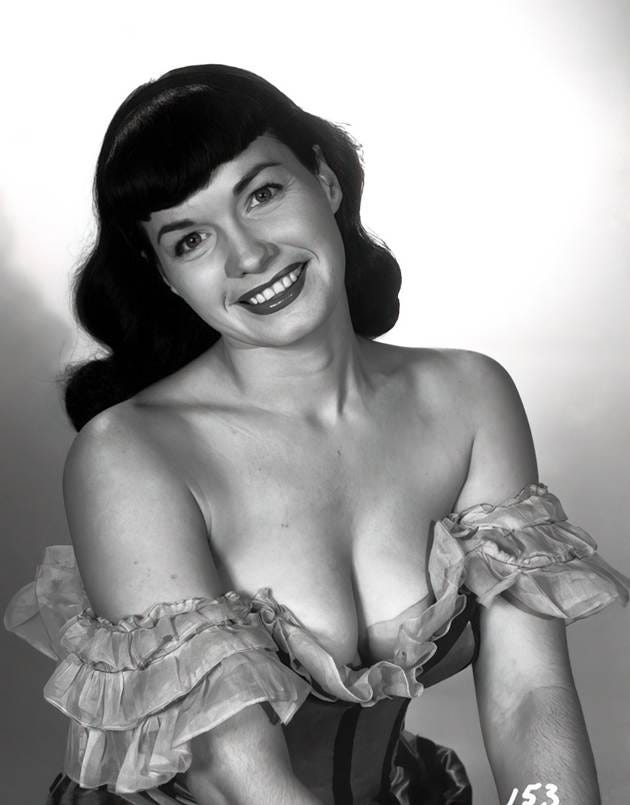
Bettie Page
I was first introduced to the icon, Bettie Page, when I was just 17 years old. During this time, I was still in my Emo/Scene kid phase, and like most teenage girls during that time, I enjoyed damaging the shit out of my hair by oscillating my hair color between all sorts of shades of black hair dye.
Blue-Black, Purple-Black, Black with reddish undertones….you get the drift.
I had also decided on a whim to get bangs for the first time, an impulsive, yet life-altering decision I made with a pair of dull sewing scissors in my teenage bedroom.

While I thankfully managed not to ruin my hair, the bangs seemed to affect not only me but everyone around me. Specifically, my best friend’s mother, who decided to tell her daughter and me that I looked like Bettie Page the next time she saw me.
To which we both responded, “Who is Bettie Page?”
Discovering Bettie
When I recounted that story to a friend of mine a few weeks ago during one of our long 6 hour chats which takes up at least one Saturday a month as part of our regularly scheduled “check-ins” she asked me why I never thought that it was odd or extremely inappropriate for an adult woman (let alone my friend’s mother) to compare me to one of the notorious fetish models of the 1950s.
To which I responded that I just laughed it off as funny at the time, perhaps a bit flattering.
In truth, I never saw much of a resemblance between myself and Page, aside from the lower half of our faces, since we both had a wide smile, full lips, and at the right angle - a similar side profile.
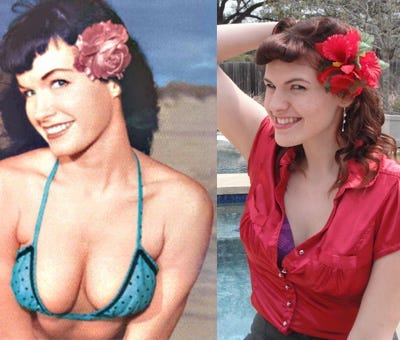
Page (left) and I (right) at 19 during an impromptu photo shoot, my best friend took of me as we tried to recreate this photo.
Yet despite the lack of similarity I saw between Page and me, to my best friend, her mother, and the rest of our high school/college friend group, we were basically twins.
Which begs the question…what was it about Bettie Page – or rather her archetype – which made it so easy for others to project onto me?
According to my friend, who is also a trained psychotherapist, she hypothesized that perhaps my friend’s mom wanted to portray me as Page as a sort of “cautionary tale” for her daughter. A representation of the path she shouldn’t follow, and perhaps sadly, that was true even if she was not consciously aware of it…
But first, a little background and context.
A Different Kind of Woman
My best friend and I grew up in Austin, Texas, the supposed “blue dot in the sea of red”, as it is considered the “liberal” city of the conservative red state, in truth, the town of Austin is not nearly as progressive as it likes to believe.
For starters, the town is racially divided between East and West, and with the tech boom, this divide has only gotten worse as more Black and Latino families have been displaced out of East Austin due to gentrification. Moreover, it is located in the South, meaning we have the influence of the Bible Belt and “purity culture,” which historically has not been so kind to women in particular.
For example, at my high school, it wasn’t uncommon for students to talk about marrying their high school sweethearts, and I even received a “promise ring” from my high school boyfriend, who planned to marry me after we graduated. Though, sadly for him, I did not reciprocate those same feelings and waited just a month after our high school graduation to break up with him.
My best friend, however, was different. She grew up in a self-described “liberal” Jewish family, yet loved the idea of being married, which, in hindsight, highlights her more “traditional” upbringing. In fact, in one of our last deep face-to-face conversations when we were 21 years old, she disclosed to me that she wanted to be married to her current partner before she was 24, since the majority of the women in her family were married before the age of 22.
To her, the idea of being married after 24 seemed like the worst reality ever. An outcome no woman should ever want for herself. When she asked me if I thought I would marry my current boyfriend, whom I was dating at the time I was applying to graduate schools for my master’s program, I told her, “I hadn’t even thought about it” since I wanted to focus on my education first, and I remember the look of pure shock and horror on her face.
The conversation fell dead silent after that, and I remember feeling my best friend’s anger directed towards me, which made it all the more confusing for me. I hadn’t thought I had said anything “radical” or out of character for myself. Just simply that I wasn’t interested in following the “traditional” path of marriage yet.
Little did I know it was this direct rejection of traditional marriage norms and light feminine values that would not only lead to a massive falling out between my best friend and me a few months later, but also continue to be a common theme in my life, which, to others, solidified my reputation as being similar to Page.
Like Bettie
While I perhaps refused to see it at the time, the association between my best friend’s comparison of me to Bettie was no mistake.
Like Bettie, who had to deal with the conservative policies of the McCarthyism era, which cracked down on the distribution of pornographic images in an attempt to “bring morality and family values back to the United States.” (Sound familiar, anyone?) I also grew up in a more conservative environment (though perhaps in more covert ways).
Therefore, both Bettie and I were different. We didn’t follow the expected social norms and customs, and thus, people weren’t sure how to handle us.
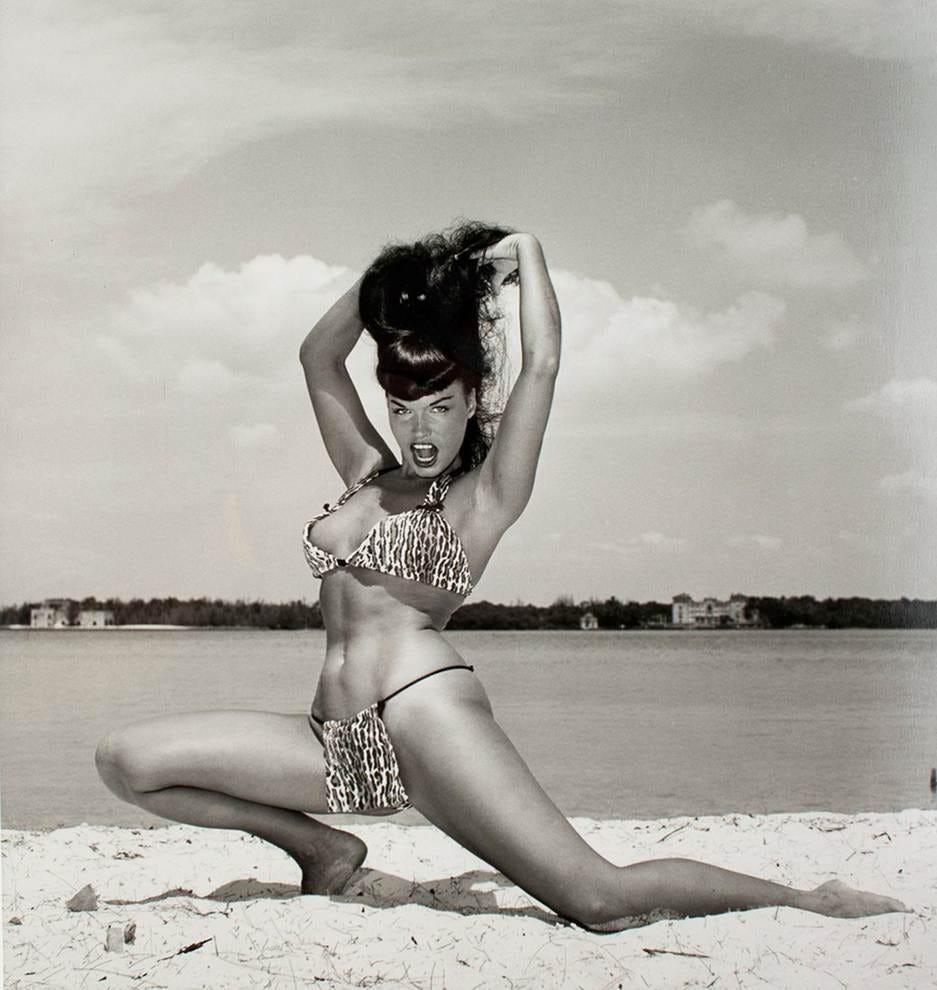
Page
At 17, I was already a budding feminist who had a lot of opinions and had read many feminist works of literature, including Kate Chopin’s The Awakening, Gilman’s The Yellow Wallpaper, and Ariel Levy’s Female Chauvinist Pigs. Yet this defiance of rigid gender roles didn’t cause people to respect me; in fact, the opposite happened, it led to others objectifying and sexualizing me.
*Cue my friend’s mother comparing me to Bettie Page*
At this point in history (the late 2000s), Bettie, who was previously seen as a “dirty” fetish model back during her claim to fame, was now elevated to the role of a “feminist icon,” or as some might describe her, a goddess.
At the time of her death in 2008 (right around the time I was a junior in high school), the image of Bettie and her famous use of bondage/BDSM had a resurgence. Artists of all types were inspired by her image, and often celebrities, like Lady Gaga, Beyonce, Dita Von Teese, and most notably Katy Perry, styled themselves after her iconic look. As evident from this photo shoot for V Magazine with Katy Perry and Madonna, where both women sported the signature “Bettie bangs” and played with BDSM themes.
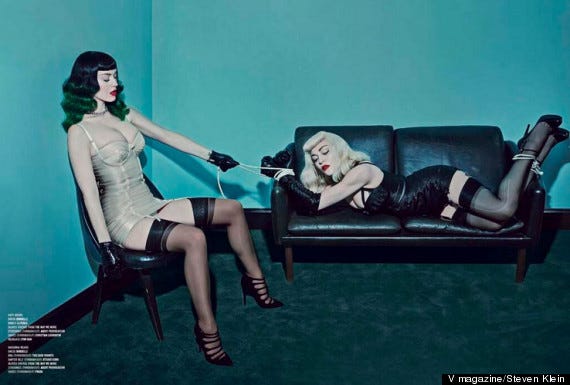
It should be said that the impact of Page’s image and contributions is worth proper acknowledgment. A fashion icon in her own right, she broke down doors and barriers for women in ways that had never been done before. Not to mention the unapologetic embrace of her sexuality, which in the 1950s was unheard of for women. No wonder so many pop icons, artists, and fashion designers still choose to pay homage to her!
Recently, I watched the 2012 documentary Bettie Page Reveals All, directed by Mark Mori and written by Douglas Miller, in which the audience hears clips of Page narrating her own life in her own words.
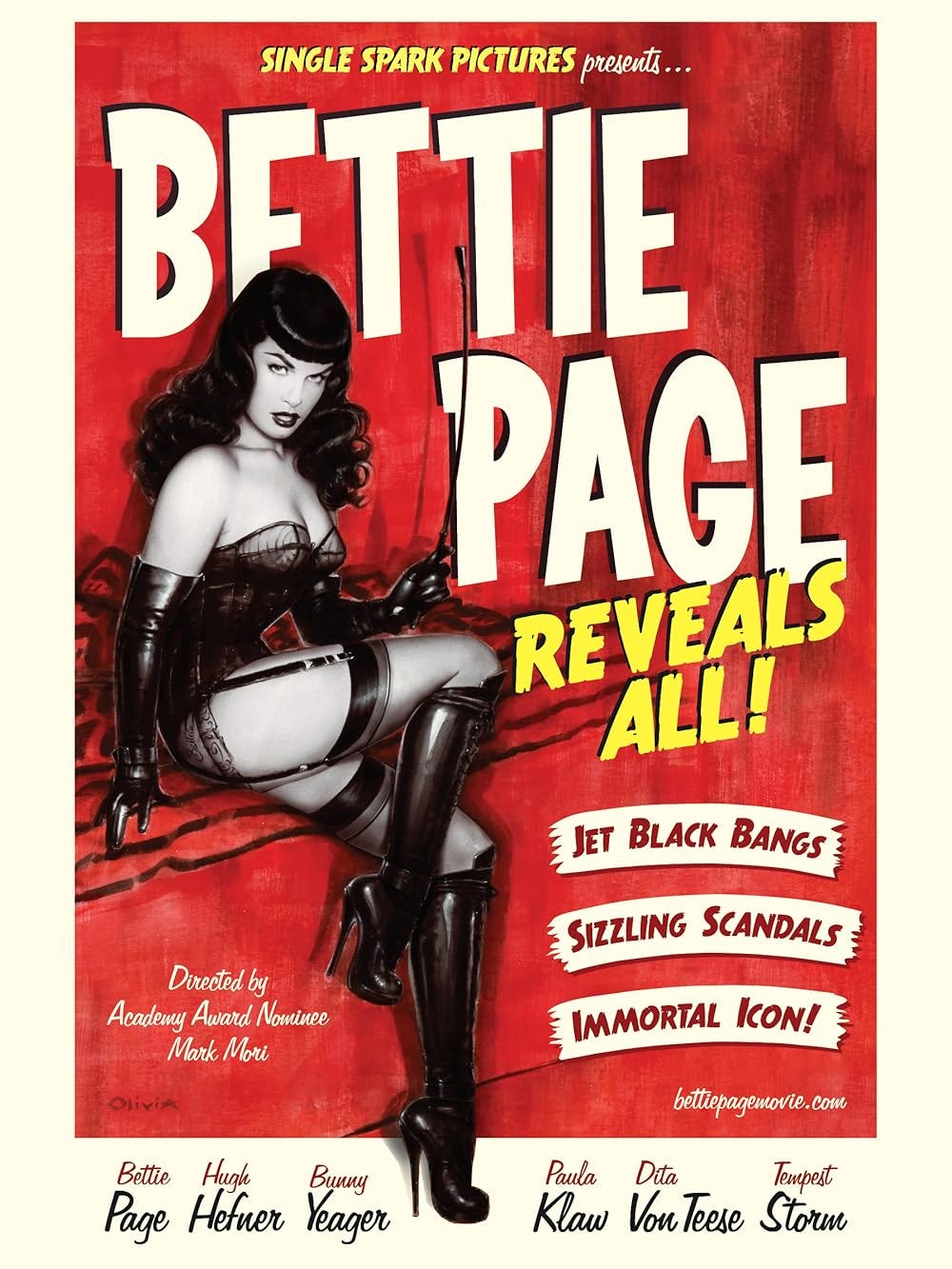
While I was hoping to be inspired by the documentary or perhaps learn more about Page and why so many people in my life choose to associate myself with her, I found myself feeling sick to my stomach throughout most of the entire 101 minutes of the movie.
Namely, how curated her image was throughout the film.
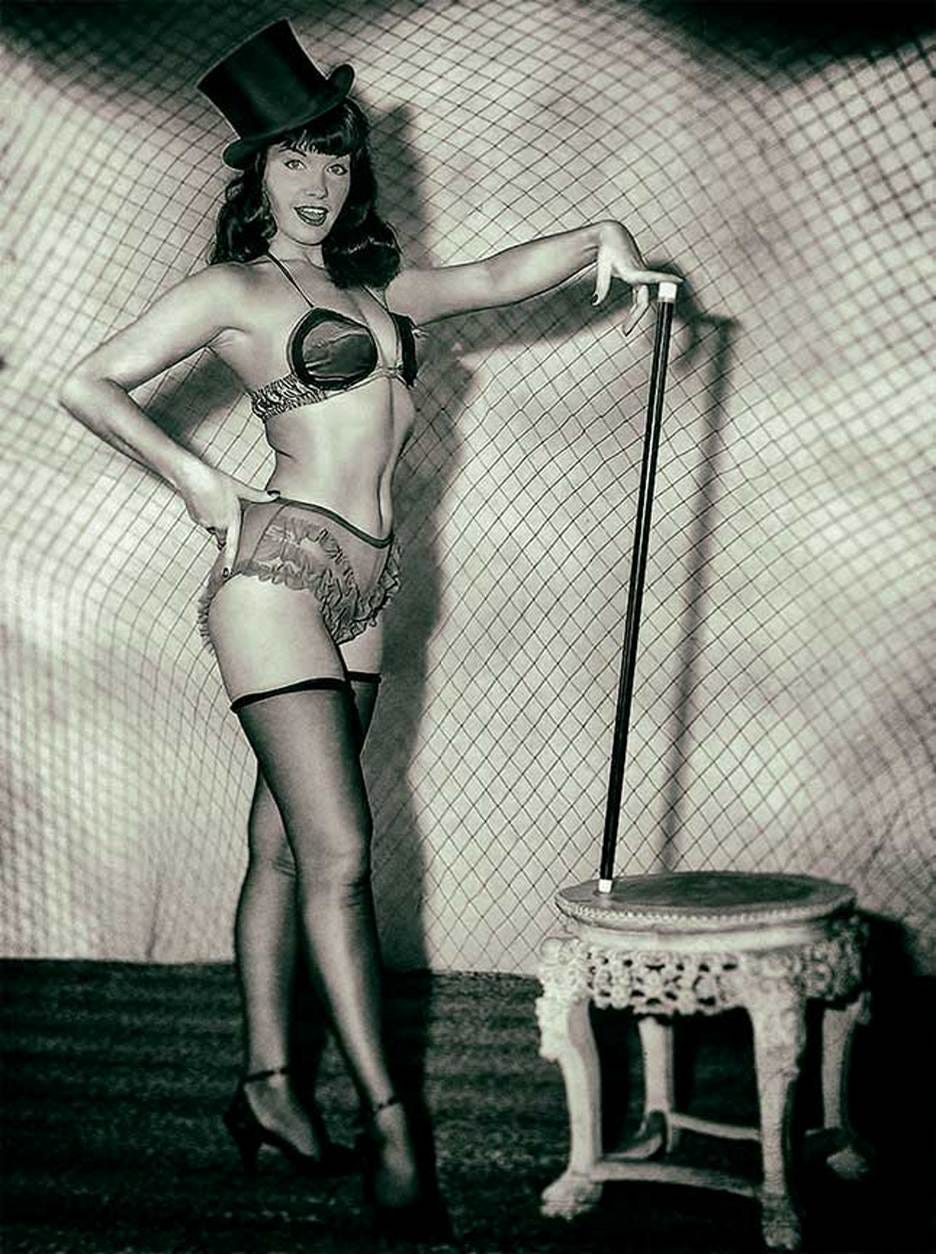
Page
The Sexualization of the Dark Feminine
We love to eroticize what we don’t understand. Sex has a power to cut through the carefully crafted defense mechanisms of our minds and speak straight to our psyches, which words alone can not contain. It is both sacred and profane, which perhaps no one knew better than Bettie Page herself, who was not only very comfortable with her sexuality and being a sexual being, but deeply religious and spiritual as well.
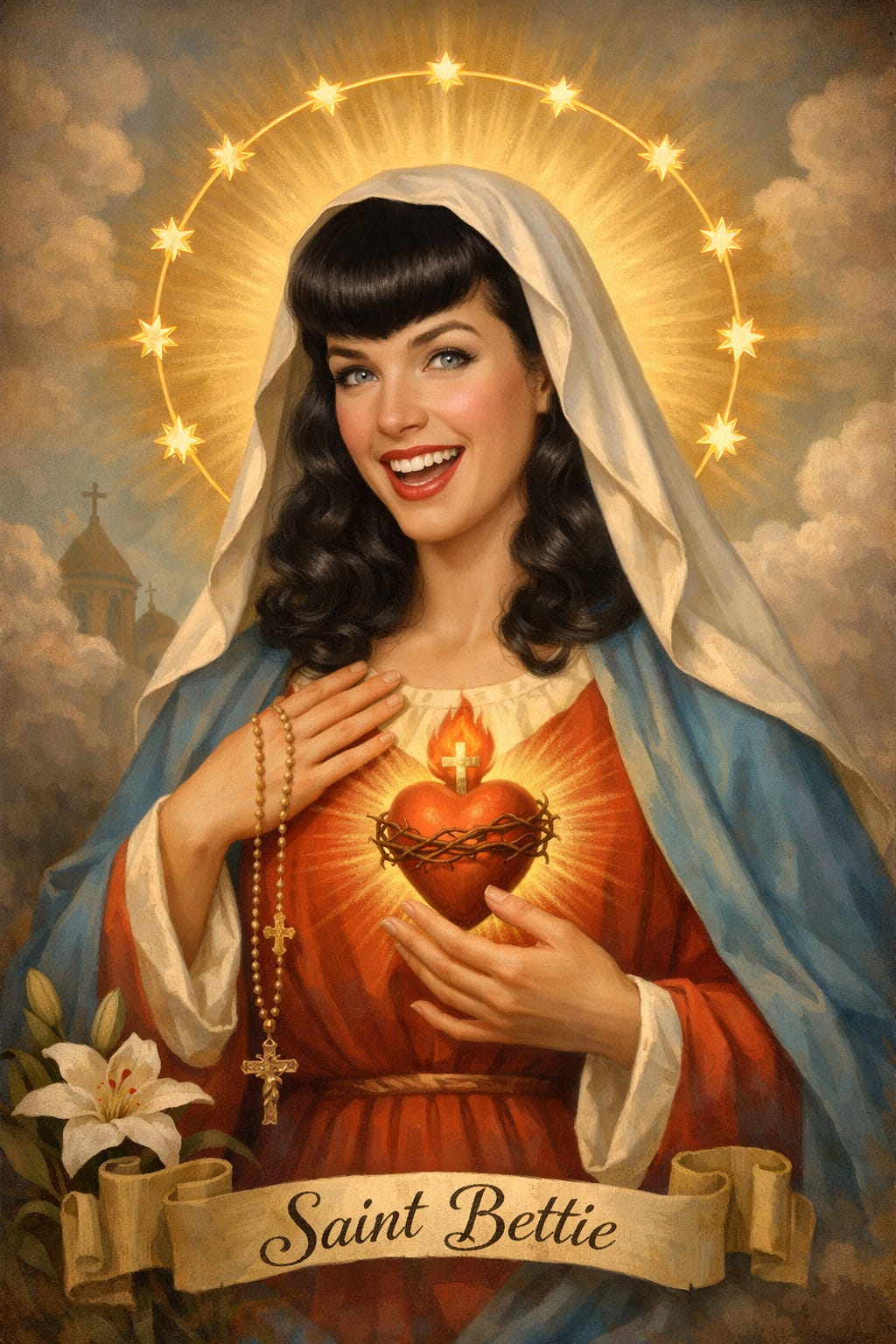
Saint Bettie image generated by AI.
In The Sacred Prostitute: Eternal Aspect of the Feminine, Nancy Qualls-Corbett explores the sacred priestess as an initiator of the feminine, not only for men but also for women. While she uses Carl Jung’s term “anima” throughout her book, I think what she is actually describing what I call in my Yonic Theory™ as men’s and women’s Aura function, the dark feminine aspects of ourselves, or rather the aspects of the sacred and profane we keep hidden within.
She noted that, often, when women first encounter their inner image of the sacred prostitute/priestess (i.e. Aura function), they project it onto a woman in their life, or perhaps a female celebrity/sex icon they wish to emulate. I’ve seen this happen time and time again in my practice, and I’ve even encountered it in my own life as I underwent my own process of self-actualization, or what I call Anamnesis. For many women in my practice, I have found that this awakening usually coincides with women discovering their sexual attraction to women, though this is not always the case.
Yet in my own life, it is interesting to note that my Aura function or witch projection was chosen for me by others who saw a resemblance between Page and me, way before I could successfully integrate it within myself.
As I said before, when I was younger, I never consciously saw much similarity between myself and Bettie Page, in part because I was still in what I refer to as my Veil function or attempting to embody my light feminine aspects. It wasn’t until I completed my master’s education and ended a tumultuous 7-year-long relationship with my ex-fiancé (the same man my teenage best friend asked me if I was going to marry) that I was finally able to integrate my light masculine Ego function, around my late 20s/early 30s that I could circle back to reclaiming my dark feminine aspects.
Thus, I could begin to put together what it was about Bettie Page and me that others found so similar.
After watching her documentary, I’ve come to understand that perhaps the shared bond between Bettie and I came from our desire to remain rooted in our authenticity and to true to ourselves. Despite how uncomfortable it made those around us feel in response.
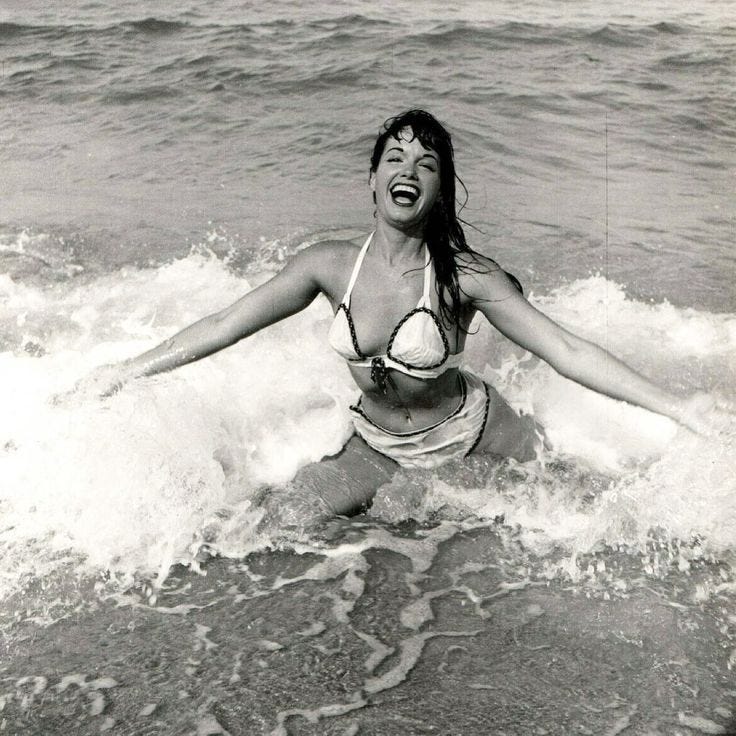
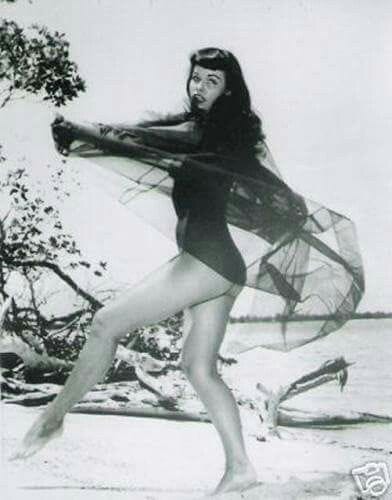
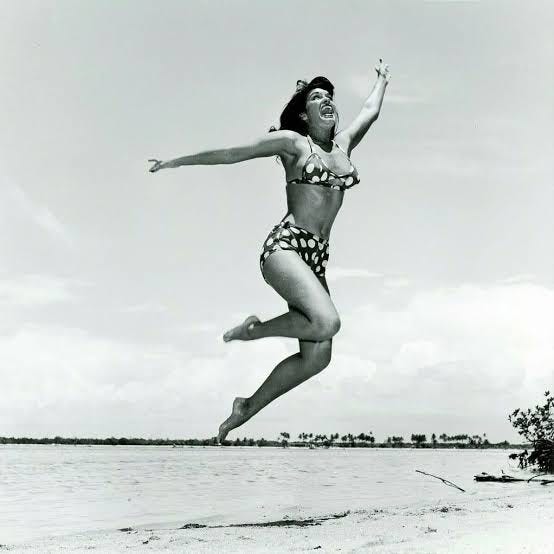
Page playing in the water during one of her photo shoots.
As I watched and learned more about her life, what became clear to me about Page was that she was brilliant (intellectual, smart, creative, and driven) and not a woman to be messed with.
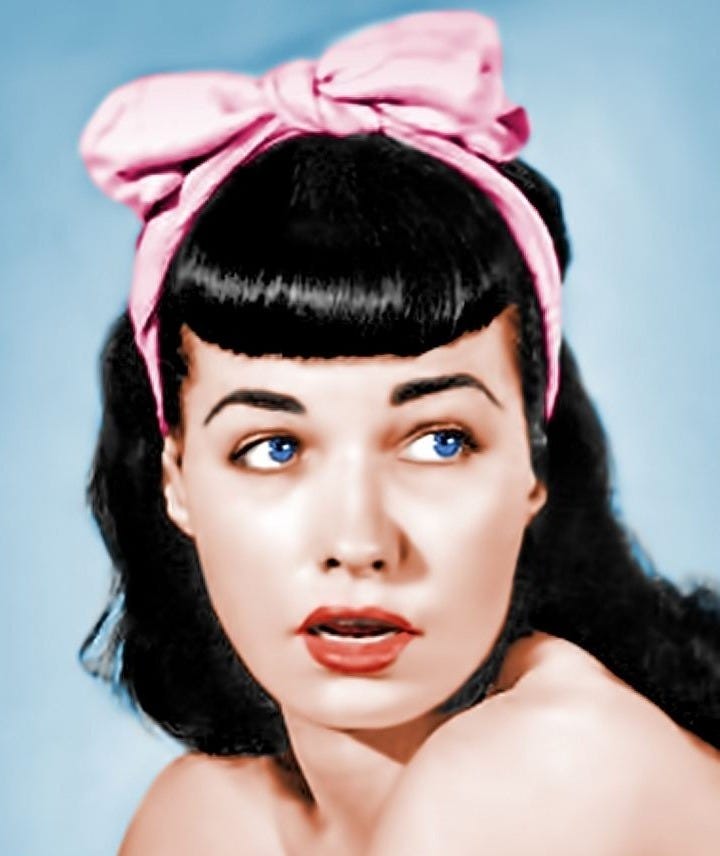
Almost Valedictorian of her high school, she lost out on a four-year scholarship to Vanderbilt by less than a quarter of a point. Yet this setback didn’t prevent Bettie from moving out of her hometown of Nashville, Tennessee, or leaving her ex-abusive husband to move to New York City. There, she was discovered by Jerry Tibbs, who took her first pin-up photos and urged her to cut her hair, which led her to create the iconic hairstyle we know and love today.
From there, Bettie would eventually pair up with the brother and sister duo Irving and Paula Klaw (also known as the “Pin-up King”), who took most of her photos and films throughout her career. Moreover, it was Klaw’s photos and videos of Bettie that earned her the title of the “Bondage Queen”.
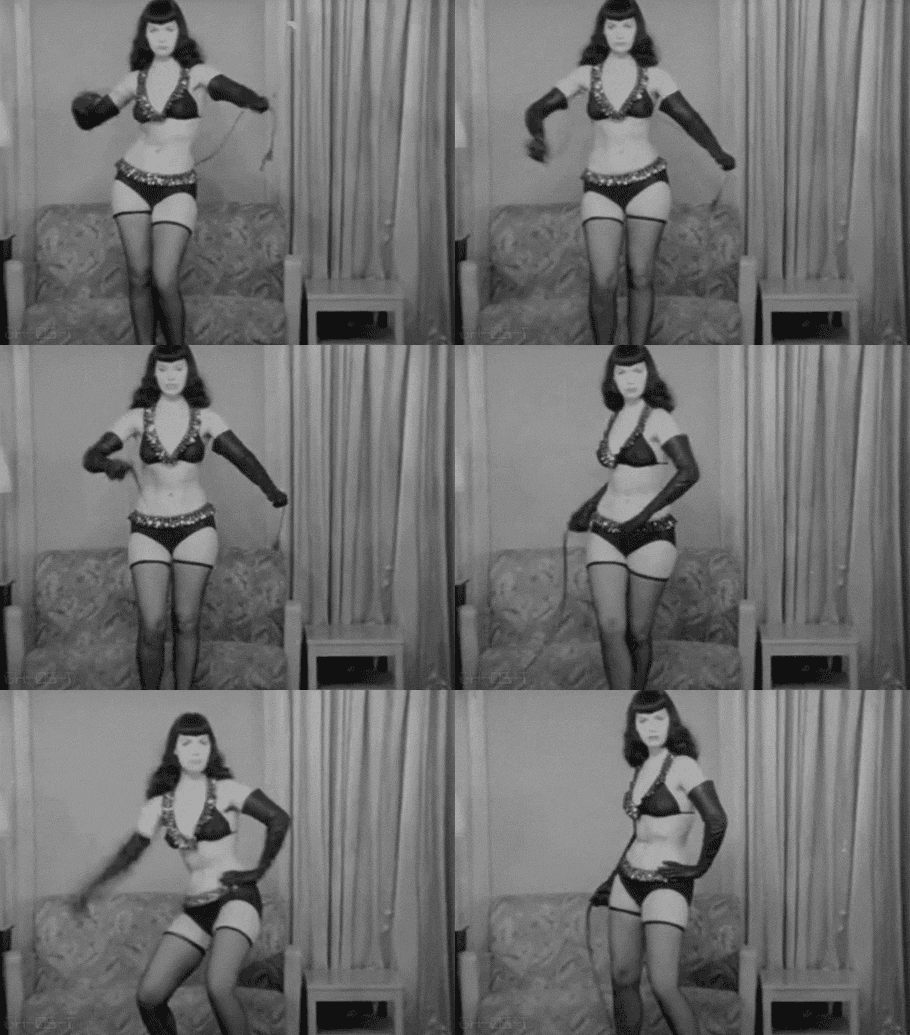
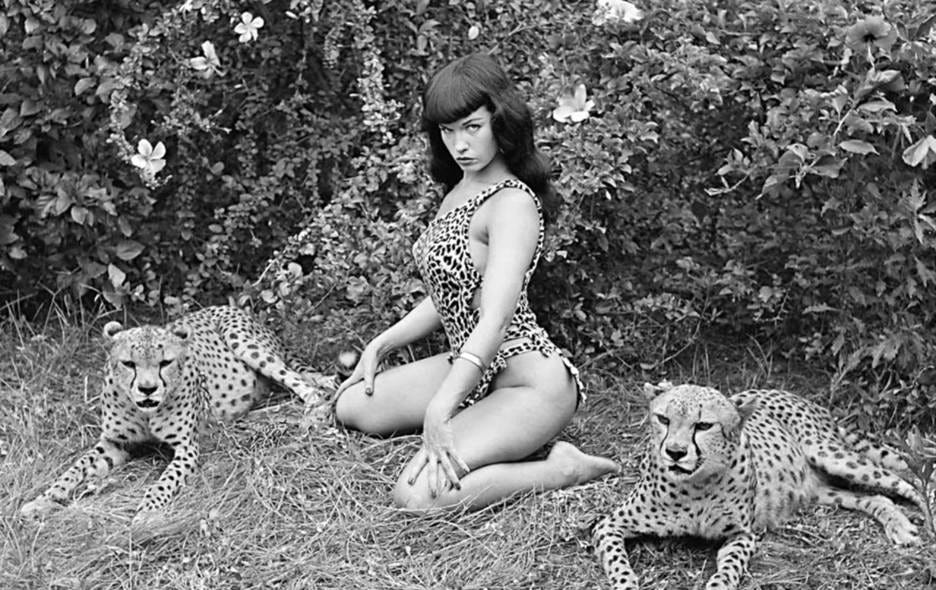
Yet what many people don’t realize is that Bettie was not just a passive pretty face behind the camera. Instead, she often offered suggestions to her photographers and designed and sewed all her own outfits. As she did for this iconic cheetah theme shoot with model turned photographer Bunny Yeager, which happens to be some of my personal favorite images of her.
Yet beyond her outfits and her good looks, by far the theme that was made clear in the documentary was that most of the photographers she worked with, (who worked with hundreds of beautiful women all wanting to have their picture taken), was that everyone wanted to work with Bettie, not just because she was beautiful, but because she was fun and enjoyed herself!
Throughout the documentary, you hear Bettie describe herself as “enjoying her body” and not feeling any shame in doing so. She is explicitly clear that she not only enjoyed having sex, but that she enjoyed being photographed, not because of the reaction she would derive from the men who photographed her, but that SHE felt sexy when she posed for photos, and that most of all she thought it was fun.
In fact, that appears to be the documentary’s central theme since Bettie decided to abruptly leave pin-up modeling around 1957, after only 6-7 years, at the peak of her popularity.
Her reason for leaving? Modeling no longer became “fun,” she got bored, and wanted to do something else.
As someone who gets bored easily and decided to leave an industry at the “peak” of their career, I find this behavior honestly iconic, and I feel seen.
Yet, of course, all of Bettie’s life wasn’t only sunshine and roses. Throughout her childhood, Bettie experienced sexual assault and abuse by her father and men in her life, though she was adamant about maintaining boundaries during her photoshoots. Yet, sadly, for Bettie, at the end of her modeling career, she found herself in an uncomfortable situation with a group of male photographers, which she describes as leaving her “shamed and embarrassed.”
While Bettie didn’t go into detail about this event in her documentary, it is clear to me that Bettie was a prideful person and took herself very seriously, so she would not take kindly to anyone taking advantage of her and it would be clear she would get the last the word, which is perhaps why she removed herself from the world of pin-up modeling when she no longer felt as though she could control the narrative.
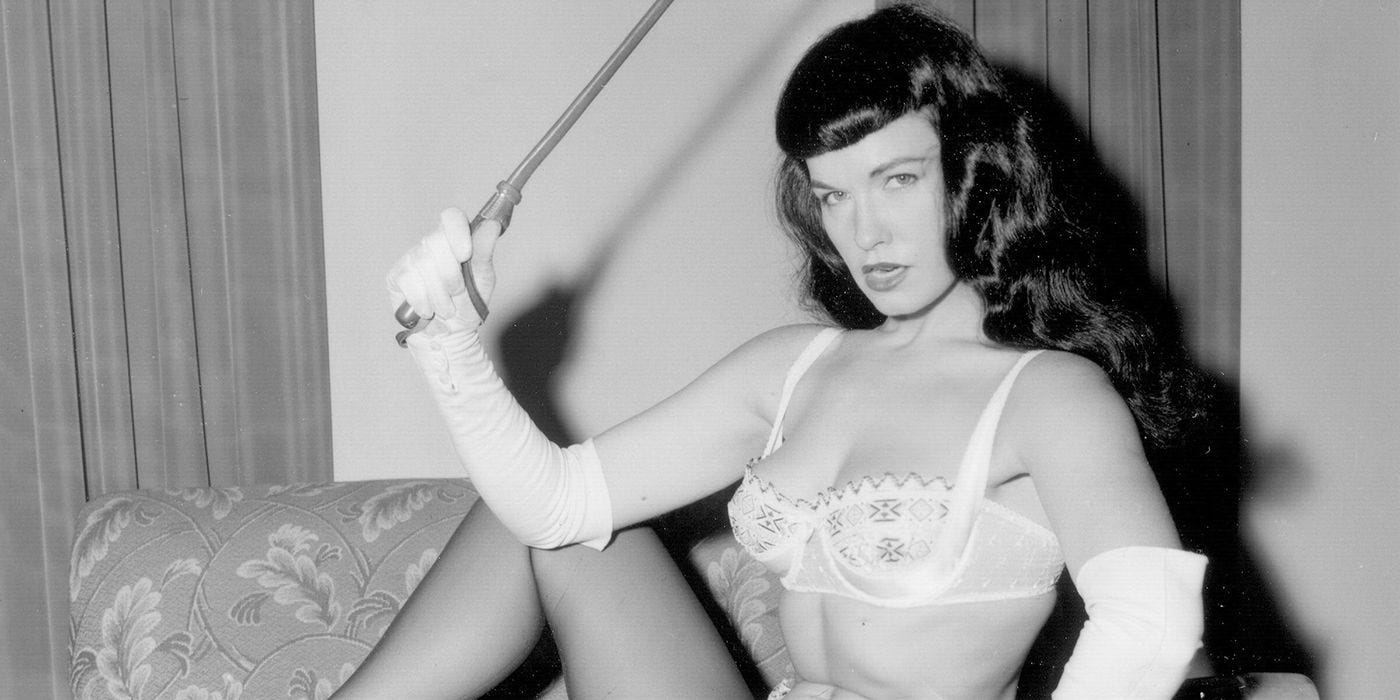
A dynamic that I am not unfamiliar with, given my own experiences of being labeled the “other woman” in previous relationship dynamics, a category Bettie found herself falling into as well, with many men who wanted to idealize her image as the temptress.
When Bettie left modeling, she found herself gravitating toward religion and wanted to become a missionary, but sadly, due to the fact that she had been divorced from her first husband, the church refused to let her serve. Therefore, she went back to her abusive first husband to remedy this, who, less than a month later, almost killed her, causing her to file for an annulment.
It was during this period that Bettie, began to experience the “voice of God” talking her, causing her to enter into a period of psychosis and eventually becoming institutionalized and diagnosed with Paranoid Schizophrenia. While you can watch the documentary to learn more about Bettie’s “lost years” and her run-ins with the law, and even her assault of her former landlady, what is clear to me is that during this time Bettie was most likely responding to the trauma she had endured throughout her life and likely attempting to seek solace in the divine as we all do, by attempting to merge with daemon or dark masculine function.
Thus, in her own way, I believe Bettie was trying to come home to herself, to who she was before her narrative became distorted and taken away from her. A process I myself am very familiar with.
Reclaiming Bettie
As I said above, my biggest issue with the film is not its content, but how curated it is. Since most of the interviews featured in it are conducted with men and seem to hyperfixate on Page’s physical attributes rather than her as a whole person. At the end of the film, we see a message that says that Page did not want to include any photos or videos of herself as an older woman because she wanted us to “remember her by her photos.” While I imagine this may have been done to either protect her privacy or because perhaps Bettie herself knew her legacy would have more power by choosing to remain tied to her “glory days,” it left me feeling unfulfilled and wanting more.
As a woman who can identify with Bettie’s story, I find it uncanny how similar our relationships with men, religion, and sexuality have been, despite the fact that I knew so little about her until recently.
Like Bettie, I also had a period of 6-7 years in which my body was repeatedly fetishized by men and other women, which occurred around the end of high school, right when I first adopted her famous haircut. While I never pursued modeling, nor had a desire to, it was clear that my body was more developed than the rest of my female peers, as I was already wearing a C/D cup and had wide hips and a prominent backside, thanks to my mother’s Croatian/Balkan heritage.
At first, the attention felt nice, and like Bettie, I enjoyed it. More than that, I enjoyed feeling sexy for myself. I enjoyed dancing, moving my body, and claiming my own source of pleasure. Just as Bettie did for herself.
While I was raised Catholic, I’ve always had a complex relationship with religion as Bettie did, namely in regards to its obsession with demonizing sex and associating the body (and therefore women) with sin.
Therefore, like Bettie, sex and the divine for me were not so separate. I believed (and still do) that sex is play, sex is pleasure, and when done with consent and respect for the other, should be celebrated, and that it can even be transcendental at times. Or what Qualls-Corbett refers to as the Hieros Gamos or “divine marriage”.
Yet, this openness to play, sex, and authenticity made it easier for both men and women to objectify me. Like Bettie, I would constantly find myself either being placed into the “other woman” role without my knowledge or men would explicitly ask me to be their mistress for them to cheat on their primary partners. A request that very few of my other female friends who were more “demure” and viewed sex as a sort of “autopilot requirement” for being a girlfriend, as opposed to a choice, ever received.
Which illuminates the ways we treat women who embody the dark feminine or “witch” archetype as different in our society.
Thus, like Bettie, the narrative I had chosen for myself shifted. I became no longer defined by what I thought of myself, but rather how others saw me and chose to view my “openness” and authenticity.
That awareness was heightened even further for me during the fallout that occurred between my best friend and l. Since despite the fact that we had both roughly slept with around the same number of men at this time, I became branded a “whore” (or should I say witch) by men and she was thought of as “marriage material” (i.e. the goddess). An image that no doubt my association with Bettie Page only further exacerbated.
So to counteract this, I, like Bettie, chose to run away, and thus I thrust myself into a new narrative. Thus, I overcorrected and became something that might resemble a “trad wife” today with my ex-fiancé (which, for what it is worth, helped me discover my love of Ina Garten - another woman known for her iconic hairstyle and bangs). Thus, I began to use food to cope as an attempt to hide myself so that no one could objectify me again.
Except that didn’t work because once I left my ex-fiancé, I found myself right back in the same pattern with men again, because the truth about women who become objectified is not that they are “prettier” or “more attractive” than other women. Or have better boobs and/or a “phat ass.”
In fact, I would argue that physical attraction is fleeting, constantly ebbing and flowing with what society deems as being “in fashion,” which is the very definition of the light feminine since it reinforces the external form of validation we often associate with the masculine principle.
In truth, Bettie was one beautiful “conventionally attractive” woman, among hundreds of “conventionally attractive” women who all did pin-up and fetish modeling from the 1950s.
It is not her beauty that makes her so iconic; it is her.
Page
It was her ability to have fun, be real, express her authenticity, and above all else, play.
What made her stand out was not her good looks, but rather how she didn’t censor herself and how she wanted to control her own destiny.
In our society, we fear these types of women because they disrupt the “status quo.” They force us to confront the dark feminine, and the dark feminine is much easier to digest when it is objectified.
Moreover, if you objectify it, that means you never have to look at yourself and the parts of you that seek it out through projecting it onto others.
My best friend and her mother had disowned their own dark feminine aspects by projecting the archetype of Bettie Page onto me. Which is why when I challenged my friend’s notion of marriage - simply by being me, it was met with anger. For men, I represented something taboo, dangerous, that didn’t fit with the ways they were socialized to view women, and so, like Page, I became the “other woman” because it was easier to dehumanize me than to acknowledge the power that their projection of me had over them. Which also wasn’t accurate to who I really was either.
That power is the same thing that has continued Page’s legacy, authenticity. The bravery to be herself, to make her own choices, and to honor her divine sexual nature.
Because for Page and for women who learn how to embrace their dark femininity or Aura function, we know that the line between sex and the sacred isn’t so different.
I just hope that, unlike Page, women can begin to reclaim this narrative at all ages, and not just during the years we associate with our maidenhood when men decide we look our “most beautiful.”
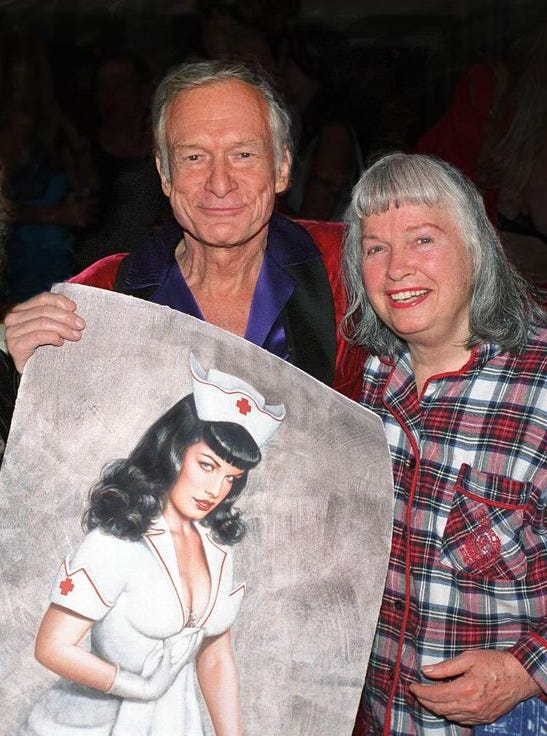
One of the last known photos of Page (around 70) with Hugh Hefner, who, for what it’s worth, helped Page get the royalties to her iconic image.
Because maybe then, if women are finally allowed to get old and tell their stories without having to maintain the image of the male gaze, the witch and the goddess, the profane and sacred can finally be reunited.
This is, personally, the legacy Page has left for me, and what I, in turn, want to leave for all women.
To embrace the dark and the light and everything in between.
OX
Your Dark Fairy Godmother
Feeling inspired by this article and want to learn how to reconcile your inner goddess and witch archetypes? Check out the goddess-witch spectrum course here:
For more info about my theory, check out my Yonic Journal or learn about its foundational components through the course on my website.
Reference
Mori, M. (Director). (2012). Bettie Page reveals all [Film]. Single Spark Pictures.
Qualls-Corbett, N. (1988). The sacred prostitute: Eternal aspect of the feminine (Studies in Jungian psychology by Jungian analysts, Vol. 32). Inner City Books.
This really stayed with me. Thanks for writing about Saint Bettie! The way you frame Bettie not as an image but as a site of projection, play, and authenticity felt incredibly true, especially the tension between the sacred and the profane, and how threatening that kind of wholeness can be. I appreciated how you reclaimed her as an agent of herself and self-directed rather than flattening her into an icon (which she also is), and how clearly you named the ways women who embody the dark feminine are often easier to eroticize than to truly see. On a lighter note, the meme about girls cutting their bangs genuinely made me laugh. I did the same thing! It felt like such a perfect, human echo of the themes you’re naming. This felt both personal and expansive. Thank you for such a deep and thoughtful reflection.