

Beauty and the Beast
What Smutty Romance Novels Reveal About Women’s Self-Actualization Process

Very few things in life can excite us as much as the Eros of romance and sex can. It seems as though these experiences with another, which arouse and excite us, are necessary for our evolution.
Many male scholars and psychotherapists have written about this process from their personal experiences. Jung had his “temptress,” Sabina Spielrein, and later Toni Wolff, who undoubtedly influenced his notion of the anima or the so-called feminine aspect of a male’s psyche, which he projects onto his lover. This archetype of the temptress is often necessary for men to face, because whether they succumb to her “seduction” or not, she forces him to take accountability for his behavior and self-reflect. Now, depending on the story the man wishes to create about himself, he might deny his portion of his involvement with the temptress, choosing to remain tied to an infantilized view of himself to protect his Ego. Yet even the act of rejecting her proves that the temptress served her role. By rejecting her, he believes he has “conquered” his own shadow, and thus she represents his projection of his own dark feminine aspects, which serve as the catalyst for his change of behavior. That his projection onto her, whoever she may be and what she may represent, leads him towards fulfillment of his destiny. Since, as Jung noted, it is through the confrontation with one’s shadow that we begin the process of individuation (I.e., self-actualization).
The same is *almost* true for women.
Except rather than chase after the temptress or our anima projection, we have to encounter the projection of our dark masculine, the Beast, which could be viewed as an aspect of Jung’s animus, or the masculine aspect of a woman’s psyche. Yet in his dark masculine form, the animus becomes the wild man or creature who appears not to be of this world, yet women are drawn to him. He is dangerous, irrational, and impulsive, yet the main female protagonist in our modern smutty romance novels and TV shows can’t help but fall in love with him.
This is the Joe Goldberg effect from Netflix’s You. Or Elena Gilbert being drawn to the sexy vampire, Damon (whose name sounds a lot like Demon), Elena can’t help but be drawn to, despite the fact that he is a cold-blooded killer.
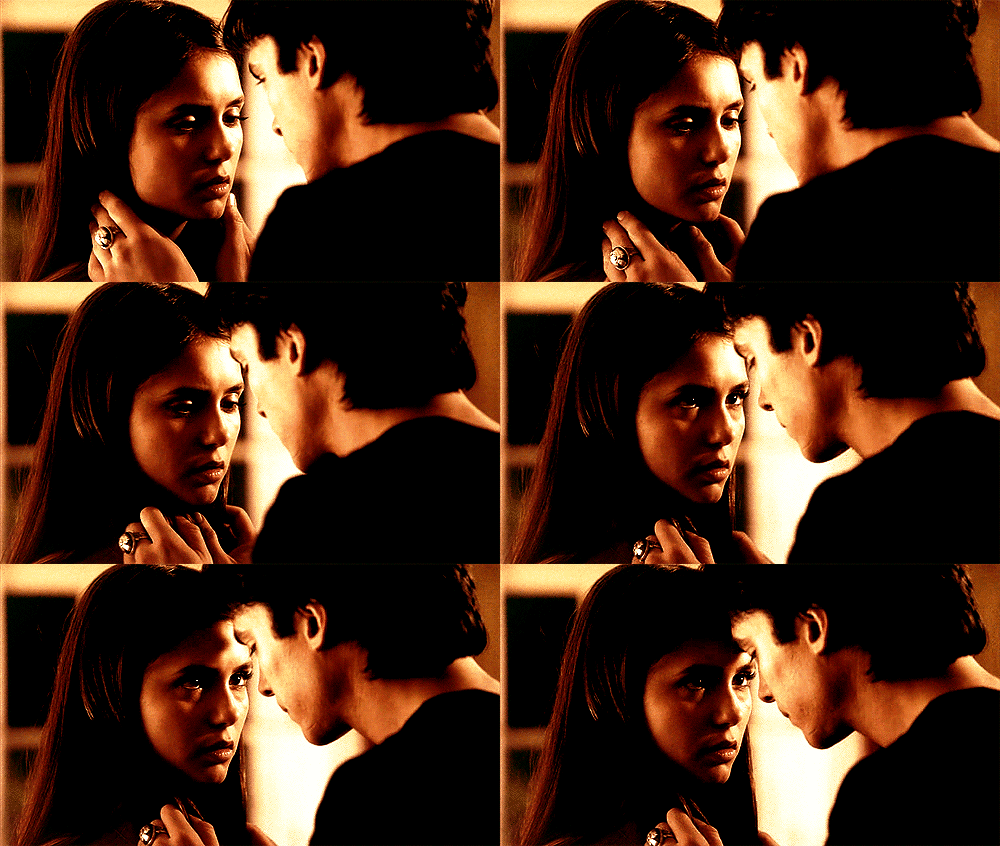
Damon and Elena from The Vampire Diaries
So what does that say about our psyches as women? Why are we so drawn to men or creatures that can kill us? Does some part of us wish to “die” metaphorically when we read these romance novels? And if so, what does that say about women’s journey of self-actualization as opposed to men’s encounters with the temptress?
Whether your poison is a sexy werewolf, a suave vampire, or a literal serial killer, a celestial ogre alien being from outer space, or just the classic James Dean “bad boy,” what role does this archetype play in women’s lives?
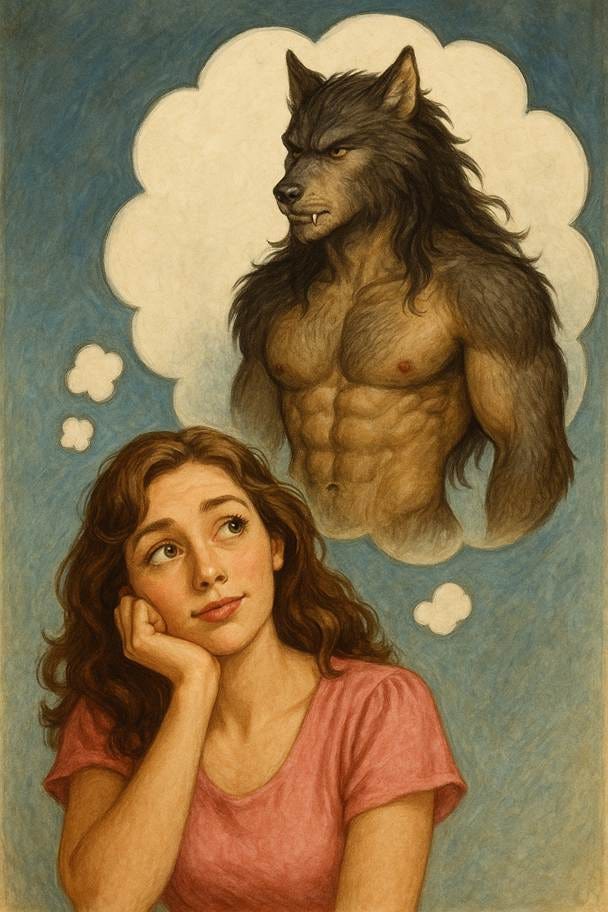
AI-Generated Image
Women’s Obsession with “The Beast”
Despite the growing trend of women posting on TikTok or Social Media about their obsession with horror movie characters like Ghost Face or their collection of smutty romance novels, this phenomenon is nothing new.
In the 1980s and 1990s, romance novels often featured images of the muscular and sexy model Fabio on their covers, who was meant to depict the main male character in the story who would seduce the “innocent” female protagonist, awakening her passions and wild side.
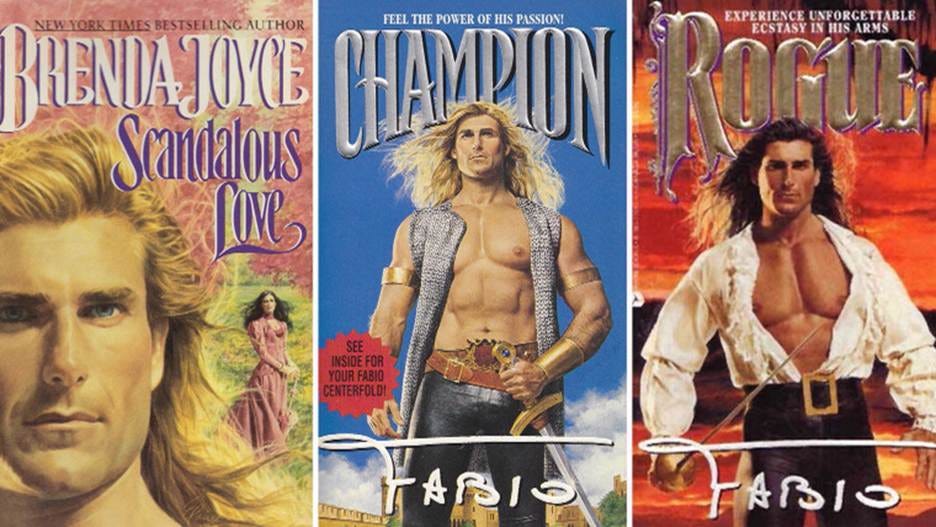
Fabio book covers
Prior to that, it was the rough and slightly shady, yet devilishly handsome and charming, character of Rhett Butler in Gone With the Wind who, though he angers and frustrates the heroine Scarlett O’Hara she grows to love him in the end.
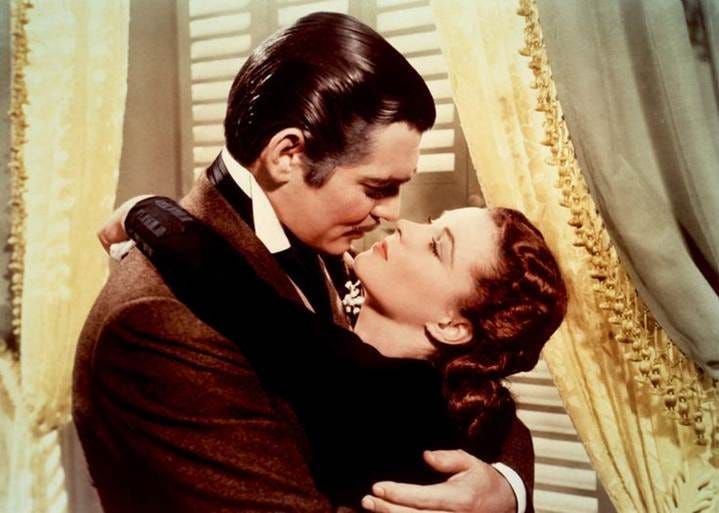
Scarlett and Rhett from Gone With the Wind
And of course, prior to all these men, who were consumed by their lust and desire to “devour” their female love interest. It was the Beast.
Beauty and her Beast
What is interesting to note about the story of Beauty and the Beast is that it is one of the few popular fairy tales that has survived into our modern era, written by a woman. The first edition of this story, was written by Madame Gabrielle-Suzanne de Villeneuve in 1740 and was quite long and detailed. It wasn’t until later in 1756 that Madame Jeanne-Marie Leprince de Beaumont simplified Villeneuve’s original story and shortened it for a younger audience, which paved the way for our modern retelling of the fairy tale, which is reflected in Disney’s version of the French story.
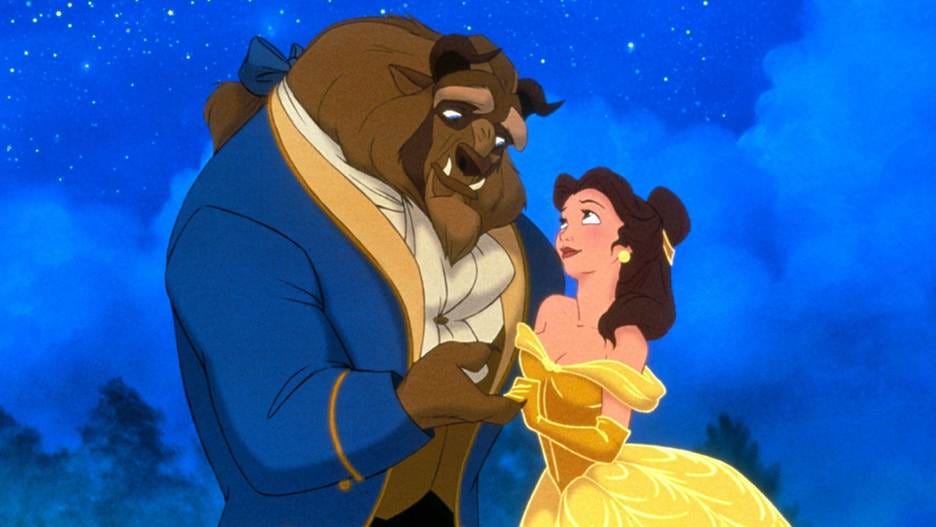
Disney’s Beauty and the Beast
In Beaumont’s version of the story, Belle (which means “Beauty” in French) is the youngest daughter of a wealthy merchant who has gone away on a trip to acquire some merchandise he has lost from one of his previous cargo ships. The merchant asks all his daughters what they would like for him to bring back with him as a gift during his travels. Belle’s two older, vain, and selfish sisters both announce they would like jewelry, fine clothes, and other luxury items. However, when it is Belle’s turn to ask what she wants, being the most modest and accommodating of her sisters, she simply states she would like her father to bring back a single rose. Belle’s sisters scoff at this request, making fun of Belle for not wanting luxury items, and her father encourages her to ask for more. Yet Belle, who is his favorite daughter, maintains she only wants the rose, and her father sets out on his journey.
Upon heading back from his journey, the father becomes lost in a snowstorm and stumbles upon a castle. In the castle, he is welcomed, given food, and provided with shelter, but is told not to take or touch anything. Yet as he leaves the castle, he remembers that he forgot to find Belle a rose, and thus, he plucks a single rose out of the castle garden for his youngest daughter. As soon as the rose is picked, a Beast appears and accuses the merchant of theft, demanding his life unless one of his daughters is willing to take his place.
When he returns home, he informs his daughters of his experience visiting the Beast. The two eldest daughters immediately refuse to trade places with their father and offer up Belle instead. Yet the merchant does not wish to part with his favorite daughter, since she reminds him of his late wife. Despite his protests, Belle insists on going into the castle in her father’s place. Once there, Belle is treated with great kindness and luxury by the beast, who has been very lonely in his castle. Each night before Belle goes to bed, he asks her to marry him, yet she always refuses, stating that she only wants to be his friend. The Beast, though ferocious in his appearance, never attempts to use his force or strength to persuade Belle; instead, he respects her boundaries. Thus, Belle begins to admire the Beast for his kindness and gentleness.
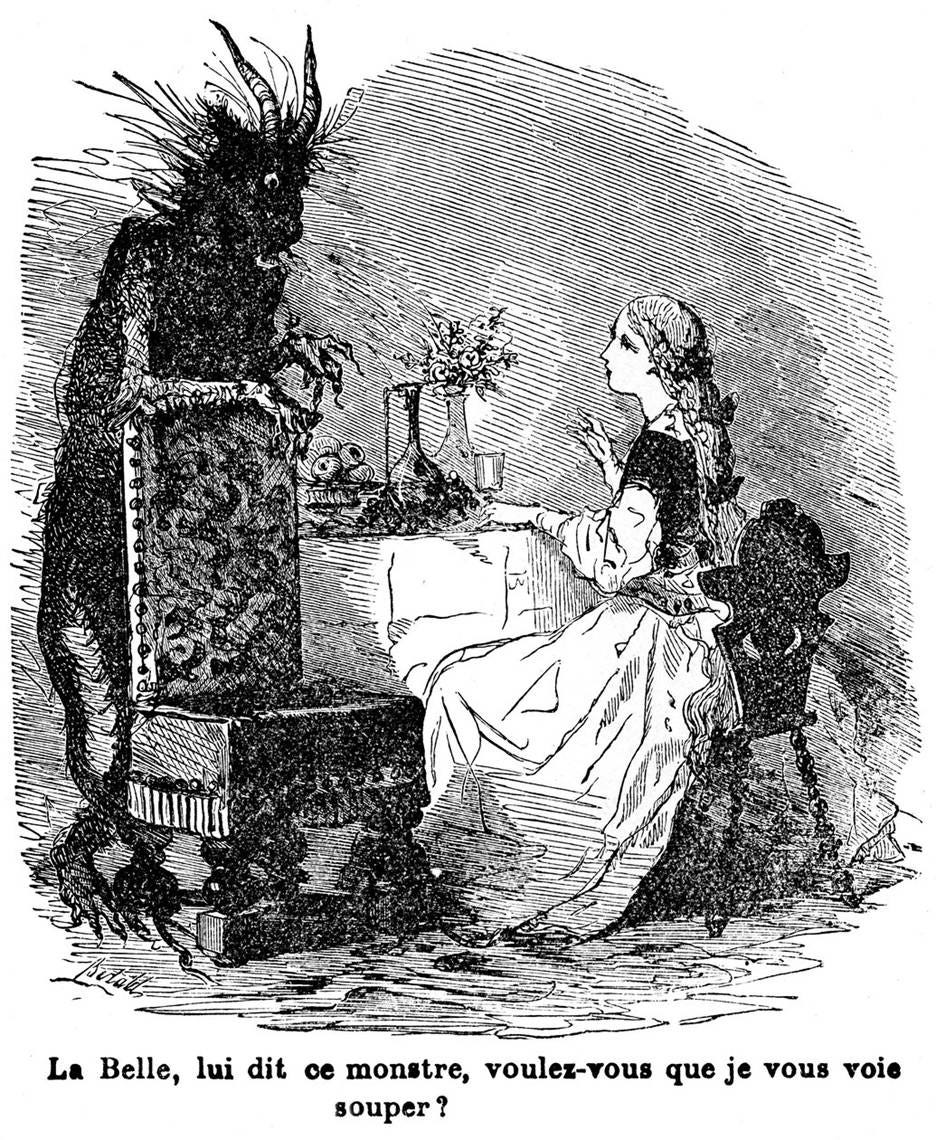
Illustration for the tale of Mrs. Jeanne Marie Leprince de Beaumont “Beauty and the Beast”, 19th century by Charles Albert dArnoux Bertall
After some time, Belle begins to miss her father and her sisters and asks to visit them. The Beast allows her to do so, expecting her to return within two months. Once at her family’s home, Belle’s older sisters become jealous of Belle’s fine clothes and apparent happiness. Thus, out of their envy, they pretend to be concerned about her well-being and persuade her to stay longer, hoping the Beast will become angry with Belle and harm her. One night, Belle dreams that the Beast is dying and rushes back to the castle to find the Beast nearly dead in the garden due to his grief over losing Belle. It is there that Belle confesses her hidden love for the Beast, informing him she will marry him. As she does, the Beast is transformed into a handsome prince and tells Belle that he was cursed due to his selfish and cruel behavior, and that she has broken the spell.
Belle and the Beast are married, and her sisters are condemned to live a life of misery for their jealousy and pride. Whereas Belle, who remained true to herself and her morals, lives happily ever after.
From a depth psychology perspective, we can see Belle’s evolution as reflective of her individuation/self-actualization process. Belle goes from being “passive” to embracing her own “beast-like” nature through her relationship with the Beast. She learns to be assertive to set boundaries, to tell the beast “no,” and most importantly, to separate herself from the opinions and judgements of others (i.e. her sisters). Thus, revealing the purpose of the Beast archetype for women. It is through Belle’s projection of her dark, masculine animus onto the Beast that she is able to claim agency over herself and her life choices.
Women seek out these mythical and real-life “bad boys” in order to break free from the “good girl” persona. The bad boy gives them permission to embrace their darker nature, thus allowing them to move towards greater wholeness.
The Beast as Daemon
In the TV Show Mayfair Witches, the phrase used among the Mayfair women to summon the demon Lasher that goes “Mi Daemon, ad me veni. Mi Daemon, mihi labora. Mi Daemon, me libera.”
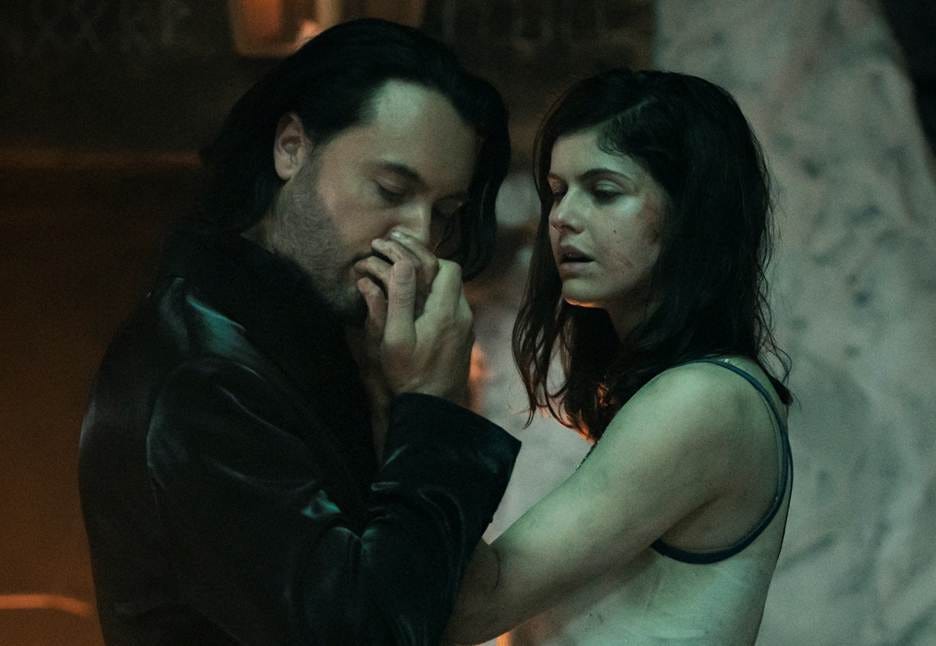
Lasher and Rowan in Mayfair Witches
These three phrases in Latin translate to “My Spirit, come to me. My spirit, work for me. My spirit, liberate me.”
It is important to note that prior to the rise of Christianity, the word “Daemon” in Greek and Latin simply meant “spirit.” However, later, when the Church came to power, this word was translated to “Demon” which was then interpreted as an “evil force” or “devil.” Yet this word, which Jung himself used to describe his experience of the wise old man archetype whom he named Philemon, is actually meant to serve as a guiding force for individuals which moves them towards fulfilling their purpose.
Thus, the “Daemon” reveals the true purpose of the “beast” projection for women. The beast is her dark animus, her inner dark masculine principle, which must be released for her to reclaim her power.
In the TV show, Lasher comes to each of the previous 12 Mayfair Witches, and through their acceptance of him, they are able to achieve great power. As is common in most Anne Rice novels, who wrote the original book series on the Mayfair Witches, this power is often revealed through the heroine engaging in a sexual and taboo relationship with the demon Lasher. Thus, through the consummation of their relationship, he releases her inner beast-like nature and the projection no longer becomes outside of her, but fully integrated.
Thus, I posit women’s obsession with smutty novels is an attempt to “claim” their inner dark animus aspects. Which in return, allows them to develop the masculine qualities they need to step fully into their power as whole, authentic women.
This is precisely the path Rowan must take in the show as she confronts Lasher, having to face her dark shadows and learn how to control her powers as a witch.
Yet from a psychological standpoint, the psychotherapist Maureen Murdock offers us a glimpse through her outline of the Heroine’s Journey of why the best project/archetype is so important for women.
The Man with Heart
In her book The Heroine’s Journey, psychotherapist Maureen Murdock discusses the concept of the “Man with Heart and the Woman of Wisdom”. She writes about how when women enter this phase of their Heroine’s Journey, they often have dreams of lions or other male, beast-like figures, which are meant to foster the integration of their masculine and feminine aspects.
Therefore, much like the story of Beauty and the Beast, these psychic figures or archetypes in a woman’s psyche are meant to create a heiros gamos (Greek for “divine marriage”) of sorts. This inner marriage of one’s masculine and feminine aspects is said to reflect one's outer relationships. Thus, as women learn to find harmony within themselves and integrate their inner beasts or “daemon” aspects not only are they able to fully step into themselves, but in return they are able to heal their relationships with men in the outer world as well.
Women are Venus and Men are from Mars: Why Male Psychological Models Don’t work for Women
While this is an old saying often shared by little boys and girls during their early school days, playing games on the playground, there may be some truth to it. Men and women, although they may share a particular time and space in history, often have different experiences that shape their development.
This is why women can’t just follow the male template that Jung and others created for their individuation or self-actualization process. These templates already assume that the individual following the path already has a strongly developed sense of their ego. That is a masculine model and a masculine understanding of the world, which is why they often need to encounter the female temptress to humble themselves.
Women don’t come from this perspective; they often have to work to develop their own ego strength through encountering, and sometimes surviving, their interactions with men. They have to encounter the masculine wild man, who gives them permission to lean into their darker aspects, their own passions, sexuality, and hidden nature. Women seek out the beast in their smutty romance novels, not only for pleasure or fun, but as a metaphorical way to break free from the rules and regulations that bind them. The conditioning they absorb growing up that tells them how to be “good” girls and women.
This is why women are so attracted to the Beast and the “Big Bad Wolf.” They represent the masculine aspect of her psyche, which she never had a chance to claim. The dangerous and perhaps even “taboo” impulses she feels to cast away her “good girl” persona and let her passions overtake her.
And it is those passions, which she integrates through her encounter with the dark masculine, that give her insight into what is important to her. Who she is and who she can be, if only she can let herself be liberated.
This is why my research on feminine forms of healing and women’s self-actualization process is so important. Without it, we are stuck following a template that paints us either as passive “good girls" or Goddesses in men’s stories or devious Witches, which men must defeat in order to self-actualize.
If you have ever fallen into either of these roles, I suggest you check out my podcast The Goddess Witch Spectrum™ or to support my research and learn how to integrate your Goddess and Witch-y aspects, you can subscribe to this substack and purchase the The Goddess Witch Spectrum™ Course through my website.
OX
Your Dark Fairy Godmother
ive had to reread multiple parts of the book addiction to perfection over and over again to really grasp these archetypal concepts, your explanations made it click. Thank you 🥰