

Love and the Dark Feminine
Wisdom from the Cailleach

I was never drawn to the stereotypical “fairy tales” many girls my age enjoyed when I was a kid. In fact, I would actively make fun of them. I couldn’t relate to Bella’s passivity or lack of assertiveness in Twilight. I never felt like Cinderella waiting for her Prince Charming to come. Yet, I was told that is what every girl should want…to be “chosen.”
This pattern of feeling different and “othered” from other women continued into my teen dating years, as I developed breasts and my hips widened much faster than my female peers. The extra weight I gained during this time soon became a topic of much debate among my family members, especially my father, as I received the message that I was “too large” or “too big”. Which meant that not only was I unlike my female peers because I didn’t center men, but I was also unlike them because I couldn’t be “small”, “demure,” or what I perceived to be “feminine.”
Instead, I imagined myself to be a grotesque monster. Perhaps like Medusa or the Cailleach, which is why I have personally always resonated with these stories. While I told all my friends I didn’t watch romance movies because I thought they were silly and “anti-feminist.” (A trait I picked up from my mom, who refused to let me watch The Little Mermaid as a child because she “sold her voice for a man.”) In secret, I would watch movies like Pride and Prejudice, the iconic 10 Things I Hate About You, and The Princess Bride.

The Princess Bride
It was only now that I realized what all these Movies had in common…
They were love stories created for the women who often became the “temptress.”
What is the Temptress?
I’ve written about my experience being the “other woman” before on my Substack, but the “other woman” is just one of the variations the Temptress archetype can inhabit. At her core, the Temptress is a trickster or, perhaps, more accurately, a truth revealer, or perhaps better said, the truth teller.
Like the God Pan, who has often been associated with the Devil or the Celtic God, the “Horned One,” she has a way of revealing truth to others they do not wish to see. While Pan is often considered a lustful God, which we can imagine to be similar to the Monsters, Werewolves, Vampires, or “Big Bad Wolves” written in little girls’ children's books (or smutty adult romance novels.) His archetype is meant to “tempt” the “good girl” away from the beaten path for her to integrate her own dark masculine qualities.
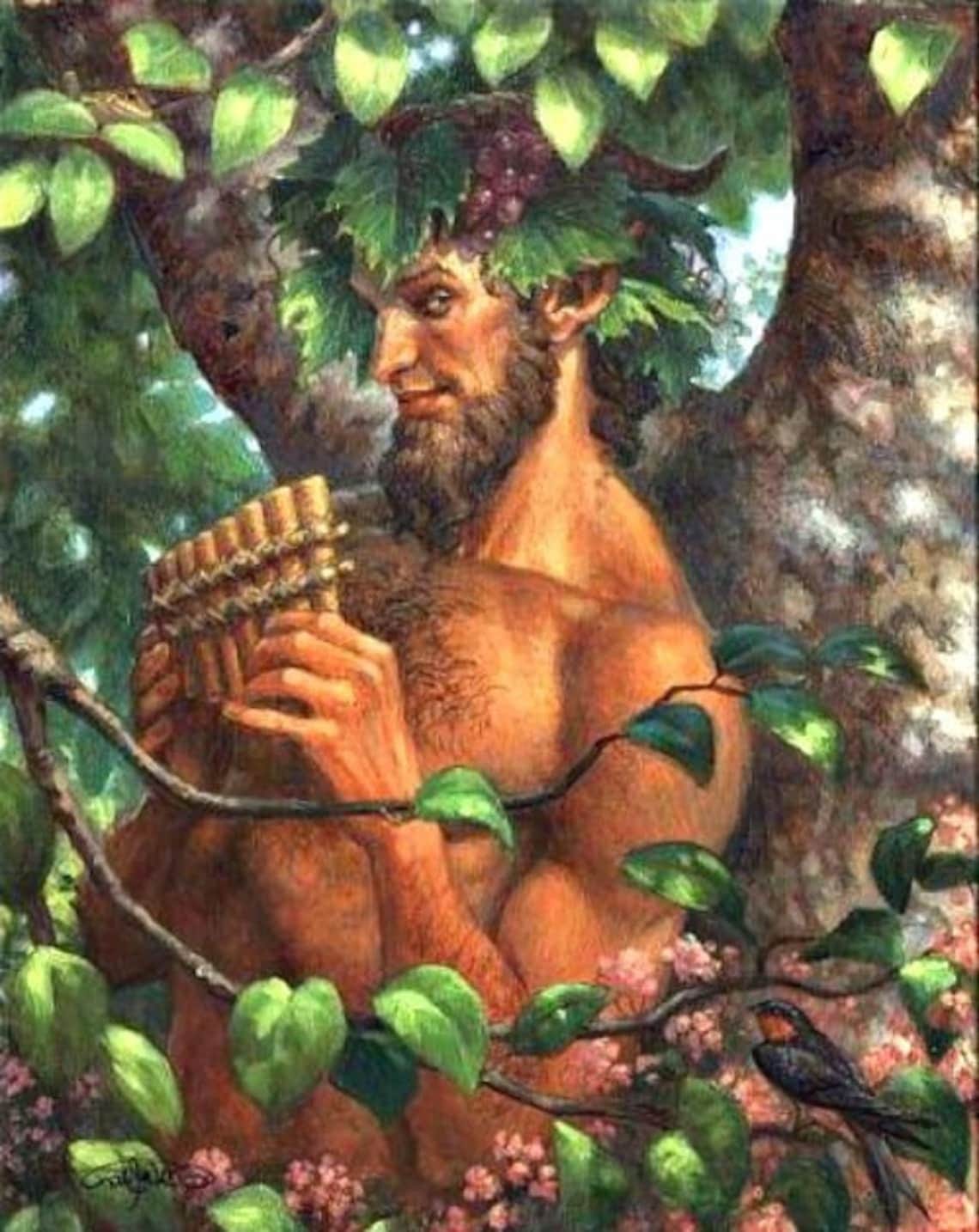
Image of Pan
For example:
The Beast in Beauty and the Beast, helps Beauty become more assertive, owning her “animal” nature. Thus, in the original French version of the myth, she is able to stand up to her sisters, finally owning her authority and not falling into the passive “good girl” role.
This same archetype is true of Red Riding Hood, who is able to own her own dark masculine authority by defeating the Wolf and saving her Grandmother.
Extreme examples of this pattern can be seen on a societal level with shows like You where women fall in love with literal serial killers, which is meant to serve as a satire for how women of all ages can be attracted to men who do horrible things in our society like the infamous serial killer Ted Bundy and yet still find him attractive.
Yet these stories are not for temptresses, they are for the “good girls” who need to reclaim their darker aspects, because it is through this confrontation with the dark masculine projection that they can reclaim their own Witchy aspects, the aspects I refer to as the “dark feminine” that make up the Goddess-Witch Spectrum™.
These women want the Prince Charming, but become tempted by the “bad boy.” Thus, through these fairy tales and smutty romance novels, they learn to embrace their own rebellious and “wild” characteristics, thus able to fully step into their power as women.
Yet for women, who already feel ostracized from patriarchal acceptance, dating the “bad boy” doesn’t do much for them because they have already confronted their own “dark” aspects through their perceived or felt social rejection.
For those women, they do not need a “bad boy,” werewolf, vampire, or alien monster to “awaken” them sexually, thus creating a metaphorical liberation. Instead, these women need care and compassion. They need the “light masculine” to embrace and accept their inner darkness.
The Cailleach
As part of my upcoming book, I interviewed a shamanic healer who told me about one version of the Myth of the Cailleach. This individual, who goes by they/them pronouns, discussed how in one version of the Welsh myth, it was said that whenever a village would crown a new king, the Cailleach would come visit him in her “grotesque” hag form. Thus, the king would have to “accept” her in order for her to permit him to rule the land.
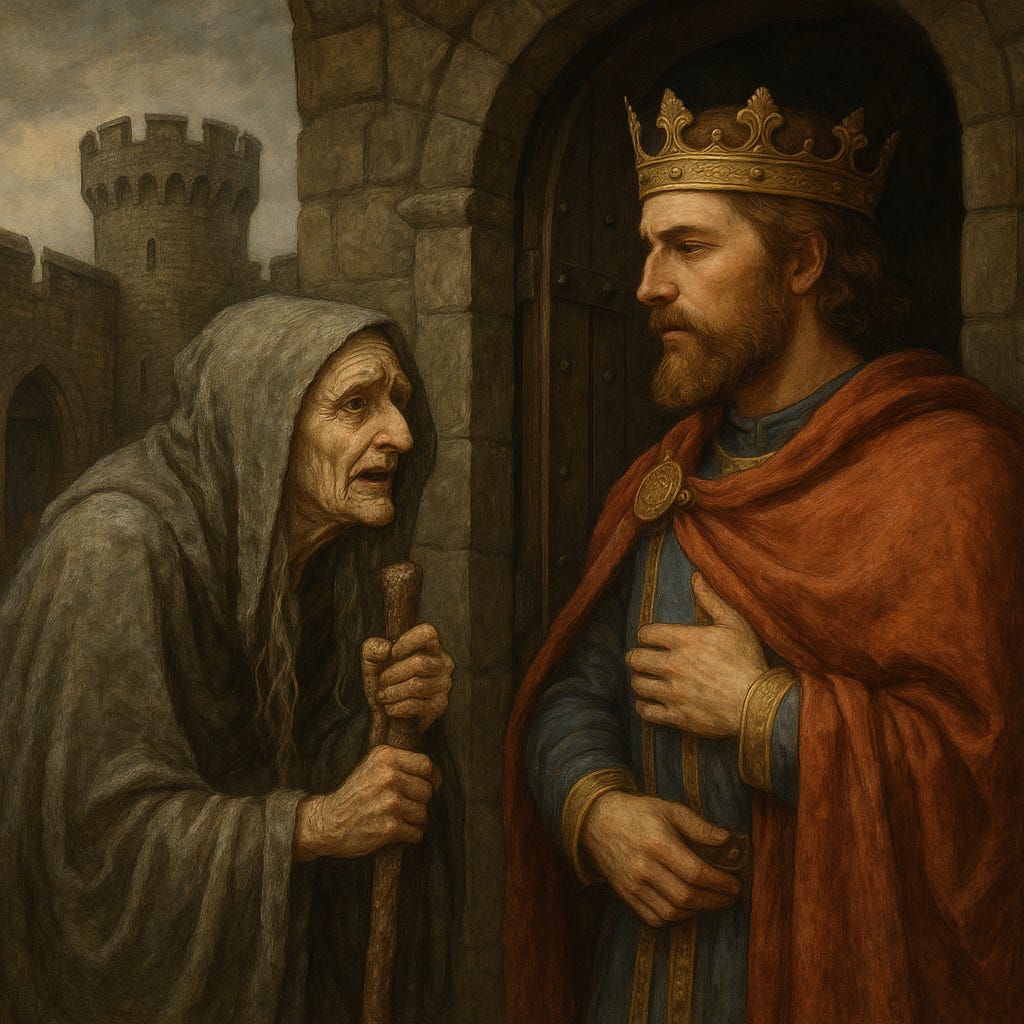
AI image of the Cailleach visiting the new king
If the king turned her away, he would become a bad and unjust ruler and suffer for his rejection of her. Causing his people to turn against him.
If the king accepted her and gave her food, wine, and shelter, he would be permitted to rule, but his kingdom would not prosper.
But if he truly accepted her, beyond just her appearance, and took her into his bed, the Cailleach would wake up transformed into a beautiful Maiden, whom he would marry, and his kingdom would flourish as he lived a long and happy life.
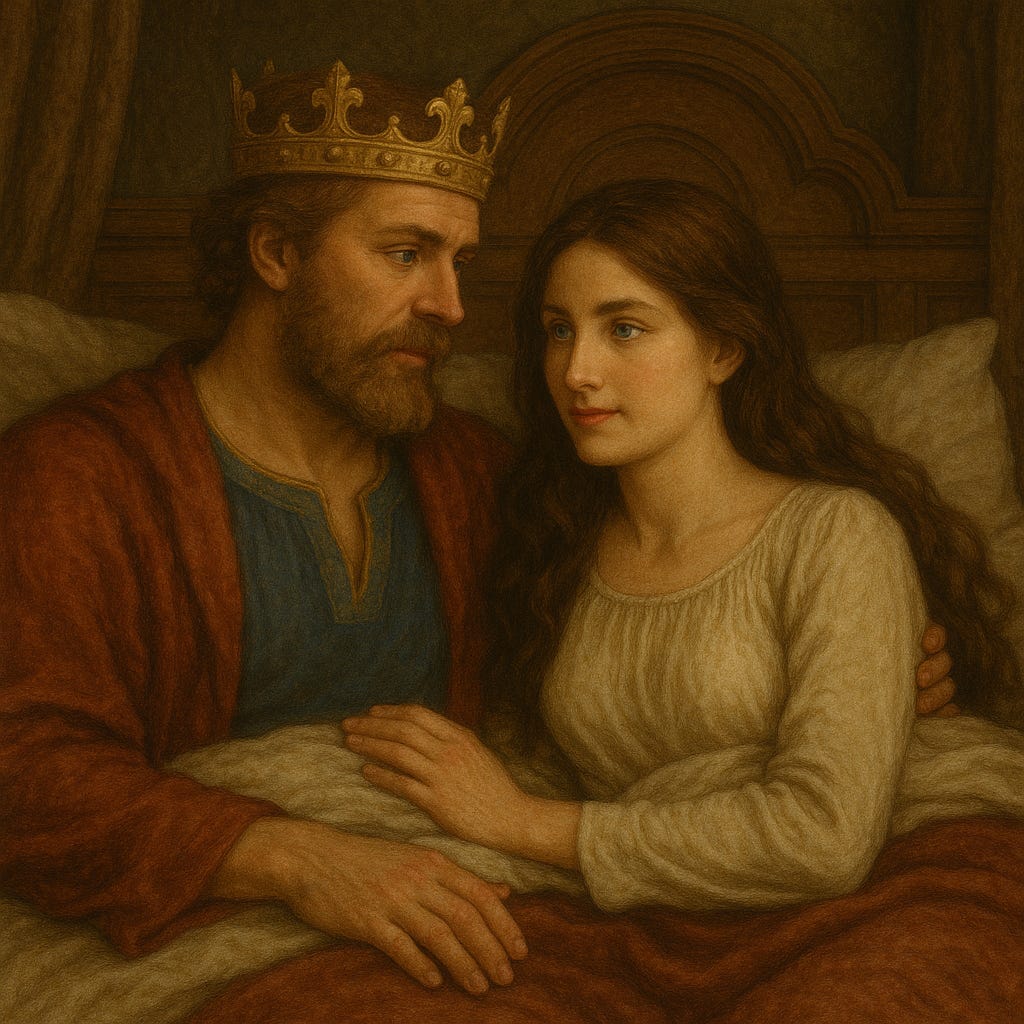
AI-generated image of the Cailleach in her maiden form
Thus, the Cailleach in this story represents the love story of the Temptress. It is in her “grotesque” form that she must be accepted first before she can become the beautiful maiden. If the king or man she has chosen can meet her at her darkest and embrace her without running away, she will then feel safe enough to “bless” him with her lighter aspects.
Which reminds me of another Irish/Welsh story. The story of Mis which Dr. Sharon Blackie has written about on her Substack and in her book If Women Rose Rooted.

Mis’ Story
To summarize the story, Mis is a princess who watches her father and brother be murdered in battle. As a result of her trauma and grief, Mis runs away to the hillside where she is transformed into a “beast” or wildling creature. Thus, the new king, wanting to put a stop to Mis’ wild rampages on his village, seeks the help of several young knights to “tame” Mis, promising that if they can do so, they can have the former princess as their bride. These men, fueled by their Ego and the desire to “conquer” as princesses, attempt to quell Mis through brute force and willpower.
Which is not unlike how modern men are told to pursue women by embodying “alpha male” mannerisms - attempting to “dominate” women into submission.
Yet, Mis devours all these men, thus turning her effectively into another type of Temptress – the gorgon or dragon, the Prince must defeat in order to “save” the princess. (Since, often in those fairy tales, the evil dragon or beast who guards the Princess is actually a metaphor for her own shadow aspect.) Thus, no man is able to tame Mis, and she continues to live in the forest, becoming further disconnected from her own humanity and light aspects.
Yet one day, the poet Dubh Ruis’ visits the king and asks to see if he can convince Mis to return to civilization with him. At first, the king, believing that Mis is beyond saving, warns Dubh Ruis of the dangers of this quest. Yet, despite this warning, Dubh Ruis’ believes he can help Mis and seeks her out in the forest.
As he approaches Mis, who is hiding behind a bush, he stops, sits down, and plays his flute, simply serenading her with music. Mis, in response, does not attack him, but rather remains hidden, listening to his beautiful melody. On the second day Dubh Ruis’ visits Mis, he brings with him some food and wine, which he sets down on a napkin next to him as he continues to play his music. Mis, intrigued by what Dubh Ruis’ has to offer, emerges from her bush to eat the food and taste the wine, but does not touch or approach Dubh Ruis’. On the third day, Dubh Ruis’ brings, his flute, the food and wine, and some coins with him. Again, Mis comes out of her bush where she has been hiding to taste the food and wine and listen to the beautiful music. Yet as she approaches where Dubh Ruis’ is sitting, he holds out his hand to her, offering her the coins, which remind her of human civilization and her dead brother and father. As she sees the coins, she begins to weep, falling into the lap of Dubh Ruis’ as he strokes her head, comforting her.
After Mis has grieved her father and brother’s passing and is reminded of her own human nature, is transformed back into the princess form and marries Dubh Ruis’, living happily ever after.
While I have adapted this story slightly from Blackie’s original telling of it, I believe this story holds much archetypal significance in our modern era, regarding women’s dating experiences. I believe we are living in an era where more and more women are becoming in touch with their rage, anger, and “dark feminine” or Witch aspects than previous generations of women had the freedom to access. As a result, women (myself included) are becoming like Mis and the Cailleach, yet modern dating coaches, movies, and love stories have not adapted to understand women’s dating experiences. Instead, they continue to perpetrate love stories that center men, where the knight must “rescue” the princess and disown her dark feminine aspects. These stories only work for women who have not owned their dark feminine power yet, which is why the divide between men and women in the dating world is only becoming greater.
Women do not want the knight in shining armor, because we have been damaged and traumatized by the patriarchal systems that created him. Instead, we want the man who can meet us in the dark, in our depths, who isn’t afraid of what he might find when he confronts the Temptress.
Modern Dating and the Temptress
As I mentioned above, the movies I secretly loved to watch as a child and young teenager reflect this shift among women.
In Pride and Prejudice, Elizabeth Bennet is intelligent and headstrong. She is given the reputation of being a “difficult” woman in comparison to her sister Jane, who represents the ideal “light feminine” or the Goddess archetype. Her headstrong nature both annoys and intrigues Mr. Darcy, who ultimately, through what can be described as an enemy-turned-friends relationship, offers aid to one of Elizabeth’s other younger sisters, thus saving her family from ruin and revealing his care and true feelings for Elizabeth. This story is an example of how often, for the Temptress, friendship is needed before the potential for love to develop.
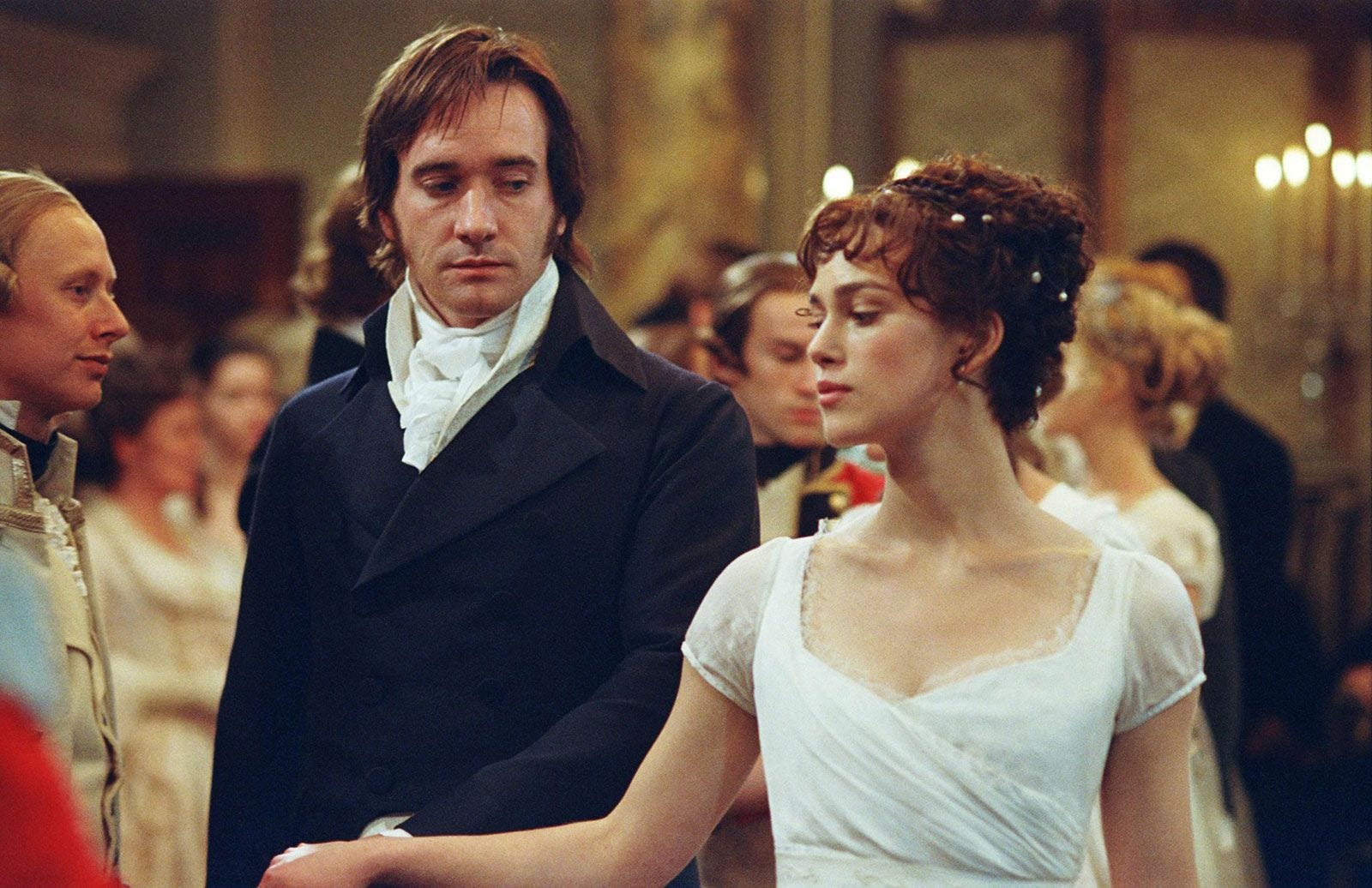
Pride and Prejudice
We also see this pattern in 10 Things I Hate About You, which is loosely based on Shakespeare’s Taming of the Shrew. Both of these stories paint the female protagonist (played by Julia Styles in the movie) as a “Witchy” woman or “Shrew” who is disagreeable to men. Yet, as the male protagonist (played by the late Heath Ledger) continues to pursue her due to a bet he has made that he can “tame” her. However, over time, Ledger’s character gradually comes to respect Style’s character as an individual, developing a close friendship with her, which eventually turns into honest and genuine love for one another. In addition, throughout the movie, Ledger comes to understand how Style’s “shrew-like” behavior developed through her own previous negative experiences with men. Thus, he is able to show her compassion and understanding, seeing her as a full, complex human being.
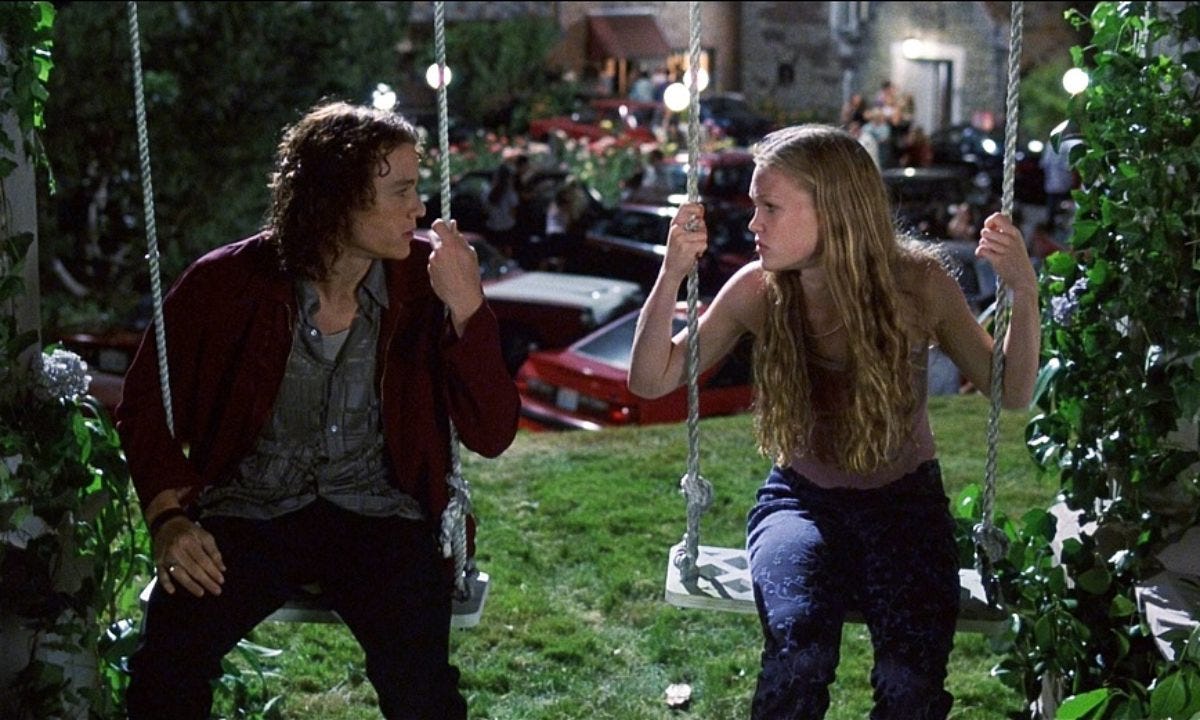
10 Things I Hate About You
The same is true for Buttercup in the Princess Bride. At the beginning of the movie, she is nothing but mean to her family’s farm boy, Wesley, whom she orders around, demanding he do tasks she can easily do herself. Yet the whole time, Wesley responds with “as you wish,” indicating that no matter how much of her “Witchy” side Buttercup reveals to him, he will still accept her as she is. Which then develops into mutual feelings of love for the two of them.
The three common themes of these movies are friendship, understanding, and acceptance. These things take time to develop, and yet, many men believe that if they are fulfilling the role of the knight, they will receive these qualities from women unconditionally.
Yet what many men don’t realize is that most women have become like Style’s character in 10 Things I Hate About You or Elizabeth in Pride and Prejudice. Thus, they don’t fully fit into the “light feminine” archetype of the Goddess, or have come to realize that it is not their only aspect. When in truth, women have been harmed by their experiences with men, those within our family systems, past lovers, and even the broader society, which constantly makes us feel unsafe and threatened.
The truth is, women are traumatized, and as a result of that trauma, we become shrews and Temptresses to protect ourselves.
Confronting the Trauma of the Feminine Experience: How Men Can Help Women
In the latest season of Squid Game, without giving away any spoilers, there is a scene where characters 222 (played by Jo Yu-ri) and 456 (played by Lee Jung-jae), stare across from one another while above them there are giant statues of a Korean girl and boy “playing jump rope. Yu-ri (222) stands on the side with the girl, and Jung-jae (456) is next to the boy.
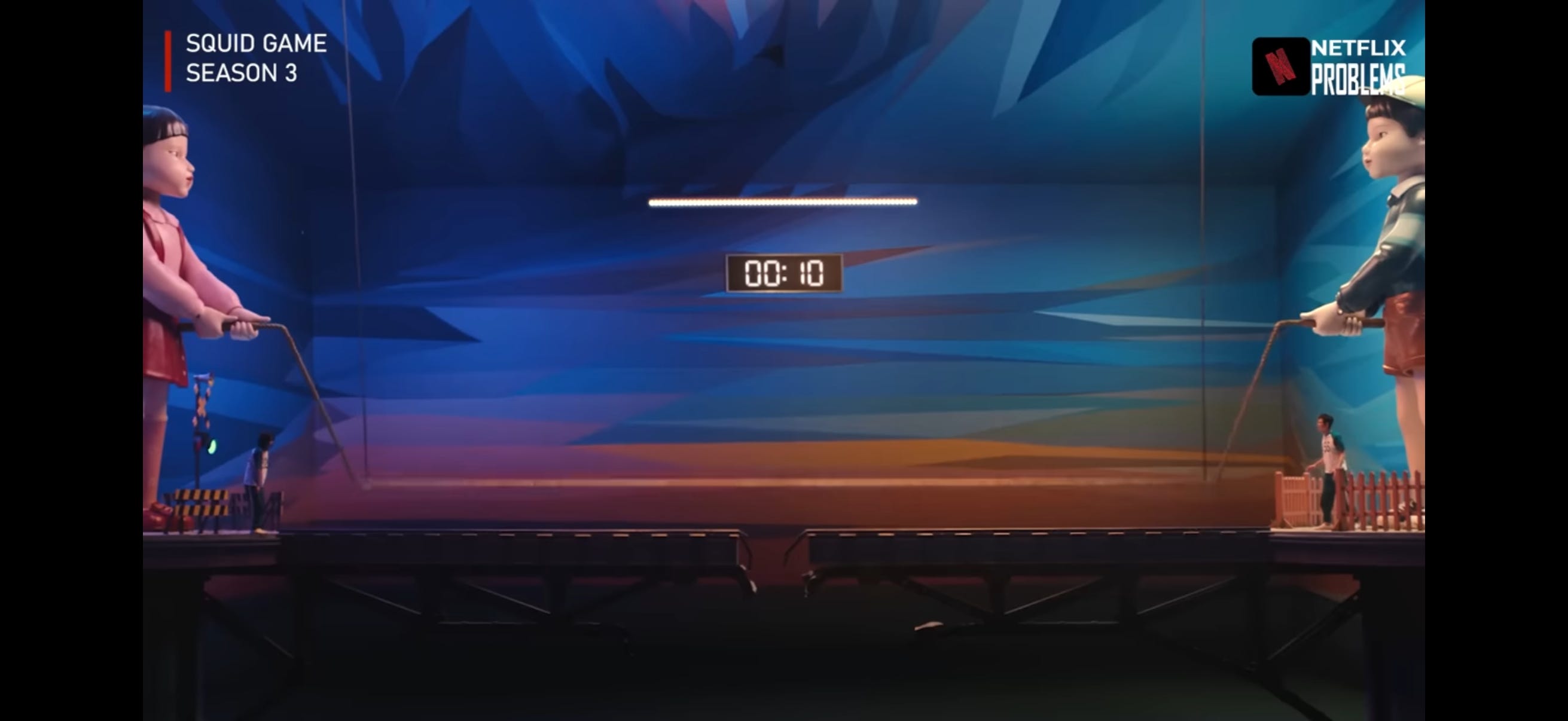
Squid Game Netflix
This scene is haunting and tragic for many reasons, which I will not reveal here, but what struck me was the imagery of this moment between the two of them and how it speaks to our collective understanding of men and women. As children, we learn to become divided as men and women, but we begin playing together. Boys and girls, play jump rope and all sorts of games together, we are able to communicate and understand one another because we see each other as humans.
Yet, over time, as the broken bridge illustrates between the two figures, we become divided and at war with one another. We forget how to be “friends” with one another and view the opposite sex as an object to conquer. Men idealize women and turn them into Goddesses or Witches when they don’t fit within their perception of what a woman “should be.” And Women do the same thing to men. Idealizing men into their “Prince Charming” for a chance to be chosen, or seeing them as “bad boys” or “bad men” who are dangerous and out to get them.
When the truth is, we all have these light and dark aspects within us.
Perhaps that is why the Temptress and the Witch archetype have become more frequent and reactivated in our collective consciousness. Like the Cailleach, she is the “truth teller” she reveals our hidden desires and instincts, the parts of us we avoid or attempt to keep in the dark. Yet, without embracing her, there would be no foundation of friendship. She brings the dark to light, not to cause men’s or our destruction, but to offer the chance to be accepted and understood.
To bring us back to our more innocent version of ourselves, where the world wasn’t so complex and misunderstood.
OX
Your Dark Fairy Godmother