

Is it a Fetish? Or just the Goddess-Witch Spectrum?

The word fetish itself has a fascinating history...According to Merriam-Webster, the word fetish first appeared in English in the early 17th century, and it was used to refer to objects or amulets worn by Indigenous West Africans, which were believed to have supernatural powers. Thus, from the beginning, it seems as though the word fetish was always used to describe an object that contained a mystical-like power over an individual.
It was not until the 19th century that the word took on a broader meaning and was later defined as "an object of irrational devotion or reverence." Yet, even with this definition, the object was not physical or sexual. A person could have a fetish for an idea, a creative project, a belief, or a particular religious dogma or political ideology, which they would become captivated by and obsessed with. In a sense, the fetish was the experience of becoming so caught up in rapture with the perceived mythical object (the amulet, the idea, or belief) that it would cause an individual to lose themselves in pursuit of it.
Eventually, by the early 20th century, fetish took on yet another meaning, which set it drastically apart from previous definitions. Fetish became known as: a sexualized desire for an object (such as a shoe) or for a body part that is not directly related to the reproductive act (such as a foot).
This is by far the most common and accepted definition of the word today. Made famous by film directors like Quentin Tarantino, who has never been shy about his obsession with women’s feet on screen.
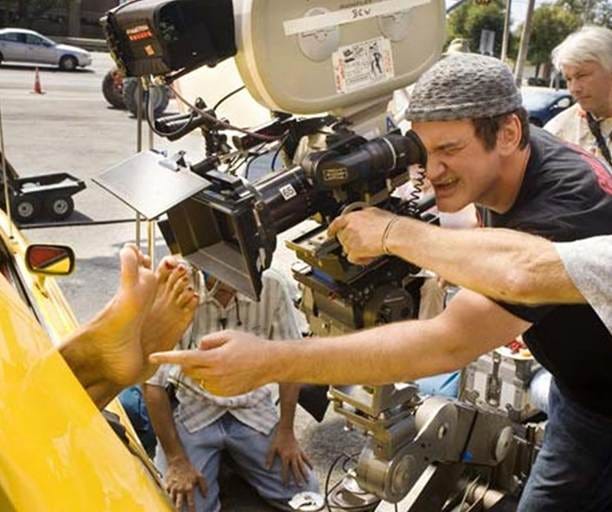
Tarantino on Set for Once Upon a Time in Hollywood
While it is perhaps easy to write off Tarantino’s alleged foot fetish as harmless. (Though given his association with Harvey Weinstein, one does wonder about the company one keeps.) In today’s society, it seems as though for many pornography consuming men, the word fetish no longer pertains to a body part or clothing item, and instead, can refer to women themselves.
Which begs the question…when does a fetish turn into objectification? And when is a fetish just a cover-up for men’s internal split of the Goddess-Witch Spectrum™? Often known as the Madonna-Whore Complex.
The Internet is for Porn
Let's be clear about one thing: this post is not anti-pornography. As a former clinical therapist and Counselor Educator who used a sex positive approach to treat sexual concerns with her clients; I don’t think porn is the enemy. In fact, I believe the act of creating pornography is very human.
From prehistoric cave art depicting sexual acts, to Mesopotamian vases, Greek and Roman graffiti on walls of temple ruins, the Kama Sutra, even hidden double entendre in Shakespeare’s great plays, porn is everywhere. No wonder it is all over the internet.
Which is the theme of the Song sung by the character Sully in the hit off-Broadway musical Avenue Q:
This song is intended to offer a humorous reflection on how humans often take technology and then find ways to distort it for their own viewing pleasure. Which begs the question, if porn is so embedded into our human consciousness, why is it that porn and sex itself has become so taboo? And what does it say about us as a society?
The Sacred and Profane
In 2018 Jungian Analyst Giorgio Tricarico published Lost Goddesses: A Kaleidoscope on Porn, in which he provides an in-depth analysis between technology, consumer culture, and the porn industry and how it reflects men’s collective shadow and their desire for the sacred or divine. Tricarico argues that modern porn is a distorted attempt to reconnect with the archetypal feminine through the form of the Goddess. Who, as I have discussed, represents men's idealized feminine qualities they wish to seek for themselves.
Thus, the goddess refers to the sacred and numinous qualities of sexuality. It is important to note that this is not just eros….eros is simply the spark of passion, the arousal of the animal instinct to fuck and procreate, if you will. Instead, the image of the Goddess represents a deeper, more soulful connection to another person and one’s body. An image that has been lost in an age of technological quick fixes, always looking for the next “high” or thrill, which can never be satisfied.

AI-generated image
Thus, in an attempt to find these sacred images and connect to their feminine aspects, men seek out pornography to fill this inner void. However, because in our society we do not uplift the feminine and favor the masculine above all, the image of the Goddess is repressed and distorted. Thus, she re-emerges, split from her core purpose through men’s experiences of the Goddess-Witch Spectrum™. Where men cannot reconcile that women can have access to both their light feminine qualities, such as empathy, wisdom, nurturance, beauty, etc., and their dark, witchy qualities, their raw passion, sensuality, anger, and more “devilish” instincts.
An example of this I can give from a recent conversation I had with a man, where, after discussing the film Kill Bill vol 1 and 2, the topic of Tarantino’s foot fetish naturally arose, I was informed of a common “fetish” within the gamer/comic/anime community online.
Amazons and Shortstack Women: The New Goddess-Witch Spectrum™
Unbeknownst to me, a new adaptation of what psychologist Sigmund Freud first identified as the men’s Madonna-Whore Complex has emerged, which I have deconstructed and relabeled as the Goddess-Witch Spectrum™, in order to center women and approach this dichotomy from a more empowering feminist perspective.
Yet while the terms and characters within this spectrum might be new, the concept of splitting women into “good” and “bad” aspects of the feminine still remains, which is at the core of the Goddess-Witch Spectrum™.
So, let’s start with the bad or the dark feminine for a change. If you’ve been following my Substack for a while, this is the Witch, the Temptress, the “Other Woman,” or also now known as the Shortstack.
The Shortstack
According to Google and my deep dive on Chat GPT on this subject, a Shortstack “fetish” is a sexual attraction to short, voluptuous women that often appear highly sexualized in hentai, adult comics, and other fantasy fandom artwork. From what I can gather, the term likely began as slang in online communities like DeviantArt and 4chan around the late 2000s-2010s and was a take on the term to describe a small stack of pancakes (AKA: A short stack), meaning that an individual, or rather a woman, was “short and stacked.”
This term is similar to other terms used to describe voluptuous women who are often highly sexualized for their curves, such as “thicc” or “bbw,” which are used by porn sites to identify “fetishes” of viewers who wish to watch larger-bodied women engage in sexual acts.
However, one key distinction stood out to me about Shortstack fandom in particular. While these women are often short, curvy, with wide hips and big breasts which reflect human female attributes like their thicc and bbw counterparts, they are often not depicted as human. Which, in a way, reveals the unsettling truth behind this “fetish,” which indicates it is, in fact, the Witch archetype, which has been used to dehumanize women for centuries.
These characters who fit the “Shortstack” archetype are often depicted as dwarves, goblins, or halflings, though the occasional human does exist. However, what concerns me is that these characters are frequently reduced to their “animalistic” qualities, as they are perceived as being closer to animals from the gamer's perspective (who is usually male, though not always). Thus, given their animal or “wild” qualities, it is easy for men to project onto them their own shadow impulses of their dark feminine aspects. (i.e. what Jung refers to as the Shadow and Freud the Id.)
They represent the depraved feminine, the wild, untamed feminine, the lustful object, they can use for self-pleasure, the halfling on their journeys who represents their sexual awakening, much like the temptress. She is meant to be “fun” and an erotic and exotic “experiment,” but she is not intended to be human, or the Goddess…who is taken by another feminine body type, the Amazon.
The Amazon
While perhaps not every man views the Shortstack body type of a woman as an object, there is an ongoing lively debate in online chatrooms, often referred to as “Shortstack supremacy” vs. “tall Amazon women” as ideal fantasy partners.
While I was not comfortable including many of the photos I found representing these two archetypes for obvious reasons…I did find one that was semi-appropriate to give my readers who are unfamiliar with these archetypes a demonstration.
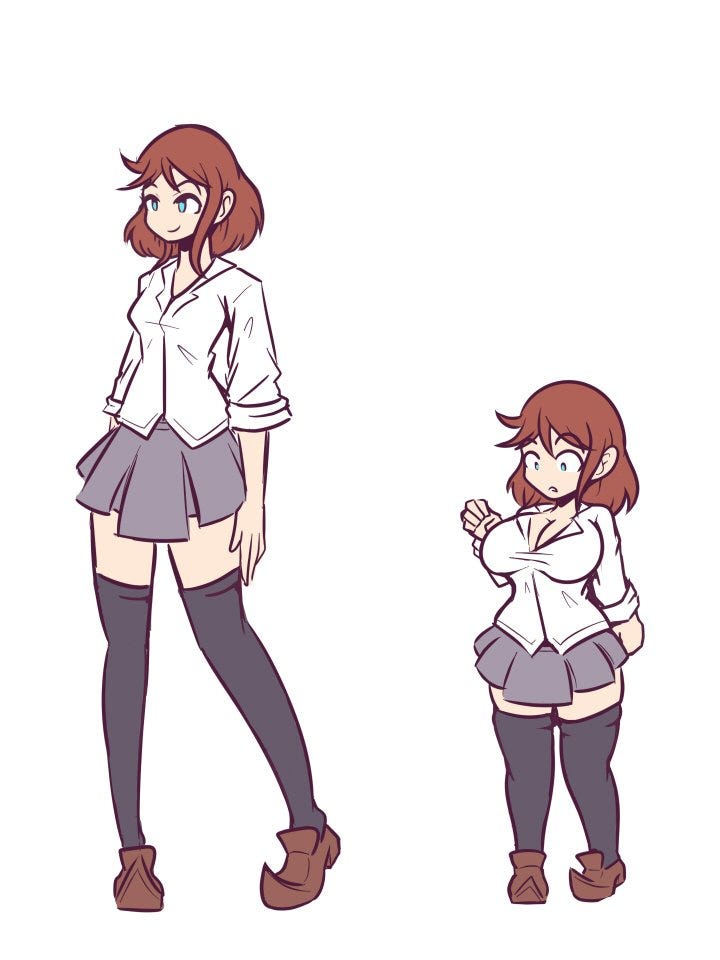
The Amazon archetype (left) and Shortstack (right), image artist unknown.
As you can see from the image, the differences between the two women are apparent and extreme. And where extremes lie, the Goddess-Witch Spectrum™ is always hidden.
The Amazon Woman is tall, perhaps muscular, but generally thin and statuesque. She is confident, protective, and, above all else, elegant, which sounds very similar to another word used to categorize women — demure. She is often depicted as a strong/powerful figure, who is sometimes dominant and yet also maternal in a way, thus linking her to the Goddess or the Virgin Mary/Madonna archetype. Hence, the association with mythical figures, such as the Amazons, Valkyries, and other warrior women.
What is also interesting about this archetype is that there seems to be a fantasy among men to “overpower” or care for these strong women. Which feels oddly similar to how men would idealize Queens and other “noble” women in courtly culture in an attempt to “win” their favor.
Thus, she represents the ideal archetype, the light feminine who is pure, queen-like, a powerful, chaste leader who is respected. Much like the gnostic notion of Sophia, who is thought to be the wife of God in some Christian circles:
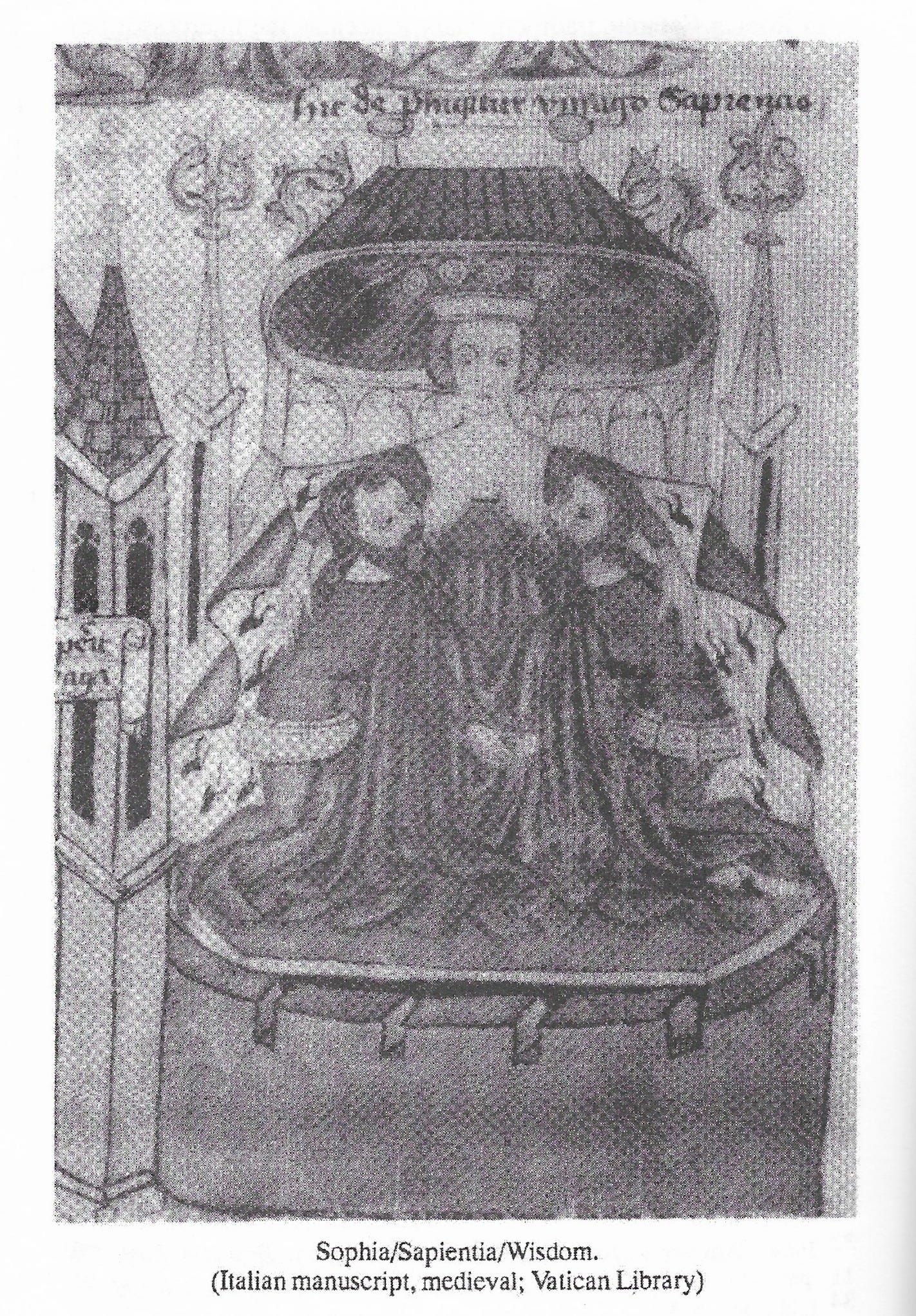
Take from the book Sacred Prostitutes by Nancy Qualls-Corbett
She represents the ideal for the hero (or man) to achieve, given her Goddess status, and thus is seen as the object that will bring him salvation. A womanly embodiment of the Holy Grail, which is said to be a metaphor for the yoni. As the Goddess Sophia is seen here “nursing” two clergy men, yet somehow, we are supposed to believe that this pornographic image is not sexual…?!
And that is in of itself the myth of the Goddess, that a woman could be so “pure” she would not realize the sexual, life-giving power of her womb. Whereas, the Witch, the Shortstack in this case, already knows her power and owns it. Her womb is not meant to be conquered by some man or fandom on the internet, which is why men have to turn her into goblins, monsters, and make her inhuman.
A ” fun-sized” toy to him to see as mischievous, overtly sexual, and “bratty” so that he can explore is uninhibited pleasure, leading him into chaos as the Witch archetype so often does for men.
The only difference here between these archetypes and Freud’s original notion of the Madonna-Whore is that the Amazon is still a sexual being, like this image of Sophia. Yet, her sexuality is seen as more “sacred.” Where the hero is awed and subdued by her power and elegance, which feels transcendent and humbling. Versus feeling overwhelmed by his passions ignited by the raw indulgence of the taboo nature of his fantasy of the Shortstack/Witch.
Yet the irony is, both of these women are the same. They are both Goddess and extreme aspects of the feminine. The Goddess is just as mystical and alluring as the Witch, and the Witch is just as powerful and sacred as the Goddess.
Which we can see reflected in Neo-lithic Goddess statues which look uncannily similar to the body of the Shortstack archetype pictured here:
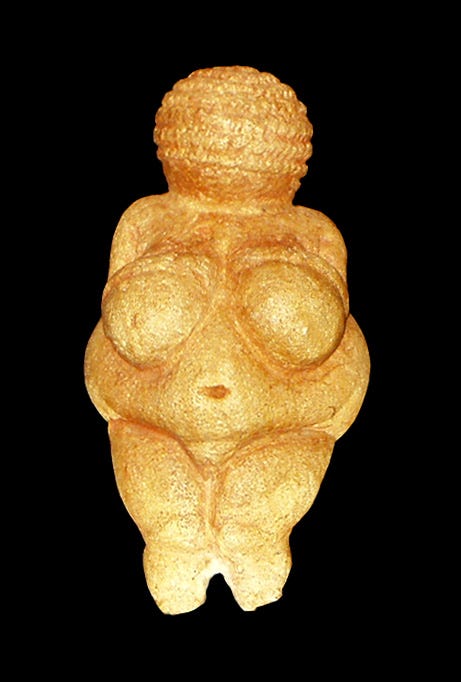
Venus of Willendorf
Thus, it begs the question, which one of these women is really more sacred or profane than the other? When the truth is every woman, regardless of her body type is the Goddess incarnate.
Sacred Prostitutes
I began this post discussing the origins of the word fetish and how it was initially used to describe something sacred, that contained mystical-like powers by Westerners upon their interactions with the Indigenous people of West Africa. Unfortunately, in the West, patriarchal and overt bias towards the masculine has a way of polluting and distorting the sacred. Western men, and most modern men across the world, cannot understand the sacredness of sex. The sacredness of the womb, the yoni, and the feminine.
They do not understand the rapture of being consumed by the power of giving oneself over to the feminine, which is what the Witch archetype represents. So they distort it, which manifests in the archetype of the controlled hyper-light feminine, which represents idealized masculine qualities of the feminine on one end (The Amazon/Goddess) and on the other, wild, free, uninhibited, ecstasy of the dark feminine (The Shortstack/Witch).
One is his sacrament, the other his drug and addiction.
Yet so often, addiction hides that which we hold sacred, yet have not learned how to attain.
I believe porn addiction and images/stories of pornography alike are what Tricarico suggested, a desire to return to feminine sacredness. Prior to Tricarico’s book, Nancy Qualls-Corbett, another Jungian Analyst, wrote about the history of the Sacred Prostitutes who were not in fact prostitutes, but priestesses of the Goddess. These women were thought to be the Goddess incarnate during pre-Christian societies and were revered and honored as such.
However, unlike the Goddess archetype we know today, who is still seen as pure and chaste, and thus the sex is controlled and viewed as “holy,” the priestess embodied both of their Witch and Goddess aspects. Qualls-Corbett notes that the priestess would invite a chosen man into the temple, where he would be given food and wine, and dancing would ensue, allowing him to strip away his ego and surrender to his inhibitions. After some time, the priestess and chosen individual would retreat to her bedroom (or maybe even the temple itself), and they would engage in the sacred act of sex to appease the Goddess.
Yet this sex act was vastly different from our understanding of prostitution and pornography, since rather than center the man’s pleasure, both the priestess and the man were expected to enjoy themselves. Since it was thought that this sensual, free expression of pleasure would bring one closer to the Goddess. Thus, modern porn completely misses the mark here; sex was never meant to be something that just centered the male experience, it was always meant to embody the feminine. It was meant to honor the Goddess and the Witch, who are truly one, in the same.
Reclaiming the Sacred in Sex and the Feminine
While I could make the argument that sex and the art of sacred prostitution can represent a fetish and the pursuit of the mystical in accordance with the original definition of the word, the way we use this term in our modern society does not reflect this notion. It is instead a pollution of something sacred and a way to reduce women down to objects centered around men’s pleasure.
Sex was never meant to be dirty, taboo, or bad; it was always meant to be a way to foster deeper connection and intimacy with another. For both individuals (regardless of gender) to experience the power of the feminine. Thus, it is not until our modern men realize that the Goddess they seek is just the Witch with a different face and body, and vice versa, that they will be able to integrate their inner Goddess and Witch aspects, and reclaim their own relationship to the feminine.
OX,
Your Dark Fairy Godmother
For those of you interested in learning more about the Goddess-Witch Spectrum™, I am hosting an on-demand 4-week course for women on how to integrate your inner Goddess and Witch. The course is $44 and new modules will be released each week. Check it out here to purchase:
If you enjoyed this post, please be sure to like and share it! Also check out my podcast on the Goddess-Witch Spectrum here:
Resources/Reference:
Merriam‑Webster. n.d. “Fetish.” Merriam‑Webster.com Dictionary. Accessed July 28, 2025. https://www.merriam‑webster.com/dictionary/fetish
Tricarico, Giorgio. 2018. Lost Goddesses: A Kaleidoscope on Porn. London: Routledge.
Qualls-Corbett, Nancy. 1988. The Sacred Prostitute: Eternal Aspect of the Feminine. Boston: Shambhala.