

One Video: Two Different Experiences
What we can learn from Blake Lively and Justin Baldoni Feud

*UPDATE* I made this post before I heard the news regarding Trump’s executive order declaring that the United States government will only recognize two sexes (male and female). I want to make it clear to my LGBTQ+ supporters that I do not support this ruling. Moreover, my reference to trans-women in my post was to highlight the lack of understanding between trans and cis-gender women and how this misunderstanding is rooted in misogyny and the sexism cis-women experience through their gender role socialization. No one, regardless of their sex or gender expression, should feel unsafe or unable to fully express themselves. It is this harmful rhetoric that led me to create this post in the first place, to look at the divide between men’s and women’s experiences, which has perpetuated binary thinking in our country, which keeps us all divided. To all my readers, especially those who identify as part of the LGBTQ+ community, please know you have my support and solidarity. XO Dr. Michelle
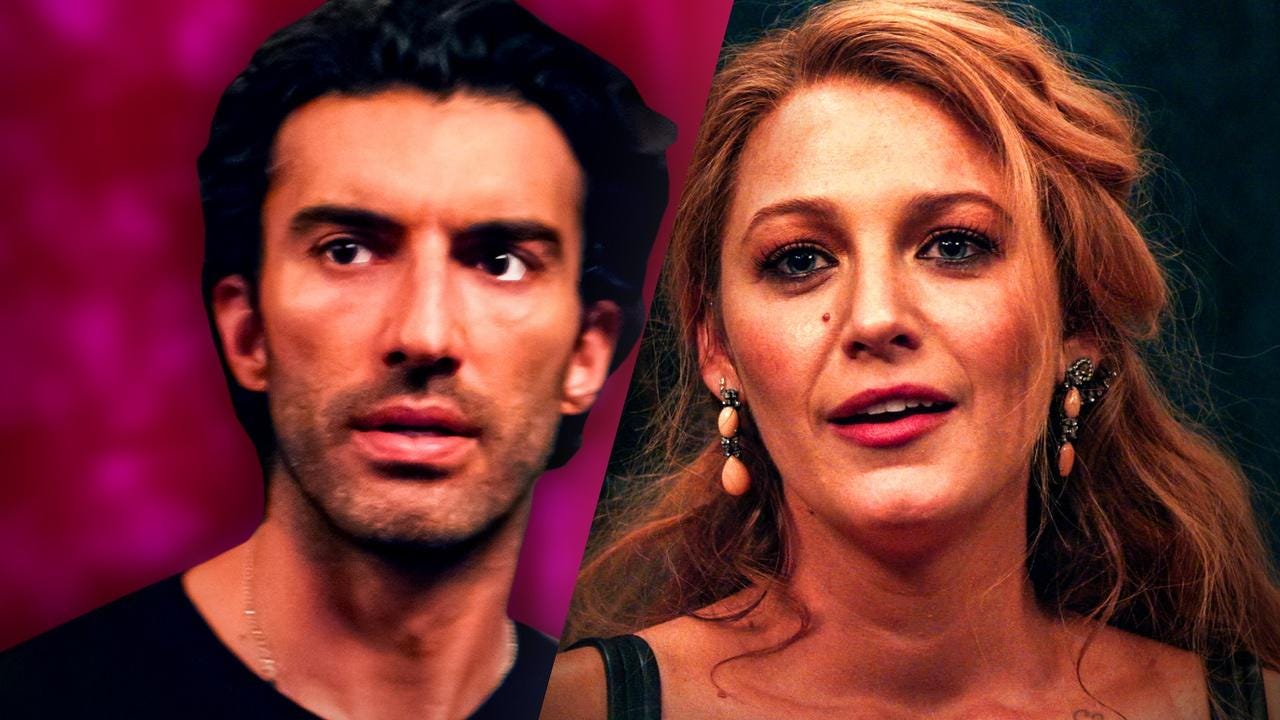
A couple of weeks ago, I posted about the lawsuit Blake Lively filed against Justin Baldoni, accusing him of sexual harassment and creating a hostile work environment. As if this feud between these two actors couldn’t get any messier, Baldoni has filed a countersuit against Lively, accusing her of defaming his character. Moreover, he has now released the raw video footage of a scene Lively references in her lawsuit where she describes feeling uncomfortable by Baldoni’s actions, namely that he attempted to repeatedly kiss her despite her asking him not to do so and stating that she “smelled good.”
Here is a video from CNN providing a brief overview of the footage.
What is “the Truth?”
While I am not a lawyer, and I want to refrain from scrutinizing either Lively or Baldoni’s case, I believe this video highlights a commonly understood phenomenon between cisgender men and women, which is that even though there is a factual account of what transpired between these two individuals, their unique individuals' perspectives of the event can be extremely different.
This is because each of us contains within our psyche our own experience of the world (or worldview), which can vary based on our experiences throughout our lives. In other words, Lively, having been raised in a cis-gender female body, is not going to have the same experiences as Baldoni, who was raised in a cis-gender male body. Their understanding and perspectives of what occurred that day is going to vary differently based upon their gender role socialization as well as their race or cultural experiences as well. Baldoni, who is of Italian and Jewish descent, has likely experienced some form of discrimination based on his cultural heritage despite his ability to pass as a cis-gender white male, which comes with many levels of privilege. Lively has likely also experienced privilege due to her white Anglo-Saxon background. However, she shares one identity that is still highly marginalized within the United States and larger collective. Her identity as a woman.
I write all of this because I think, as a nation, it is time that we admit an uncomfortable truth. We are horrible at not only attempting to understand women’s gender role socialization or lived experience, but we simultaneously discount their validity, especially when a man directly opposes their experience. Meaning that I believe that it is fully possible that both Baldoni and Lively believe that their experience of what occurred on the set of It Ends With Us can be both valid and authentic for their worldview and psyche while also simultaneously directly opposing the other's experience.
Baldoni likely believes he did nothing wrong in this scenario, and I am positive that many men and maybe some women would agree with him. I also fully believe that Lively is telling the truth about what she experienced as well. Both are true. In the words of Friedrich Nietzsche "There are no facts, only interpretations."
With this statement, Nietzsche is arguing that what we consider "truth" is shaped by human interpretations rather than being an objective reality. In other words, it is shaped by the reality of our psyche at any given moment, which responds to current life events in our present based on our past history. All of us are biased. Thus, there is no such thing as a black-or-white objective truth. No matter how hard we might want to paint someone in the collective as the “villain” or “hero.” Now, of course, there are extreme examples of this, such as in cases of genocide or SA. Still, even within those experiences, the individuals who complete these horrendous acts are likely responding from a place of their own trauma, which has distorted their reality through the use of maladaptive defense mechanisms.
Lively v. Baldoni
Bringing this back to Lively and Baldoni, when I watch the video as a woman who was raised in a cis-gender body and has experienced sexual harassment/stalking on several occasions in my youth, Lively’s actions to me do not indicate someone comfortable in that interaction. Instead, I believe she was engaging in a fawning response because she likely felt that she needed to appease Baldoni’s ego due to fear of how he might respond if she was more assertive with him. Repeatedly throughout the video, she makes comments about how she thinks the scene would be more “romantic” if they were just talking and dancing as opposed to kissing, likely indicating that she did not wish to be intimate with Baldoni but wanted to maintain a level of professionalism. Moreover, you can see how she moves her face away from Baldoni or looks away when he attempts to kiss her, likely showing that she did not feel as though she could refuse his advances and yet did not wish to engage in these interactions. If you are a cis-woman who has ever been on a date with a particularly pushy man, you have likely experienced this same double-bind as well.
I myself have reluctantly kissed men good night on a first date, not because I wanted to, but because I felt cornered and trapped into doing so and as if it was something “expected” of me because of my gender. I am also positive that probably 80-90% of these men believed that I wanted to kiss them because they were unable to read my social cues of uncomfortability and awkwardness, just as Baldoni appears to lack an understanding of Lively’s social cues in the video. You can see from the video that Baldoni is laughing and leaning into Lively as she leans or moves her head away. He also attempts to kiss her ear, forehead, and cheek because he believes his playing the part of the romantic partner, despite Lively asking him not to kiss her, stating, “don’t give it to them,” meaning she wanted to delay the kiss for the audience to feel like the chemistry was building throughout the scene. Which again was probably her attempt to gently reject Baldoni’s advancements without bruising his ego as so many women are socially conditioned to do.
What does this say about us as a collective?
I’m not sure what will transpire with this lawsuit, but what I can say is that I think this lawsuit is less about “who is right/telling the truth” and is more of a reflection on the divide that is currently happening between men and women. Women, out of protection, learn to understand men’s experiences. We are bombarded with it. It’s in our religious intuitions, in the books we read at school written by men, most of the movies and television shows we watch. However rarely do men read books or watch movies or TV shows written by women. Because of their privilege, they do not have to. Just as many White people fail to understand the lived experiences of people of color because they don’t consume media that portray their stories in a positive and uplifting manner. Men are severely lacking in their understanding of what it means to be a woman and to be raised in a woman’s body. It is this lack of perspective-taking and overt sexism that I believe is, in part, why so many cis-gender women struggle with accepting trans-women's perspectives on their own femininity. As we have witnessed by the number of women who elected to vote more conservatively in the last election despite women’s rights still being at jeopardy through the overturn of Roe v. Wade.
This is because cis-women do not feel heard by men in their lives, so when an individual who was raised in a male body and had certain privileges that came from having a penis (even if they did not wish to have one) is perceived as telling cis-women “what it means to be a woman,” it can be very upsetting to cis-women. Because even though trans-women might perceive they are supporting all women, they do have not the same gender role socialization experiences that cis-women have. They have not experienced the shame women often feel about their bodies or gender during childhood, well before they reach the age of puberty. How cis-female girls are socialized to be quiet and pleasing, causing them to engage in fawning behaviors as a form of self-protection, versus being allowed to be assertive like little boys are. How often girls learn very early on that men are not to be trusted, and so they must hide parts of their body or dress modestly to avoid receiving unwanted attention. Or how their teachers might dismiss their comments in class in favor of their male students, who are often seen as more capable. Reinforcing how young boys frequently feel more comfortable expressing their needs and wants to others, which is perhaps a “privilege” of sorts that some cis-gender women might think that trans-women take for granted. (Whether or not this is true from each individual’s own perspective.)
I want to be clear that this blog is not an attack on men or trans-women, not am I supporting this division of gender, it is just simply me stating my experience as a cis-woman, and the stories I have heard from my clients and female family members, who can identify with how my voice, my body, and my self-agency have been stifled because of my identity. I am also aware that these experiences are even more complex and complicated for Black, Brown, Asian, and Indigenous women because of the privileges I hold as a white woman. I fully believe that there is space for all of us to be heard as women, men, and every expression of gender, including trans individuals and non-binary folx. However, to get there, we HAVE to realize that there is no absolute truth and that we must place ourselves in the shoes of the other to truly (as much as possible) understand their experience. This starts with having humility, something perhaps all of us could use a little more of in the world, myself included.
With that, I hope this blog has encouraged you to consider how your own experiences, gender expression, and worldview have shaped your experiences and what you can still learn from others.
XO
Your Dark Fairy Godmother