

Persephone and Demeter
Transitions and Healing the Mother/Daughter Split

My whole life, I have strived for recognition. As the eldest daughter of my family, I found a sense of purpose in my ability to caretake others, specifically my younger cousins and sister. However, over time, that role began to extend to other individuals within my family system. Specifically, the older women of my family who lacked their own feminine nurturing.
I became the pseudo mother figure, another version of the Madonna or goddess/light feminine to these women.
I was their kind, compassionate inner voice when they would beat themselves.
I would extend them grace and understanding when they could not offer that to themselves.
I was the one who noticed their distress and would offer to do chores around the house. Or be expected to cook dinner for the family when they had “more important” things to do.
I was the one who absorbed their tears, fears, anxieties, and anger about the outside world and held space for all of their pain, like a vacuum.
I was also the one they pinned all their hopes and dreams on.
The version of themselves they wanted to be. The one who didn’t make the same mistakes they did during their youth. The one they could vicariously live through. The one they subconsciously used as a representation of their puella aeterna, or the ‘eternal girl.’
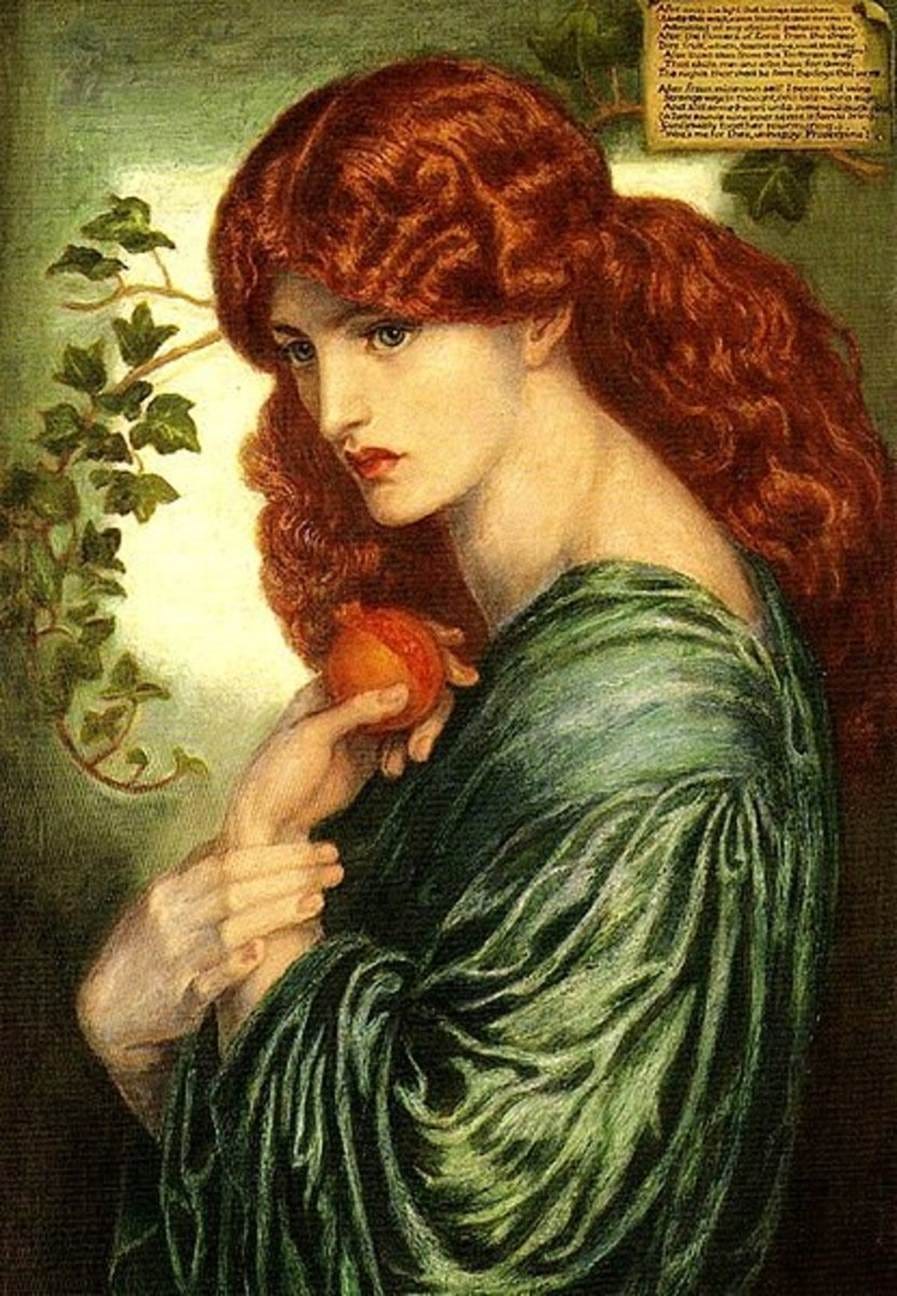
"Proserpina” or in the English translation Persephone, by Dante Gabriel Rossetti, 1874
The Chosen Daughter
This post is inspired in part by a post I read last week by The Alchemical Pen, where she discussed the concept of the puella aeterna and how we must grieve the nostalgia of our childhood.
For me, this brought up the notion of the maiden, the ‘light feminine’ aspect of women’s psyche, and how we run the risk of getting trapped in living in the perceptions of others.
Yet, unlike the masculine counterpart of the puella aeterna or the puer aeternus, which Carl Jung first identified as the ‘eternal boy’ who never wishes to grow up, or what is most commonly referred to as “Peter Pan Syndrome” by pop psychology “experts,” I find that the puella aeterna presents differently for women, then it does for men.
Most women I know were forced to carry the burden and expectations of their mothers. Even if they were not conscious of this fact until they became older.
As the eternal girl, we became the hopes of our mothers and grandmothers for what they didn’t achieve during their younger, unburdened years. Or conversely, for some mothers, their daughters become their competition – but that is a different blog post for another day.
Either way, what drives this behavior is rooted in the same fear, the fear of death and aging. The grief that comes with letting go of the puella aeterna.
For the mothers who live vicariously through their daughters, like Demeter, this results in a compulsion to hang on to their daughters. Subconsciously, there is an aspect of them that believes they can outrun the responsibility of aging by having their daughter be attached to them “by the hip.”
These are also the same type of mothers who, if they have male children, will often become overinvolved in their son’s life. Attempting to relieve their ‘forever girl’ fantasy through their idealization of him.
Yet for mothers who never grew out of this archetype, their daughter, whom they live vicariously through, often assumes a motherly role over them.
She becomes stuck in the in-between, not quite a maiden, but also not quite a mother, as she has never given birth to any children of her own, nor did she ask for this role.
Thus, she feels trapped with responsibilities that are too great for her to carry alone, because deep down, she knows she can not ‘fix’ her mother.
Therefore, like her mother, she also becomes the puella aeterna, not because she lacks maturity, but rather because she knows that owning her own power would force not only herself, but also her mother, to take responsibility for herself.
And the impacts of this pattern are long-lasting. I personally come from a long line of women who never discovered themselves outside of the shadow of their mother.
Women who sacrificed their happiness and did the “right thing.” Got married to the “right guy” because their mother didn’t want the “neighbors to say anything.” Or choose to pursue a steady career or marriage, despite their passions lying somewhere else, because it would make their mother proud.
In full transparency, I still struggle with this role myself.
While I have done much work to free myself from this pattern, even choosing to alter my career path to pursue a more creative and academic route, the pressure to remain the puella aeterna to maintain the current state of homeostasis for the women in my family remains.
And yet, I also knew that, like Persephone, I needed to go my own way and discover my own path in life. For if a woman does not embrace the release of her maidenhood, she will remain trapped in her girlhood. Stuck in the light feminine version of the maiden, who lives for others, and not herself.
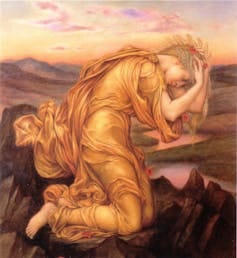
Demeter mourning Persephone by Evelyn de Morgan, 1906. Wikimedia Commons
Breaking Our Mother’s Hearts
“You’re breaking your mother's heart!” Both young boys and girls often hear this phrase growing up, or if they don’t, they usually hear instead “You are so kind to your mother”/” You make her so happy!” Which can have equally lasting effects.
Now, let me make it clear that I’m not hopping on the “mother blaming bandwagon” of Freud here, but what I am saying is that when mothers are unable to become fully self-actualized themselves, due to their conditioning and the lack of freedom they have to pursue their own choices, they are more likely to produce children who also lack the internal resources to self-actualize.
I am fortunate that my mother and grandmother, despite their own difficulties moving out of the ‘forever girl’ archetype, had enough understanding and insight into themselves to stress the importance of education. Because it is through education and access to education that women have choice, which is why it is always the first thing to go in a fascist society.
This freedom gave me the ability to expand my horizons, and although I initially chose a career path that I felt pressured into by the women in my family. I was able to expand my horizons enough to realize that I wanted to pivot into a different side of psychotherapy, one that focuses on theory, women’s self-actualization, and advocacy for feminine wisdom.
This might not feel like a significant shift to some individuals reading this blog, but for me to release the “caregiver”/”service provider” role I was forced into as a child, it was huge. To permit myself to move into the role of being a professor and researcher meant that I no longer had to silence my voice, my writing, or my needs to be seen or heard.
Both professionally and within my family of origin.
Yet this choice, like any, came with a cost. It meant that I had to make myself less available to the women in my family and that I had to do a serious cleansing of my relationships with both men and women. That I had to begin to assess if my friendships were, in fact, reciprocal, or if I had fallen into the same pattern of caretaking others as I had done within my family system.
Many of these friendships that I chose to let go of did not occur as a seamless, not overnight process. Instead, it was messy, and I found myself falling back into old patterns and loops of behaviors on more than one occasion. But as I began to match the energy of others, I was eventually able to root myself and establish a sense of who I was outside of others’ expectations of me.
I think we often expect endings to be clear and well-defined, but usually, in my experience, it is a gradual shift.
The slow burn of realizing you are no longer the maiden or girl you once were.
Thus, the friendships and relationships you had when you were younger, if they do not evolve, become tethers on your soul’s evolution. They keep you stuck, like a rope attached to a dock, when perhaps what you really need is to let go.
But letting go is scary, especially when it involves your mother.
No matter the relationship we have with our mother figure, letting go is complex, messy, and it is rarely easy.
We go through periods of clinging to the rope and then walking away from the dock, only to return to see if it is still there. This is normal with grief; it is a human desire to want to know the person we love so much is ok, that they will find a way to navigate their own seas, without us. Or if they will eventually find dry land.
There can also be guilt associated with leaving the “boat,” so to speak, and finding your own island. To not get lost in the waves of the ocean, which ultimately represents the Great Mother/Anima Mundi, the ultimate mother figure we all return to in death, and simultaneously the path to finding ourselves.
Which is what the myth of Persephone teaches us.
Persephone: The Rooting of Self
While Persephone’s story is often associated with the changing of seasons and, therefore, transitions, I find that it is in transitions that we most often learn how to root ourselves.
In the myth, Persephone, who is under her mother Demeter’s watchful eye as the maiden and puella aeterna, breaks from her mother’s hovering gaze to lie in a field of flowers. Depending on which version of the myth you believe, Persephone hears the cries of the lost souls of the underworld and willingly goes under the earth, or Hades decides to take her for his bride.
Yet I think the truth is probably somewhere in the middle. It would make sense that Persephone, feeling so restricted in her maidenhood due to her mother’s endless smothering, would want to separate herself from her mother, and thus she might seek out a projection of the dark masculine archetype (what I sometimes refer to as the Don Juan or “wild man” archetype) in Hades. Often, for many women, this rebellion comes through dating.
Finding themselves attracted to the man their mother would not approve of. Or perhaps does not fit their definition of who they think they “should” be with. Yet it is often these men and what they represent that hold the key to women’s ability to break free of the puella aeterna archetype.
Just like the Temptress or witch archetype is often what serves as men’s initiation point for their process of self-actualization.
That is because, in Hades, Persephone sees an aspect of herself which has not yet developed, her power, her self-agency, which gains symbolically through the loss of her virginity.

Artist unkown
Hades is not the villain in Persephone’s story; he only becomes the villain if she never moves out of her maidenhood. If she becomes trapped as the ‘forever girl’. Instead, he is her awakener, her initiator, her Daemon or dark masculine force, which becomes her counterpart for her to embrace her full dark feminine power.
Again, it is in the transition that we root ourselves. As Persephone moved from the Spring/Summer light feminine maiden, into her Fall/Winter dark feminine woman, she became whole.
It is only after this awakening that Persephone can return to her mother, Demeter, and find her roots through a process I call Anamnesis. Or the process by which women become self-actualized, by remembering the core of who they are.
Thus, once Persephone can see herself as a whole woman with her own dreams, desires, and goals, and not as a projection of her mother’s puella aeterna, she can finally heal the mother-daughter split.
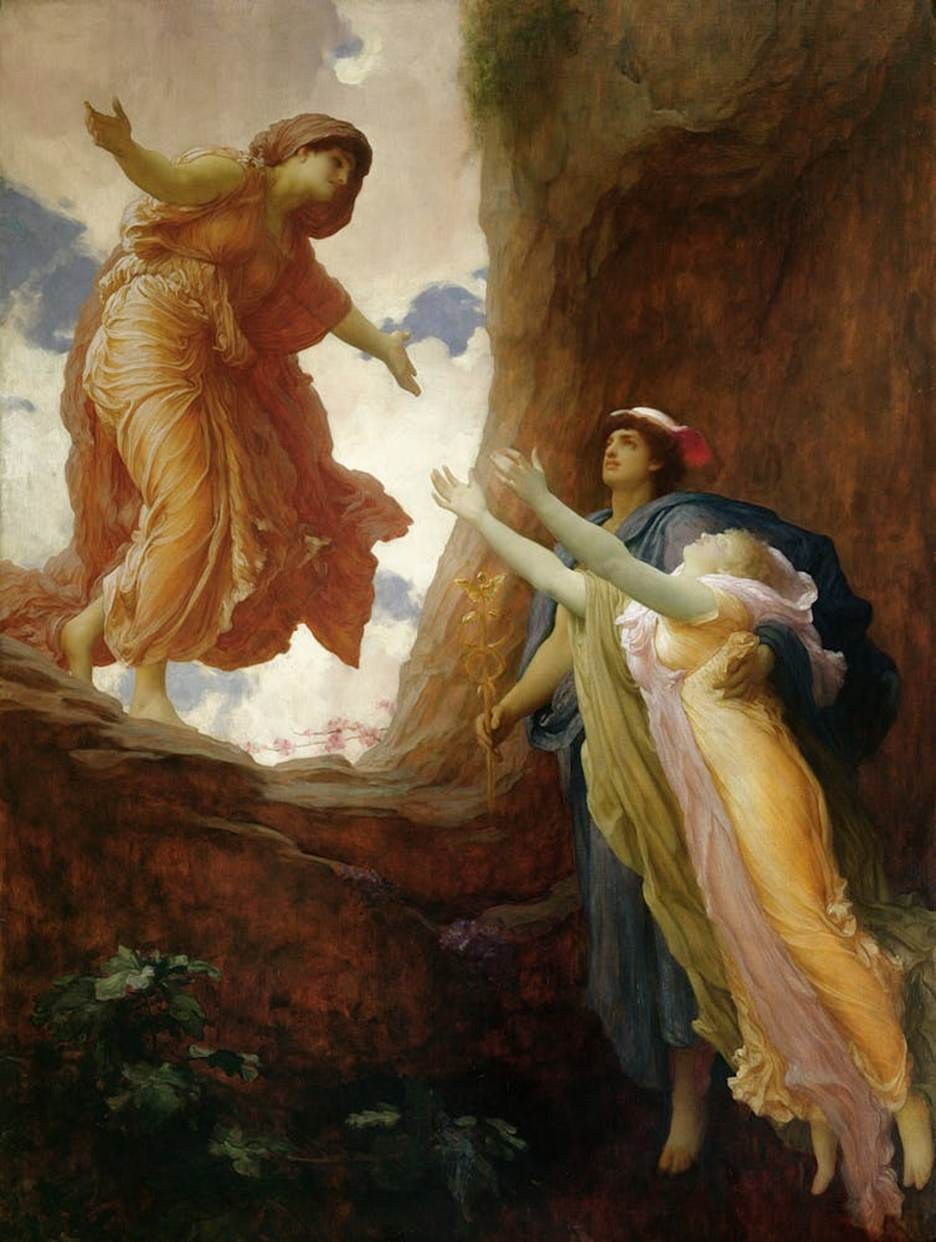
Frederic Leighton, The Return of Persephone, 1891. Wikimedia Commons
Which in the “real world,” can look like separating oneself from the expectations of our mothers or the pseudo mother figures we project onto (our bosses, female friends, coworkers, etc). Or conversely, it may mean moving out of the “mother” role within our friend group or leaving a relationship that has become codependent, where we silence or sacrifice our needs to “keep the peace.”
Like Persephone, it may involve letting ourselves date and fall in love with someone who maybe our mothers or family members wouldn’t approve of, whether that person is of a different race, culture, religious background, social class, or gender.
Or sometimes, it is simply giving us permission to pursue what we truly want.
Yet, we can only do that once we have faced our descent – the reason Persephone goes underground is a metaphor for confronting death and the changing of the seasons. It is only through realizing that we will eventually die and that mothers must subsequently die as well, that we come to understand that we are not ‘forever children’ because we do not live forever.
Our parents become old and transition into grandparents, and we, like Persephone, move from maiden to fully embodied woman, or in this case, mother. Eventually, replacing Demeter.
The question is, do we want to be a mother who is still attached to her younger maiden self, which she will inevitably project onto her children? Or do we fully live our lives in our authentic selves and choose to become rooted in ourselves?
OX
Your Dark Fairy Godmother