
The Death Mother
Malevolent Force or Misunderstood Guidance?

“The Death Mother wields a cold, fierce, violent, and corrosive power . . . When [the] Death Mother’s gaze is directed at us, it penetrates both psyche and body, turning us into stone. It kills hope. It cuts us dead. We collapse. Our life energy drains from us, and we sink into chthonic darkness. In this state, we find ourselves yearning for the oblivion of death. Eventually, this yearning for death permeates our cells, causing our bodies to turn against themselves.”
― Woodman, p. 178, 2009 in Confronting Death Mother: An Interview with Marion Woodman.
Death, we all fear her rage, and yet, we all know that we must eventually surrender to her….
However, historically, scholars and psychotherapists alike (such as Woodman) have focused on the dangers of over-identifying with this force rather than her creative and liberating potential.
She is presented as a destructive force. Like the Hindu Goddess Kali, ready to cut off our heads and drag us into the underworld – our ultimate demise. Yet what we fail to understand is that Kali isn’t just destructive; she is also considered to be the mother of the universe.
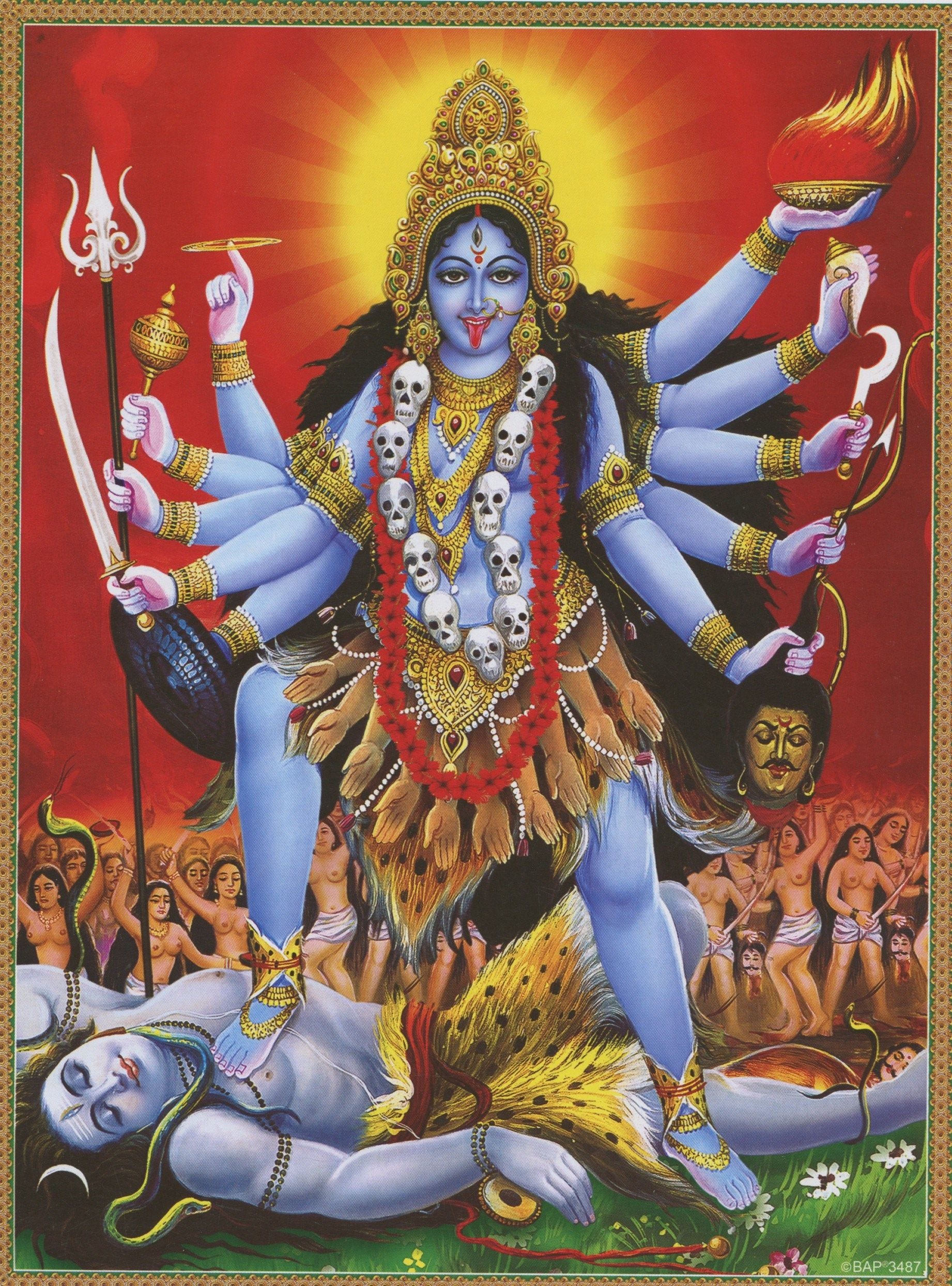
In other words, the same force that seeks to destroy our fragile Ego functions is often the very force that is needed to set us free.
We forget in our patriarchal society, which is obsessed with regulating women to their light feminine aspects, that the archetype of the mother is not only meant to be the selfless caretaker of us…she is also the one who is responsible for setting boundaries for us until we are able to learn how to do that on our own…
Because a true “good” mother not only nurtures her children and comforts them when they are sick, sad, or longing for affection, but also reminds them not to be reckless. Not to touch the hot stove, or else they will be burned, and to remember their responsibilities and that they have to consider their relationships with others and the world around them.
She reminds her children that the world is a balance of giving AND taking, that things should be reciprocal, and that nature will always demand a balance one way or another.
In my own family, I can speak directly to this: as children, we came to understand that we should fear my grandmother’s German/Eastern European wrath whenever it was triggered, and that it was often the result of some wrongdoing on our part.
Whether that was failing to respect her house or kitchen floors, which she had just painstakingly cleaned, only to have her grandchildren act inconsiderate of her feelings by dropping their dinner crumbs on the carpet. Or when we would tease our younger cousin too harshly, only to be met with a proper scolding about being nice to others and a timeout.
The message was clear in both scenarios: whether you like it or not, your actions have consequences, and you must account for them.
And while in extreme cases this desire for accountability can lead to households in which parents become too authoritarian and consequently can end up harming their children, resulting in long-term psychological impacts, there is also a very real downside to growing up in households in which mothers do not own their dark feminine aspects and fail to give their children proper guidance.
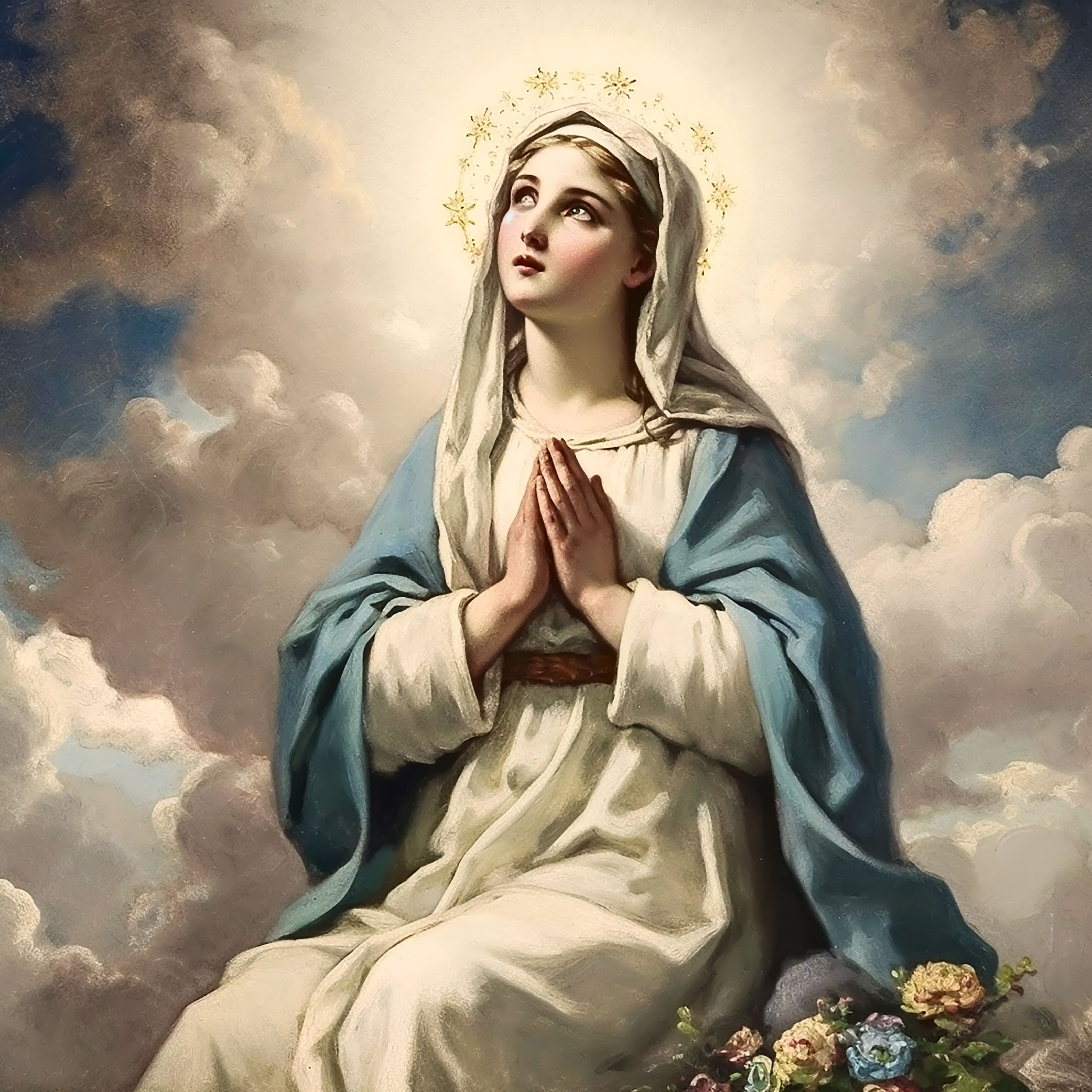
When this happens, we create spoiled children and individuals who are incapable of self-reflection. Which, sadly, has become the norm for most of North America. Our society has become so obsessed with the desire to have mothers embody the perfect “ideal” mother-figure (i.e., like the Virgin Mary or Donna Reed archetype) that we forget that perhaps a “good” mother isn’t, well… all that ideal.
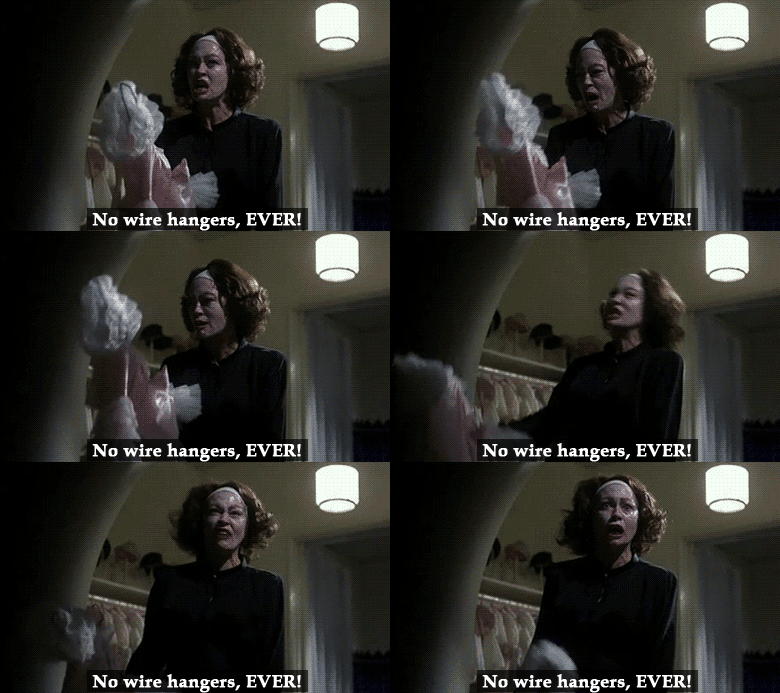
A mother who disowns her own darkness fails to teach her children how to regulate their shadow aspects. Or conversely, she overcorrects and ends up becoming something of a “Mommy Dearest” (such as in the film about Joan Crawford’s daughter’s experience growing up with her abusive mother) who then displaces her rage onto her children, who become victims in the wake of her destruction – just like Woodman’s Death Mother archetype.
Thus, in extreme examples, as I discussed in my podcast episode on the “Monster Mother” archetype, this mother can not only become violent towards her own self-destructive patterns but also to her children. As was the case with Andrea Yates, the woman who confessed to drowning her five children in their bathtub on June 20, 2001 in Houston, Texas.
Yet, because we have such a disdain for the dark feminine and Death Mother archetype, no one ever bothers to look deeper into how these tragedies can occur….
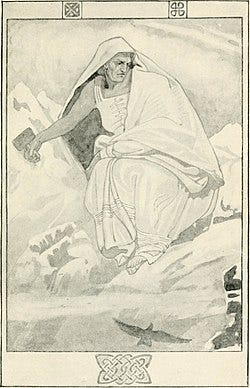
Instead, like Woodman in her own recounting of the Death Mother archetype, we label these women as “abnormal” and “cold,” and equate them with being similar to the Gorgon Medusa or the Cailleach, the Welsh/Irish Hag or Crone goddess, made of stone and ready to turn those who cross them into stone as well.
But we don’t understand, or rather, what I have come to realize for myself is that the Death Mother is actually trying to give us the very poison or “medicine” we need to set ourselves free.
Because in facing our death, or rather, becoming comfortable sitting in the void or womb of the Great Mother, where we meet the Death Mother archetype (which only occurs once our Ego functions have been split open), we suddenly become stripped of our shallow protective structures.
The status markers, the notches on our belts, the awards and “trophies” we have encountered during our lifetimes. Things that we used to believe mattered so much only to face our deepest fears, regrets, shadows, and ultimately…the mirror into ourselves.
Which is perhaps why so many women who embody this archetype were labeled as “witches”. Since it takes a person of strong character to look the Death Mother in the face and lead others to surrender to her power as well.
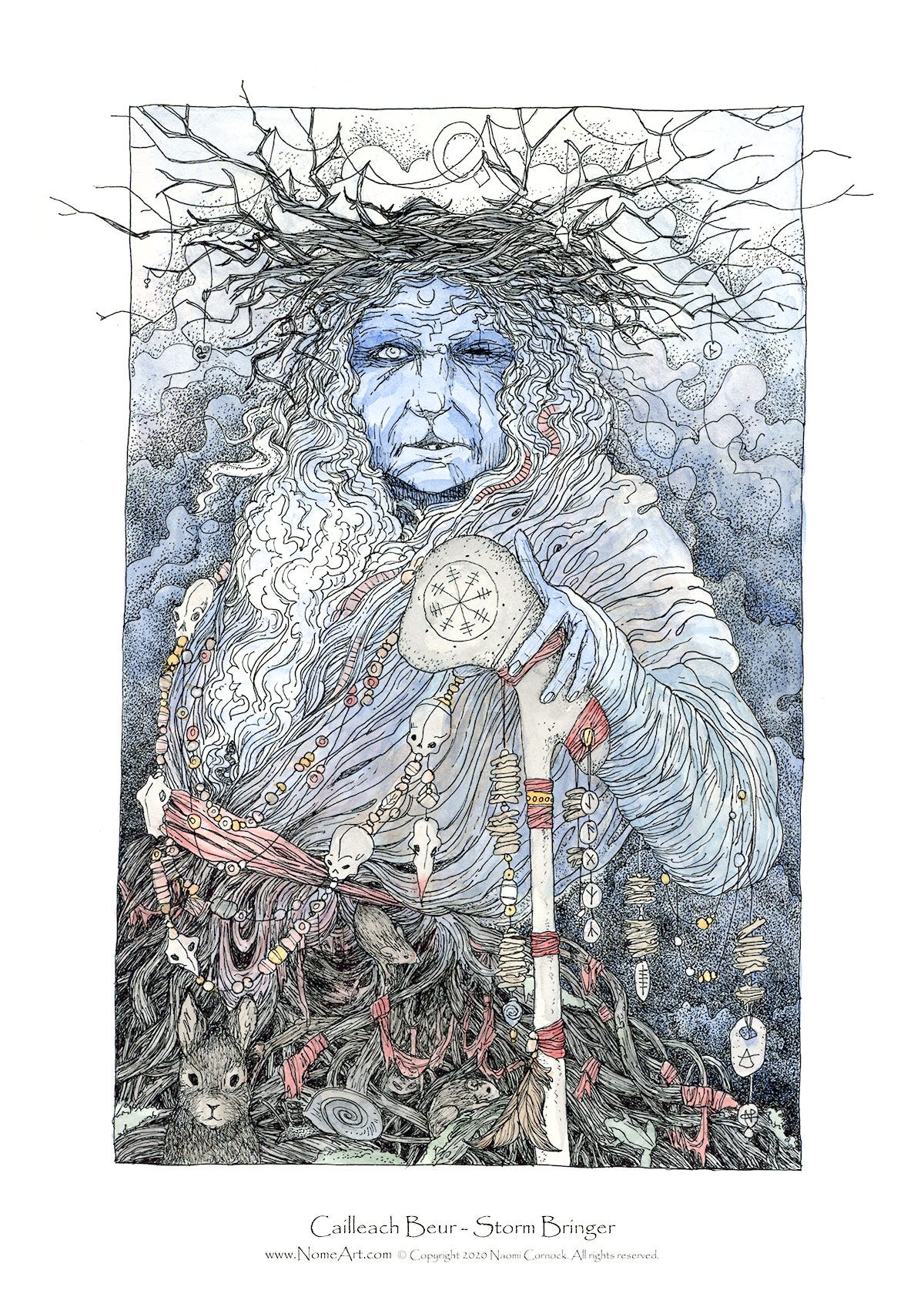
This is because we naturally fear the very medicine we need. It’s human nature to not only reject the notion of death because the Ego function above all else wants to stay alive. Thus, the rejection of the physical process of death and the Death Mother herself is inherently a rejection of the feminine, because the feminine reminds us we aren’t in control. Instead, as Woodman describes, we “sink into chthonic darkness,” and this “yearning for death permeates our cells, causing our bodies to turn against themselves.”
Our bodies, naturally, know how to die. As we age, our skin begins to sag, and we eventually start to feel the effects of us becoming closer to the void. Hospice workers will tell you there are clear signs a person displays when they are about to die. Often, individuals begin to lose control of their bowels and other bodily functions, and they talk about seeing figures not present in the room, or past loved ones who have already moved on. Often, there is a sense that they will be traveling or going on a journey soon. And then, of course, their organs begin to shut down… the body stops working, and consciousness ceases to exist.
The Ego function is no more, and the principle I call Eros/Spirit is released from the body into the ether, and all that is left is the principle of Psyche/Soul, which eventually is returned and reintegrated with the earth.
An ultimate symbol of coming home to the Great Mother.
Thus, ultimately, while over-identifying with the Death Mother can become maladaptive, just as over-identifying with the patriarchal “Father” archetype has its own shadow aspects which can lead to the devaluation of others and endless pursuit of perfection, which Woodman herself wrote about when she warned about the felid of psychology “flying too high into the world of the spirit” and thus, detaching from the “matter” or the “mother”.
Which is why I consider it a bit ironic that even Woodman herself had trouble fully understanding the complexities of the Death Mother archetype, and instead split her into two aspects, reflecting the concept I refer to in my Yonic Theory approach as the goddess-witch spectrum.
In her dark aspects, Woodman identified the Death Mother, or “Negative Mother” in her book The Pregnant Virgin: A Process of Psychological Transformation, as a witch-like character hell-bent on facilitating our destruction, who suffocates her daughter, yet she simultaneously also discussed another dark feminine force – that of the Black Madonna and then later Sophia, which she described as
“Nature impregnated by spirit, accepting the human body as the chalice of the spirit. She [the Black Madonna] is the redemption of matter, the intersection of sexuality and spirituality.”
- Woodman, p. 125, 1985
Woodman then goes on to mention that for women dreaming of this archetype, it is not uncommon for them to experience dreams of a huge serpent “mysterious, coldblooded, [and] inaccessible to human feeling.” Which she describes as an “appendage of the negative mother” since it is the “phallus stolen from the father and used to guard inviolate purity.”
Yet again, we see Woodman’s own contradictory thought process here, as she notes that the snake embodies the witch archetype, associated with the moon, which symbolizes the “dark and impersonal side of femininity” and represents the capacity to renew itself. Much like the symbol of the ouroboros, which I have written about here.
Thus, to me, the snake is clearly a symbol of the feminine rather than simply a stolen “phallic” symbol of the father. Moreover, the snake is often associated with Eve and the serpent, as in this depiction of the story of Adam and Eve, in which Eve and the serpent share the same face, which I found on the ceiling of Saint Barbara’s Cathedral in Kutná Hora, Czechia (the Czech Republic).
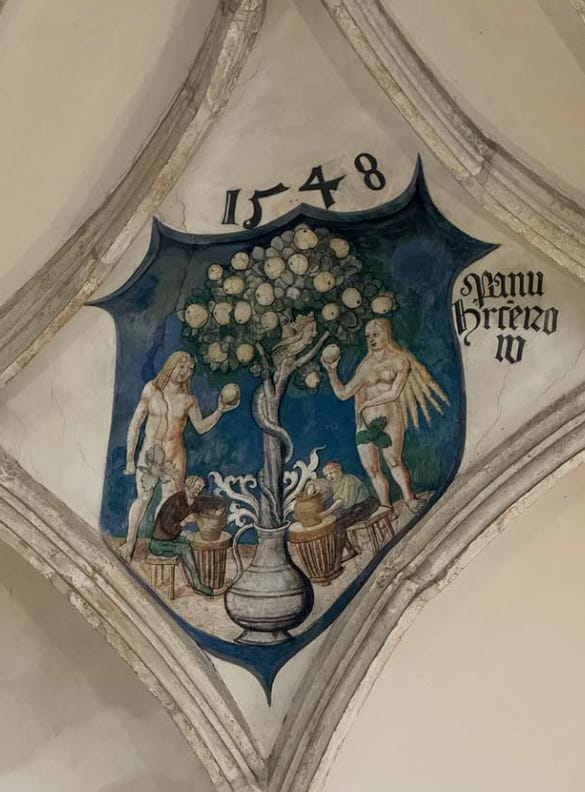
Thus, it would appear that the snake, the dark feminine, and the death of the Ego function or one’s preconceived notions of the self have always been closely linked together throughout history.
Which is why it is so interesting to me that Woodman, of all people, would reject the wisdom of the Death Mother. For if she is to be associated with the snake herself, who throughout Neolithic Goddess worshipping history was praised for her ability to give birth in an asexual manner by not having to have direct access to a male partner for extended periods of time, then it would reason that the Death/Negative Mother and Black Madonna/Sophia are actually one and the same.
Or both the goddess and the witch. As are all women.
Which is why I argue that we do not need to fear the Death Mother but rather see her as a force in our own awakening, for both men and women. That in her “cold” embrace, we are reminded of the finality of our lives and the boundaries of what we can and cannot control.
Moreover, in confronting our own shadow aspects of the dark feminine or Death/Negative Mother, we descend into her underworld, thus the more we come to understand ourselves. As Woodman herself notes:
“The daughter who can come out from under the skin of the negative mother will not perpetuate her but redeem her. The Black Madonna is the patron saint of abandoned daughters who rejoice in their outcast state and can use it to renew the world.”
- Woodman, p. 125, 1985
In other words, only by confronting the witchy aspects of the Death Mother can we hope to redeem ourselves. And thus, the “death” we experience upon encountering the Death/Negative Mother is also the very thing that allows us to be reborn. Thus, the Death Mother or witch becomes the goddess or Black Madonna, or as I like to refer to it, the capital “G” Goddess, who, like the goddess Kali, knows she can both be the giver of life and the cause of destruction when boundaries need to be restored.
The two are no longer separate but one.
Which is ultimately what the Death Mother is meant to remind us of. Like Inanna/Ishtar descending into the underworld to meet her witchy sister Ereshkigal, when we are stripped of our clothes, jewels, and status, we have to meet ourselves where the spirit meets our bones.
I.e. where Spirit meets matter…or the mother…or the Soul.
Thus, it is there where the masculine and feminine principles or Spirit/Eros and Soul/Psyche merge together, allowing a new sense of the Self to be reborn.
Yet this can only happen if we are willing to face the wisdom of the Death Mother and confront our own mortality. To recognize our own shadows and disowned aspects of ourselves, and to embrace our inner “witchiness.”
Because without fully embracing the Death Mother as she is and finding wisdom in her coldness, we can never truly appreciate the light aspect of her. The Black Madonna/Sophia becomes an unattainable ideal that still limits and suppresses the voices of women, because once she is on a pedestal, she is no longer a human, but an object that can be manipulated and replaced at a moment’s notice, the second she breaks her carefully crafted “goddess” image.
Thus, it is the Death Mother who reminds us that our “perfect” images fueled by our light aspects need to be cracked.
That underneath our desire to fly into the world of the masculine Spirit (i.e., over-identify with our Ego and Veil functions), we are still raw, messy humans. Which ultimately reminds us of our animal impulses and our connection to nature, or “matter,” and that, like the snake or the ouroboros, we all return to the same source.
OX
Your Dark Fairy Godmother
If you would like to learn more about Dr. Roby’s courses on her Yonic Theory approach, check out the resources below:
If you would like to donate to her Yonic Tarot deck creation fund, please do so through her ko-fi account:
Reference
Sieff, D. F., & Woodman, M. (2009). Confronting Death Mother: An interview with Marion Woodman. Spring, 81, 177–199.
Woodman, M. (1985). The pregnant virgin: A process of psychological transformation. Inner City Books.