

The Dreaded Grey Hair
How to Overcome the Fear of Aging

Well, it finally happened…Last Friday, after happy hour with a friend, I came home, and when I looked in the mirror, I saw it. My first official grey hair.
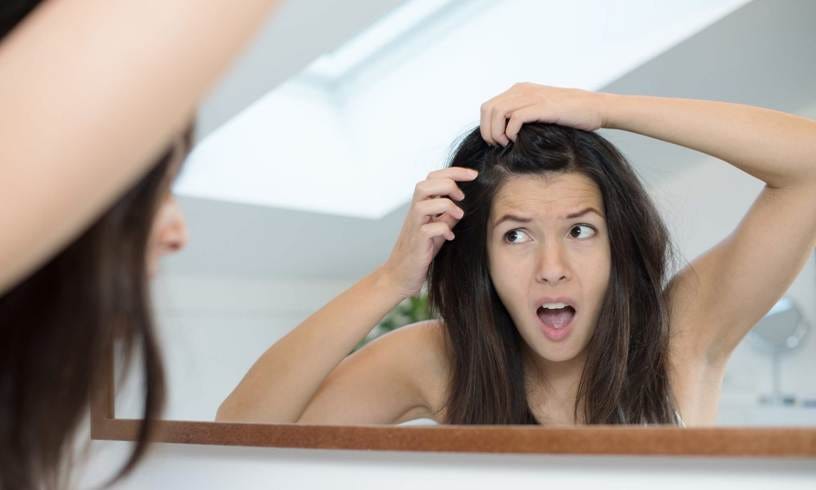
Image from Google
Now I wasn’t naïve. At 33, I assumed this day would come sooner or later. I expected to start “showing my age,” as our 30s often mark a transition period in our lives. In fact, at dinner, my friend and I were joking about the aches and pains from old athletic injuries from our youth, which come back to haunt us when we're older (Sorry, Gen Z). Moreover, so many women in my life had prepared me for this exact moment. I expected to cry, or be in denial, and experience waves of grief, like my friends who had “gone grey” before me had experienced. I was told that this would be an absolute moment of dread, and I was ready for it.
Yet to my surprise…it wasn’t.
I didn’t feel dread, not even a hint of it. What I felt was relief.
Going Grey and Grieving the Maiden
For women, “going grey” is often a sign that one has moved on from a period in one’s life that we associate with the Maiden archetype. The Maiden is the young feminine archetype, one I often associate with the goddess, as she is frequently elevated within our society, which values patriarchal standards of beauty centered around being young, youthful, and active. In other words, she embodies the “male gaze.”
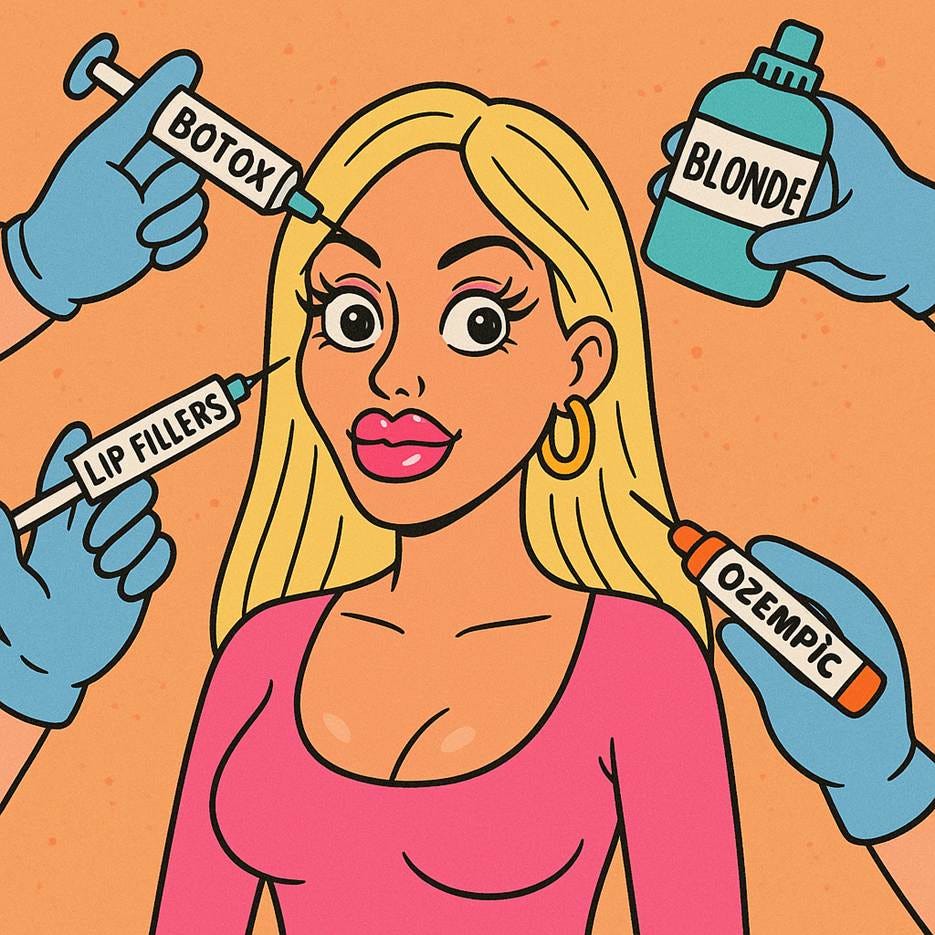
AI-generated Image
While being active is an integral part of anyone’s health regardless of age, our endless pursuit of the maiden archetype, especially for women, comes with a downside. One only needs to spend 10 minutes on TikTok before they are caught in a web of comparison. Of women with Botox, lip injections and fillers, “deviated septums” (a fancy workaround for a nose job), breast and butt lifts, brow tinting, or lamination, and so many more cosmetic procedures.
None of us are immune to this condition either. There have been many times in my life when I’ve considered getting Botox because a well-meaning “friend” told me it would make me look younger when I was 26. Yet, forehead wrinkles aside, I decided long ago that Botox didn’t really seem like my thing, and that I would rather focus on taking good care of my skin. (Moreover, as a graduate student and psychotherapist, I didn’t have the money to spend on Botox, let alone keep up with the injections.) Yet these messages seem to target women at younger and younger ages. I’ve heard stories from my former clients about how their teenage daughters are buying anti-aging serums as young as 12 and 13, way before any signs of aging have occurred. The Beauty Industry loves to cash in on women’s insecurities, which is why Ozempic and Wegovy are so popular.
Yet all these methods generally have one goal: to make us look younger. Wegovy and Ozempic help women lose a significant amount of weight, and I know many women who have reported using them to shed the last 5 to 10 pounds from pregnancy or return to their pre-baby weight. Which, if a woman is not careful, can lead her down the dark path of the Maiden archetype.
As a former psychotherapist, I would see the dark side of the Maiden archetype when I worked with women with disordered eating behaviors or body image concerns. Women who, in their pursuit of achieving perfection (an aspect we associate with youth) they would starve their bodies or engage in over-exercise to be seen as desirable and “worthy”. It is this archetype that is highlighted in the movie The Substance.
Thus, like Ophelia, in Shakespeare’s Hamlet, being a maiden can come with a significant cost if a woman is not careful. She can lose herself so deeply in wanting to appease others, being a good daughter, romantic partner, lover, etc., that she may metaphorically or figuratively “die” in her pursuit to do so.
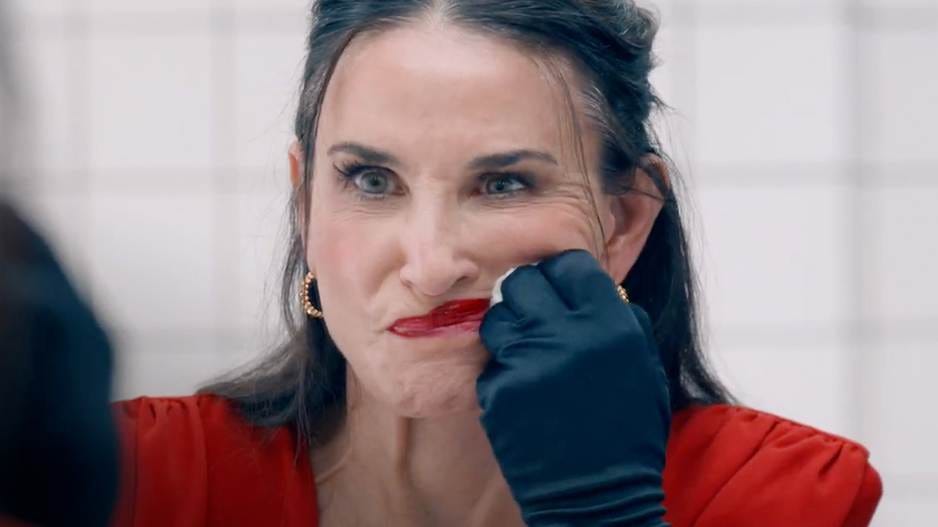
Demi Moore in The Substance
Now, with that being said, these surgeries and drugs aren’t all bad. In fact, they can be helpful for many women, especially for individuals who may need to drop a significant amount of weight for health reasons. Moreover, there is nothing wrong with wanting to make alterations to one’s body. Heck, tattoos do the same thing!
However, I do think it is important we consider what might be driving this behavior on a massive scale for women, and what it says about our society, and our view of women aging.
Women and Aging
As I said above, I believe the reason so many women get these cosmetic surgeries or freak out about their dreaded “grey hairs” is because it is an attempt to cling to their maiden aspect. By 30, many women have either a) established themselves in their careers or b) become mothers or are considering starting a family. Thus, they are entering the Mother phase of their life, which I wrote about and its connection to death and dying about here.
In the post, which I will summarize, I discuss how becoming a mother or considering having a child forces women to think about their mortality and death, much sooner than men do in our society. There is an understanding that as one gives life, they have to give up something, namely, one's youth and freedom that came along with it. That having a child, not only alters one’s day-to-day plans, but the whole task of growing a life and giving birth, changes one’s body and how they relate to themselves as well.
I have also noticed that during this age, women start to become aware of their power.
As maidens, we are usually preoccupied with being “chosen” or gaining social approval, thus women often lack awareness of their feminine essence or power. Yet, the moment one gives birth or witnesses another woman going through that process, it is very hard to deny the power of the womb and of womanhood. Giving birth is no fucking joke. It is painful, uncomfortable at times, and it pushes women to discover just how strong and capable they are. Even if one decides not to have a child, this awareness of what her body can do can be quite inspiring.
Yet, unfortunately, most women are not conditioned to take pride in this power, or only in their ability to become pregnant and produce a child. Women in our society are expected to “bounce back” right after having children and get back to their previous Maiden phase body.
Which is actually the most asinine shit I’ve ever heard…
How can one expect a woman to revert back to not knowing her power (a central aspect of the Maiden through myths and stories), when she has just witnessed it? Even if a woman can trick herself into attempting to embody the Maiden (as many women do) somewhere deep in her psyche, she knows her power and thus, she will unconsciously begin to resent men or her husband who wish to confine her to her more “tolerable” Maiden aspects. Yet, because it may not feel safe for her to rebel outright, that anger becomes displaced onto herself through starvation or hating her body, which can lead to conditions like Body Dysmorphic Disorder. Or she may project that anger onto her children or individuals who seem less threatening, as I discussed on my podcast when diving into the Karen archetype.
Thus, this begs the question: how can women be expected to age gracefully and enjoy the process of aging if they are constantly being pressured and forced back into the box of the Maiden? The Maiden phase of one’s life is roughly 30 years, if one is lucky. Yet, most women will live until their 70s or 80s. Are we really supposed to believe that those 20-30 years are the “peak times” of our lives? Seems silly when there is so much that women can accomplish (and do) during the Mother and Crone phases of their journeys.
For roughly 50 years of their lives, women have the ability to be someone else, to discover who they truly are outside of the carefully crafted roles society and men in their lives have told them to be. Perhaps that is the real reason women fear the dreaded grey hair; it is a reminder of their inner Crone within. That eventually, women must confront and accept the process of aging and figure out who they are without centering the male gaze.
Embracing the Grey and Saying “Goodbye” to the Maiden
As I mentioned at the beginning of this post, when I first saw my grey hair, I felt immense relief. As if my body was giving me confirmation of something I already knew deep down inside. That I was fucking done with being in my Maiden phase.
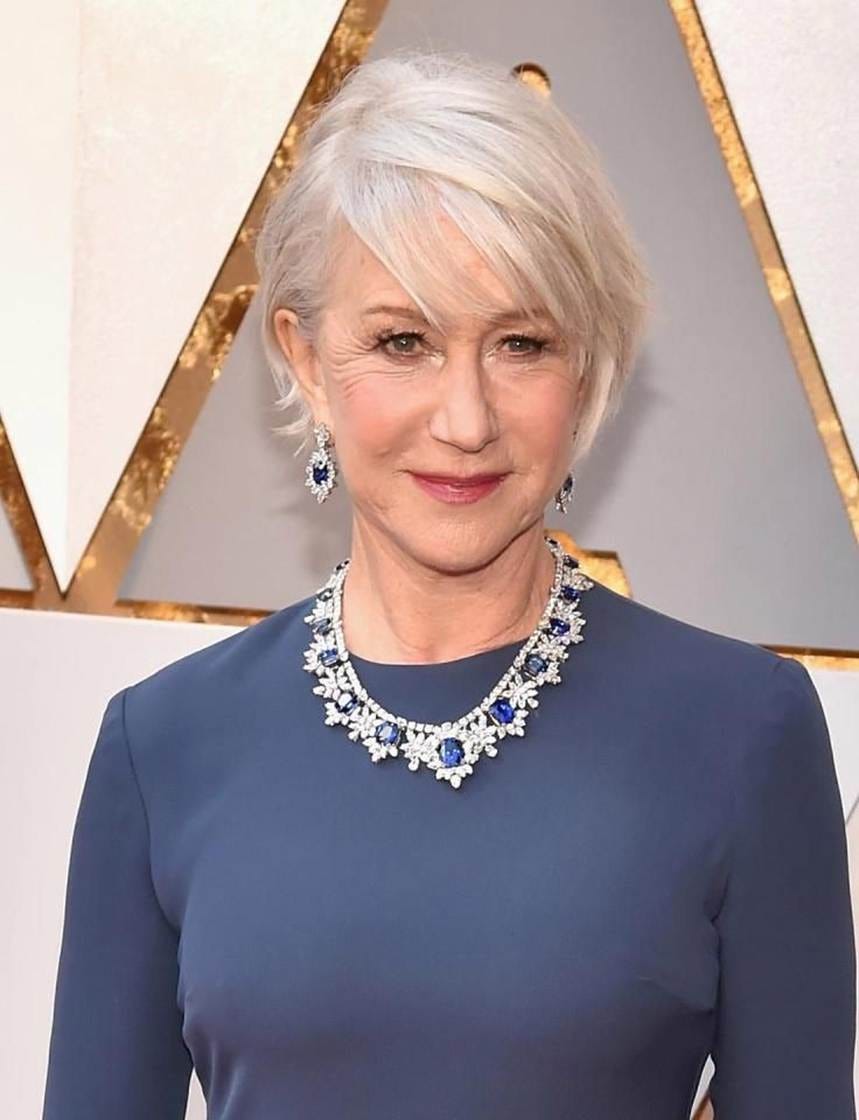
While some women want to cling to the Maiden phase for far too long, for others, it feels like a cage. I’ve always personally admired older women who let their hair go grey naturally, since I happen to think grey hair on older women is quite beautiful. The actress Helen Mirren is one example of this type of woman who has learned to embrace her Crone era.
So, when I saw that grey hair, I felt relieved because, subconsciously, I had associated my natural hair color with being part of my Maiden aspect. Seeing my one grey hair was permission for me to finally let her go, and that I had entered a new phase of my journey. One where I feel like I can be more authentic and more like myself. Whereas in my youth, I often felt pressured to “perform” and contort myself for others (as do many women).
The grey hair came not as the enemy for me to fear, but rather the key for me to release myself from the male gaze of oppression, which no longer serves me. And to be frank, I never much enjoyed it anyway.
I think part of the reason, I admire women who have the confidence to go grey, is because I see myself in them.
Aside from my personal belief that I would look great with grey hair, going grey symbolizes the ability to be comfortable in one’s authentic skin.
When a woman goes grey, she is forced to become rooted in herself. Even if she does not embrace that grey outright. Even if a woman chooses to dye her hair (which is something I am still considering, since I currently enjoy being a redhead), there is still a part of her that has to reconcile this new identity.
Once a grey hair appears, a woman cannot forget its presence. It serves as a permanent reminder for her of her mortality, the end of one phase, and the beginning of another. A reminder that she must decide what is right for herself and how she wishes to live her life.
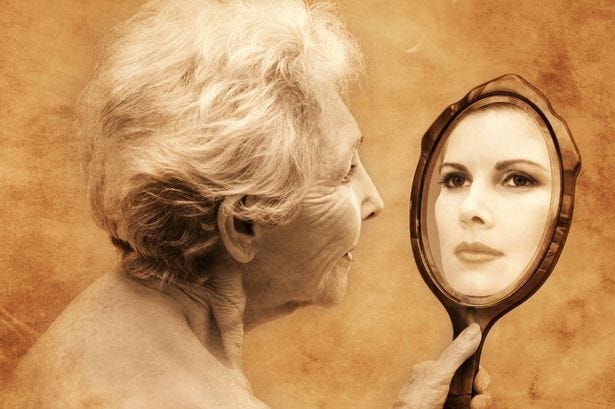
Aging [Grey]fully
In the book Hagitude: Reimagining the Second Half of Life, by clinically trained psychotherapist Sharon Blackie, Blackie discusses how, when a woman reaches her menopausal years, it is not uncommon for women to begin to experience anger, frustration, and rage. She notes that these feelings often accompany the realization that one is now not tethered to anyone else. That a woman is no longer of child-bearing age (The Mother), nor is she seen as a desirable sex-object, by the larger society (The Maiden).
She is, effectively, her own person.
This can feel scary and overwhelming for women, especially considering how awful society and patriarchal institutions have treated older women throughout history (i.e. the Witch Craze). Hags, “witches,” and even the word Crone have all been used against women to strip them of their power. Yet Blackie notes that it is the older women, the wise women, who contain the stories and secrets of life. The hidden, buried wisdom of their experiences which can help other women navigate the treacherous waters of the patriarchy so that they, too, can make it to the other side.
Thus, I encourage my readers of all ages to consider how you can prepare yourself for the arrival of your first Grey hair, and how you can welcome her, and all the many versions of you yet to come.
OX,
Your Dark Fairy Godmother
For those of you interested in learning more about your Maiden and Crone aspects, I am hosting an on-demand 4-week course on my concept, the Goddess-Witch Spectrum™. This course is designed to help women integrate their inner Goddess and Witch, in order to feel more whole in themselves. The course is $44, and new modules will be released each week. Check it out here to purchase:
If you enjoyed this post, please be sure to like and share it! Also check out my podcast on the Goddess-Witch Spectrum here:
Resources:
Blackie, S. (2022). Hagitude: Reimagining the second half of life. September Publishing.