
The End of Therapy-Tok?

This post is something I’ve been sitting on for quite some time, knowing that my views on this topic are controversial.
For a long time, I feel like I’ve been watching the impacts of therapy-tok on the collective, like a sober 35-year-old visiting a club and seeing the lights come on only to realize that no one else in the room realizes the party is over.
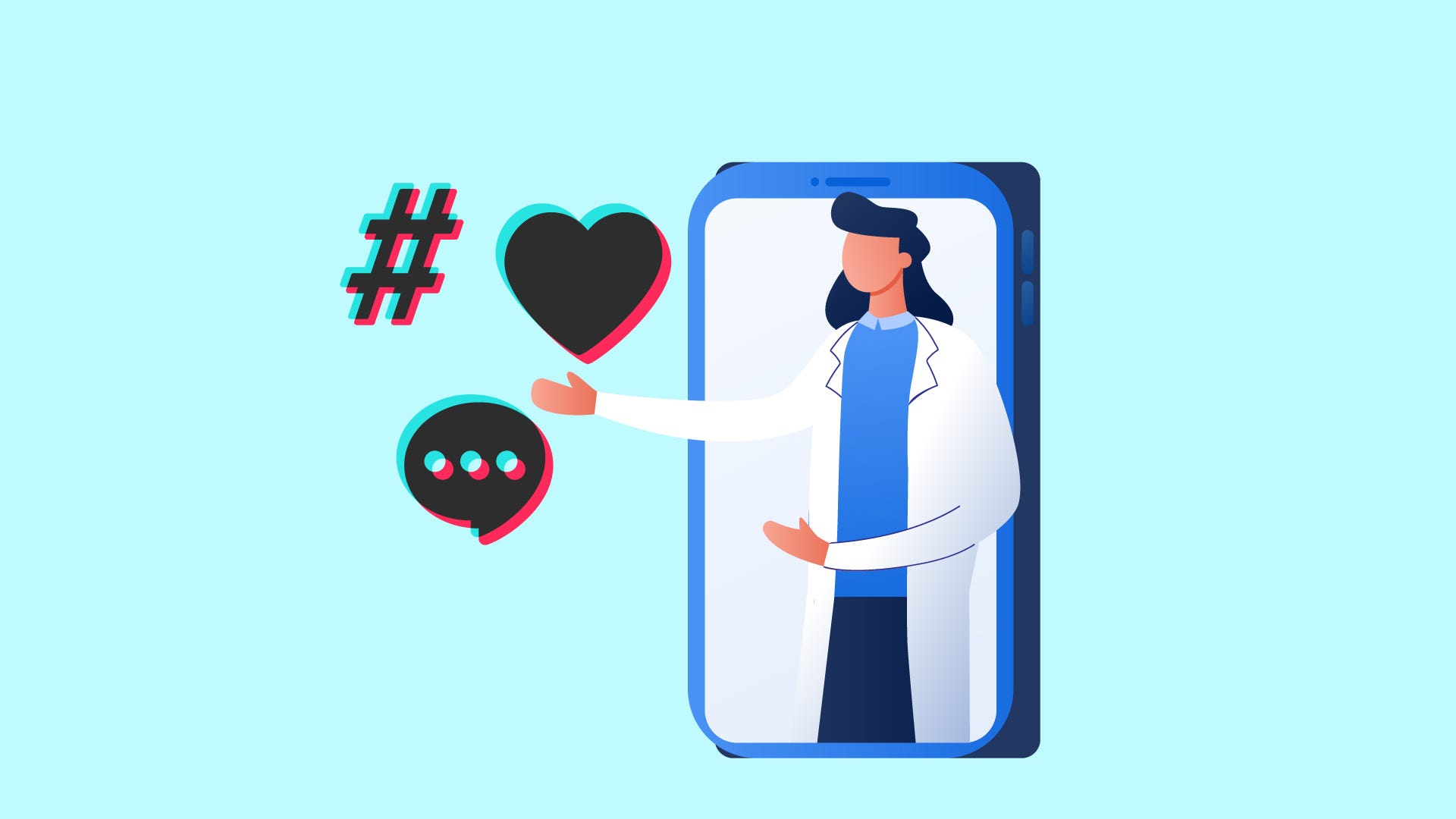
Jokes aside, I want you to ask yourself a legitimate question: whether you are a therapist, a client, or just a viewer of this content.
Has any of the information you’ve watched on therapist-tok actually been helpful?
Does it actually make you feel better? (Not just in the moment, but long-term?)
Do you feel more connected in your relationships? To your loved ones? To your significant other?
Or do you feel more anxious, isolated, distrusting, and lonely, and even more self-absorbed?
While I do believe therapy-tok began with good intentions and with the goal of destigmatizing and normalizing going to therapy, lately, the content I’m seeing has me questioning its effectiveness.
Now I need to own that when I first began my private practice in 2020, I too got caught up in the therapist-tok trend, and even on this blog, I still struggle to know how much to share and how “candid” I can be.
Yet at the same time, I deeply believe in the importance of modeling human experience, and that I, just like all humans (clients included), have my own set of flaws and maladaptive coping strategies which I have had to and will need to continue to work on throughout the course of my lifespan.
Which brings me back to therapy-tok. While it is helpful to provide psychoeducation, I believe that the advice many of these “therapists” give is too generalized.
Because the nature of social media is to be well…inclusive.
What I mean by that is that the videos with the most “views” are the ones that the most people can relate to.
So, the more generalizable a therapist can make their content, the better it performs.
Which is why you, I, and everyone and their uncle now believe that they have ADHD, high-functioning autism, Narcissistic Personality Disorder, or BPD, and whatever else is trending these days.
Yet, no one bothers to look at the number of viewers who watch these videos or how many followers these therapists who specialize in ADHD or whatever diagnosis of their choosing have.
Seriously, take a look at whatever “experts” you follow on social media and how many followers they have… Do they have 1 thousand, 50 thousand, 100 thousand, 500 thousand, or a million or more followers?!
It seems odd to me that these individuals who promote neurodivergence as being so “rare” would have such a large following…as if they are selling you a story that you are “unique,” “special” and “different” for having some generalizable symptoms which taken out of context of your daily life might look similar to the symptoms of ADHD or another diagnosis, without ever knowing your unique personal experience.
In other words, what these so-called experts are pandering to is our human Ego and our desire to feel “seen” and “special.” Yet we end up all sounding like the thousands of other people watching these videos who are convinced that they have ADHD or whatever trending diagnosis we decide is the new collective “fad” and that we can not relate to other, more “normal” people.
Which brings me to my next point: while social media is great for spreading information, it is also just as good, if not better, at spreading a LOT of misinformation…
Because ultimately to become more “popular” and position yourself as an “expert” on social media or therapist-tok – you need viewers.
So the more people who relate to your content, the more followers you have, the more subscriptions you can sell, the more books and courses and other content you can jack up the price for.
When in truth…none of those things actually get to the core “root” of an individual’s concerns.
Because the truth is, your specific set of coping skills, which you have developed, while similar to other humans throughout history, is still based on your unique experiences.
(It’s a “both/and” here for my DBT lovers…)
Which is why so many people these days can spout off which of the many diagnoses of the DSM they believe they have, and yet, do not seem to be doing any better.
Because the real healing work is slow, sacred, and there is no “quick fix.”
It requires your story to be told and to have a witness who can sit with you in the dark as you navigate it.
This means that no TikTok therapist expert is coming to save you with the “magic cure” that we’re tricked into believing is hidden in these videos or the $800 courses they tell us to sign up for.
Which is why even in my own courses, which I promote on my website, I aim to be mindful of not claiming that anything I say alone is enough to facilitate the healing process, as I believe the role of the clinician, or to use my preferred term, “healer,” is the most important factor of all when choosing to undergo one’s healing journey.
Moreover, throughout history, when we explore the practices of female folk and indigenous healers across cultures, a common theme in these practices is that they took time.
They were slow, deliberate, humble men and women who didn’t position themselves as “experts.” Instead, they were usually someone’s mother or wife, or worked other jobs, such as being a seamstress or baker. They lived among their communities, as opposed to the online pedestal we now place these therapists-turned “experts” on.
This is where the fallacy of therapy-tok lies: it dilutes the sacredness of this work, reflecting how the very field of psychotherapy has diluted these healing practices in favor of more “Western” evidence-based theories.
In our current collective society, we focus so much on the cognitive aspects of healing that we forget about the human-to-human connection and its role in facilitating the integration of what I refer to in my yonic theory approach as the four functions of the Self, though I would argue this tenet is central to any healing approach…
Whether you are a Jungian Analyst
A Person-Centered Therapist
A CBT “evidence-based” therapist
A midwife or death doula
A Reiki Master
Or a traditional healer like the beregnje women of Croatia and the babičky women in Czechia, whose practices are very similar to those of other female folk healers across Eastern and parts of Western Europe, as well as some Indigenous healing traditions in the Americas.
...my point is, no matter which technique you try, the most important factor in gauging whether this approach will actually work for you is the healer themselves.
Whether or not you like them, respect them, and feel safe in their presence.
Healing itself is an inherently relational approach. Without the relationship, which takes time to build, one cannot heal. This is why I argue in my yonic theory approach that this process embodies principles of the feminine or Soul/Psyche, as women have often been associated with these more “feminine” traits throughout history due to our connection to motherhood, the womb, and, by extension, relationships in general.
On therapist-tok, there is no relationship building. Just an “expert” who claims to know what is best for you by making broad general statements.
And now, we’re seeing this backfire with experts like “Therapy Jeff,” who has recently been in hot water for his controversial statements, because there are some things you cannot make generalizable.
And while I personally believe that Jeff was trying to address a very controversial and difficult topic in his video, which I will not speak on. I will say that when you are working with clients with deep-rooted trauma and maladaptive behaviors, it is important to know that individuals’ lived experiences, as it will be different on a case-by-case basis.
That it will not be something, and it shouldn’t be something you blast on the internet to gain views or share with your following.
Which is why I think the age of “therapist-tok” and maybe in some ways…the “traditional” Western field of Psychotherapy is coming to an end…
In favor of something more true, more relational, and more rooted.
This would require all of us, therapists, clients, and viewers alike, to get much more comfortable with being human and owning our collective and individual shadows.
OX
Your Dark Fairy Godmother
To learn more about the Dark Fairy Godmother and her research, visit her website.