


I know it has been over a month since I last posted. In truth, my thought process around my creative output has been shifting a lot since I officially decided to part ways with the counseling profession.
Previously, when I was heavily immersed in this field, my focus was almost entirely on output. How many clients should I see? How many people did I help this week? How many insurance claims do I need to file? How many articles can I write? How many papers do I need to grade? Et cetera, et cetera…
Only approaching my healing work in this masculine, linear, quantifiable way never actually made me happy. In fact, it made me the opposite.
I became consumed with work, constantly working just to ensure my survival and to pay my bills, as most therapists are prone to since the “hustle mindset” in the profession is quite insidious for a group of individuals already prone to over-functioning.
I longed for the days when I was in graduate school, before I was working full-time and feeling pressured to see 20 or 30 clients a week to make ends meet. I longed for slowness and for honoring the processing of bearing witness to another human’s story. Of finding points of shared connection with the individuals in my office who were bravely exposing their souls and deepest wounds to me to hold with grace and compassion.
And yet while I tried my hardest to remain present in session, I would often catch myself internally thinking about how I was going to afford rent or how, if a client went over the 49-minute mark, I would have to bill them for a new insurance code, which would just create more paperwork.
And thus, that is when the shift happened for me. Counseling no longer became a “craft” or a “gift” for me to help others, but instead an endless mountain of paperwork. Never-ending and all-consuming, with no work-life balance in sight.
Which brings me to the tarot card, the Two of Pentacles
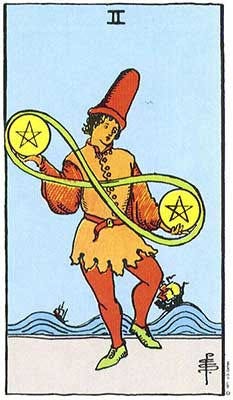
Rider-Waite-Smith Deck
Often depicted as a figure juggling 2 pentacles with an infinity symbol between them, the Two of Pentacles serves as a reminder of work-life balance and that everything in life moves in stages.
Yet, in our modern capitalist society, where our ability to produce constant output is associated with our inherent value as humans, mastering the wisdom of this card in our day-to-day lives becomes almost impossible.
And this struggle is something that I find women are especially attuned to in their lives…
The Universal Experience of Feminine Sacrifice
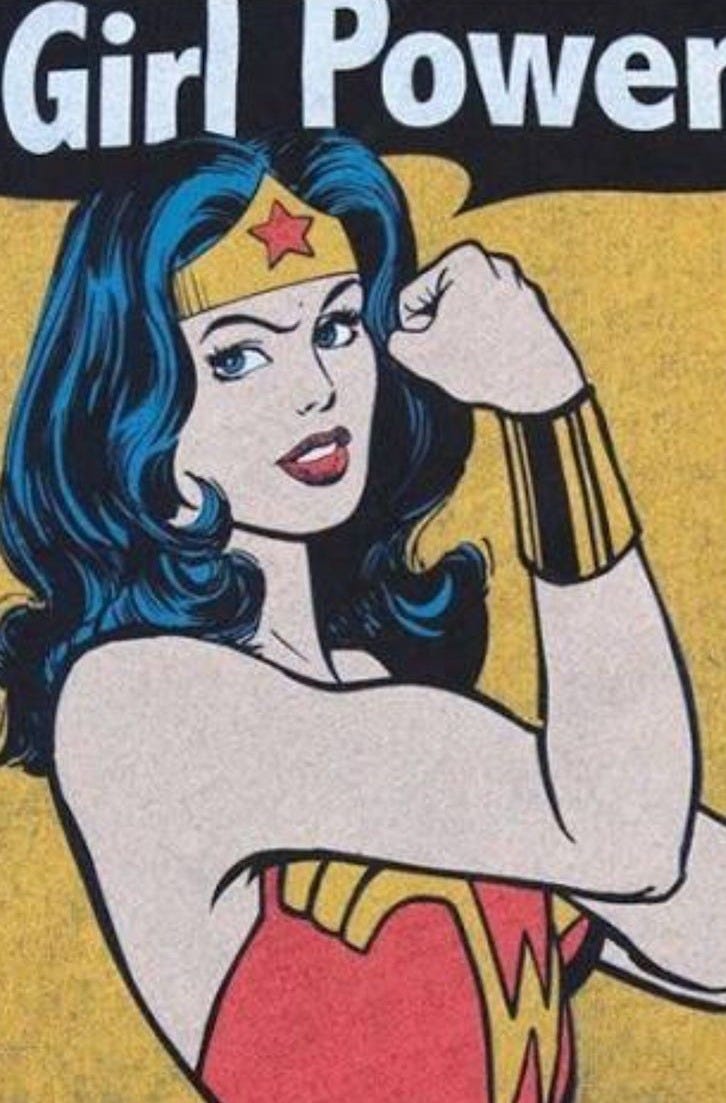
Growing up, I knew at a very early age that the Wonder Woman myth of “having it all” propagated by well-meaning third-generation feminists of the 1990s was just that…a myth.
Instead, what I saw was my mother, tired and burned out from working her job as an accountant for a demanding law firm, coming home with debilitating migraines that would leave her incapacitated for the entire weekend, unable to get out of bed.
I also saw my aunt struggle to raise her autistic non-verbal son, which led to my mother and grandmother encouraging me to spend my afternoons after getting home from school at her house taking care of my cousin in order to give her a “rest” from the demands of motherhood, which led to her developing a shopping addiction as a way to “fill herself up” from the lack of emotional support she felt in her marriage.
These women didn’t appear to “have it all,” and if they did to people outside the family system, it was often because, as the eldest daughter, I was given the role to play pseudo-caretaker to my younger sister and cousin. Something my sister still chooses to tease me about in our family dynamic to this day, as she lovingly jokes about me being her “second mom.”
It is important to know that I don’t share these experiences to judge or shame my aunt or mother, who I firmly believe were trying to be the best mothers they could in a world in which women are forced to constantly split and sacrifice parts of themselves.
I know this to be true because their stories were not so dissimilar to the stories of the female clients I worked with.
No matter what age a woman was when she came into my office, whether she was 18, 25, 35, 40, or in her 50s or 60s, at some point in our work together, the theme of feminine sacrifice would come up.
For some women, it happened when they were reflecting on their lives as they came to terms with getting older and asking themselves why they were so focused on their work, noting that they felt distant from their children or wished they had spent more time with them. For others, it was sadness about the ways they felt they had to sacrifice their careers to prioritize their children, because even if they loved their partner and felt they had a good marriage, the role of primary caregiver always seemed to fall to them.
In either scenario, there was a sacrifice; most women either felt that they were a “good mother” or “great at their career”, but rarely ever did women feel like they succeeded at both.
And for those who did try to do both (as my mother did), they would often realize that there were always limitations to their success or that their bodies would eventually revolt against them, which would force them to make a choice. And if this choice wasn’t physical or emotional, they would be reminded of the fact that no matter how hard they tried at work to “beat the system,” most women would inevitably run up against glass ceilings or witness the glass escalator as they watch their male colleagues outpace them - even in female-dominated fields, which I have witnessed as well in my career and among my male colleagues.
Because the truth is, while eventually all humans will be forced to learn the lesson of the Two of Pentacles and surrender to the flow of the cycles, it has always historically been women who are confronted with the reality of the physical, emotional, and liminal limitations of their life much sooner than men. Which is why I have chosen a woman to depict this card in my Yonic Tarot deck
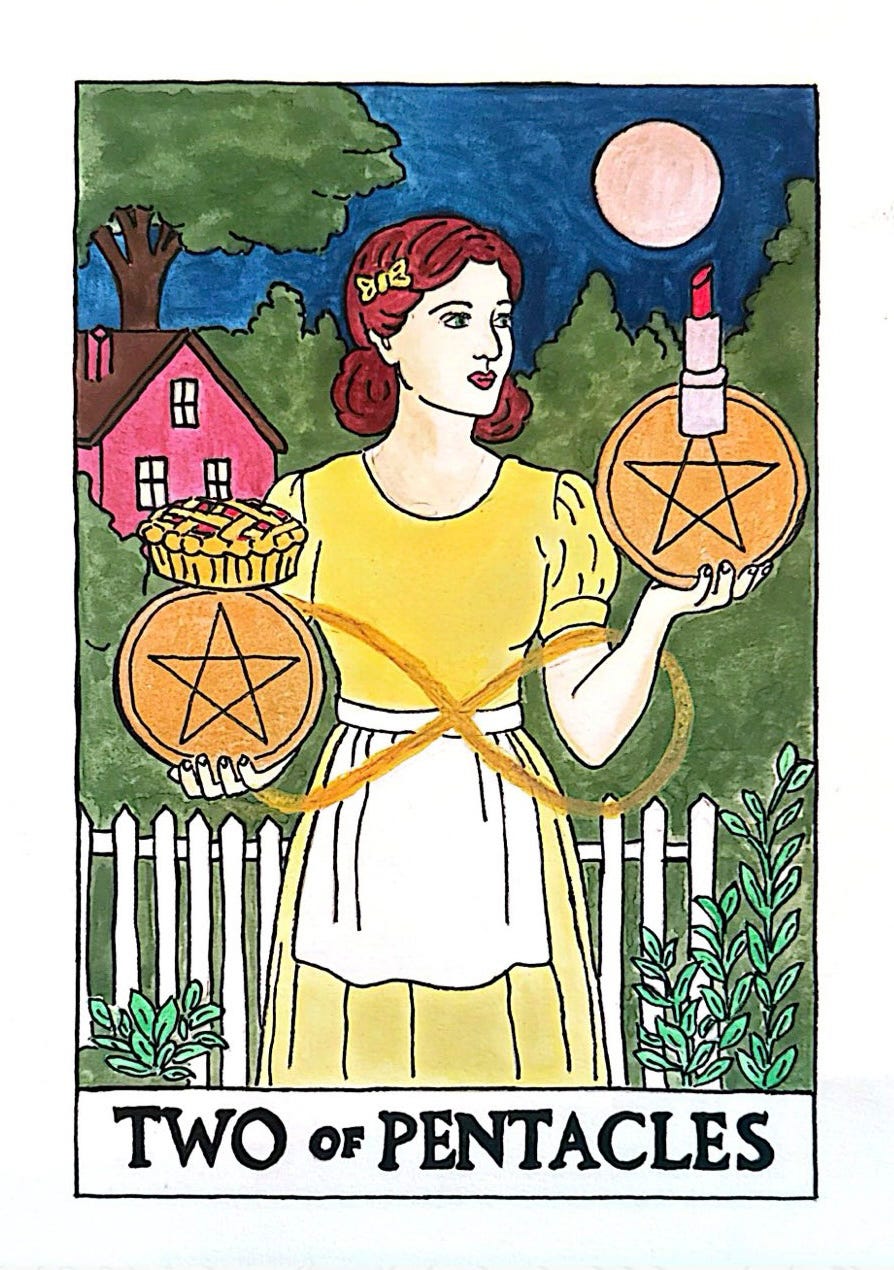
© M. Robichaux, 2026
From the time a woman is born, our limitations become painfully obvious to us, especially for womb-possessing individuals, which was a key theme noted in my dissertation research.
For example, for most women, when they first encounter their menses (i.e., period) at 12 or 13 (or even younger), they are hit with the sudden realization that they could become pregnant and that the entire trajectory of their lives could change in an instant. This is especially true for Black and Brown women in states with harsh anti-abortion laws. Thus, it forces women to confront a universal truth – that life is not fair, and we can not have everything we want, and that if we are not careful, bad things can happen to us which can limit our ability to decide our own fate.
You Can’t Always Get What You Want
Holding myself back from singing the chorus of this song by The Rolling Stones, this cliché has been used for centuries as a way of normalizing the pain and acceptance of the reality that sometimes we just cannot change our circumstances.
We can not help it that we are born into the family systems we are born into, whether we were blessed with certain opportunities or prevented from having others, whether the bodies we were assigned to at birth are viewed as “male” and “female” by the larger society, and yet, even with all these limitations thrusted upon us, we must find a way to make meaning of our lives.
And while, yes, all individuals, regardless of gender, must face this fact eventually in their lives, I tended to notice that it was not 20- or 30-year-old men coming into my office or in my friend group having these discussions. No, by and large, most of the men I knew in my 20s and even in my early 30s were still dreaming of becoming rock stars, seeking novelty, travel, or finding their next sexual conquest, believing they had all the time in the world to settle down. Instead, this was a frequent topic of debate among my female friends and me, which even at 25 I remember being asked if I was “ready to settle down” and having kids with my then fiancé, as a former supervisor of mine made it clear was part of my appeal in her hiring me as as a counselor was that she assumed I would be “stable” and thus not want to excel or leave my position.
Thus, I share this story, which is similar to so many other women’s experiences I have heard, because it is a reminder that this wall – which most men experience in their “mid-life crisis” era comes much sooner for women.
Like Sylvia Plath and her fig tree analogy in her book The Bell Jar, women are forced to make choices and thus must adapt to the cycles and demands of their lives.
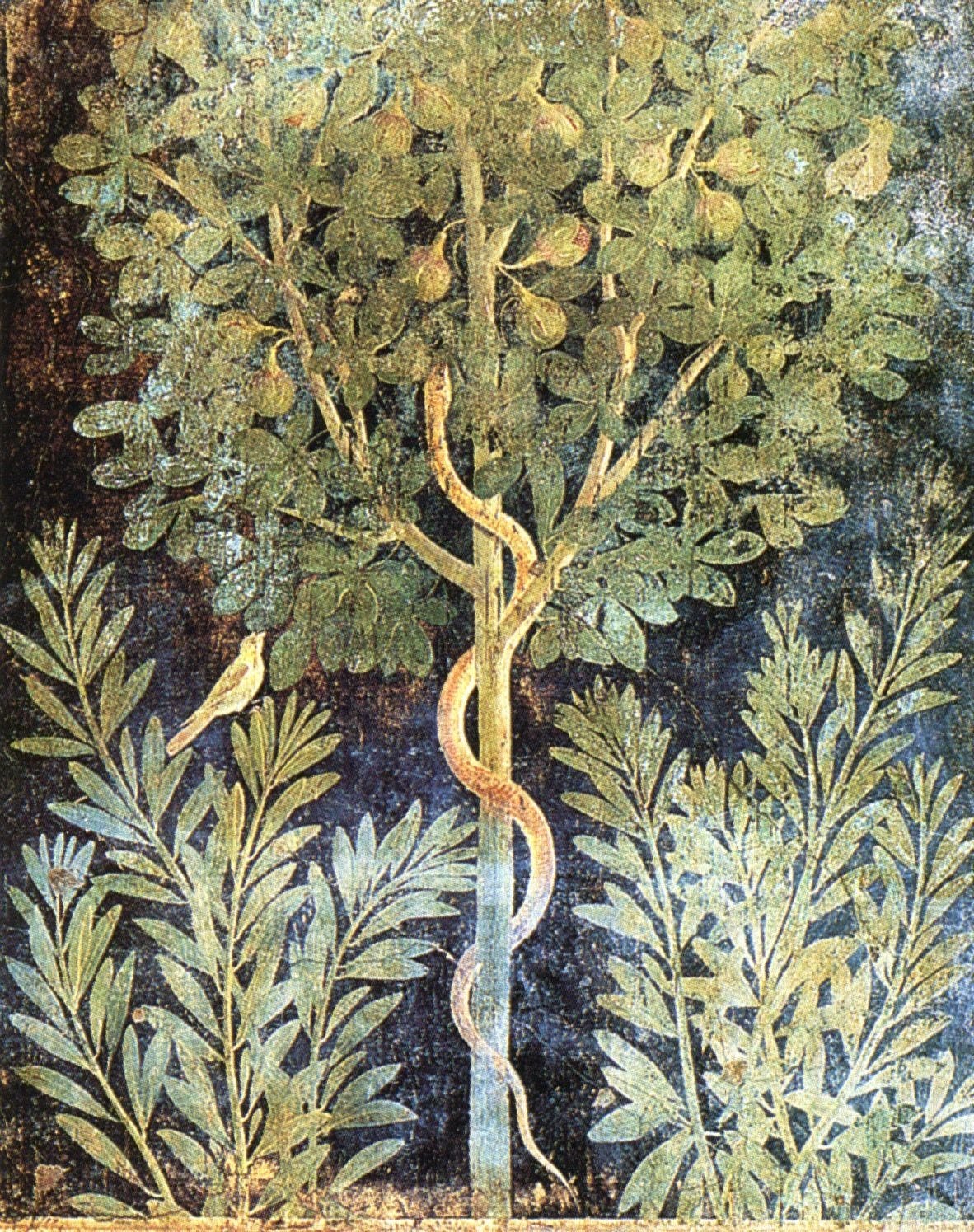
Instead, women must act quickly, but it is hard to do that when they often lack the time and resources to figure themselves out or even complete the process of self-actualization to know what they truly want. And for some women, like Plath, the forced gender roles women feel thrusted into can have very tragic ends in which they only harm themselves but leave generational scars for those who have to bear witness to the pain of a life unlived.
So if this is the case and women can not “have it all,” what is it that we can have instead?
Embracing Cycles
There is a famous interview with former First Lady Michelle Obama in which she discusses the myth of “having it all.”
In it, she says that she found that it was less about “having it all” and that she instead had to figure out how to have aspects of her life in phases. That for her it was about figuring out how to “have it all, but not all at once”.
Meaning that she understood that if motherhood was important to her, she would have to sacrifice phases of her life in order to be more present with her children, and that conversely, if a particular phase in her career felt important for her to pursue, she would have to sacrifice being less available to her children during that phase of her life.
Now of course this is easier said than done and often requires women to have a spouse or partner who isn’t threatened by them being their own individual Self and thus willing to do more of the “domestic labor” traditionally assigned to women, but nevertheless, Michelle’s words reflect the message behind the inspiration of my depiction of the Two of Pentacles, which is that women must learn to balance all parts of themselves, namely their goddess and witchy aspects of the Self.
In the card’s image above, we see a woman who is the heroine of this suit depicted in 1950s clothing holding a pie on one pentacle in one hand, which represents her Veil function and light feminine “goddess” aspects while also balancing a red lipstick on her other pentacle, which represents her more “witchy” nature and the repressed dark feminine aspects of herself. Moreover, the full-moon reference in this card directly refers to the Greek Goddess Artemis, known for her wild and untamable nature, and red lipstick has often been a form of resistance for women, which I wrote about here.
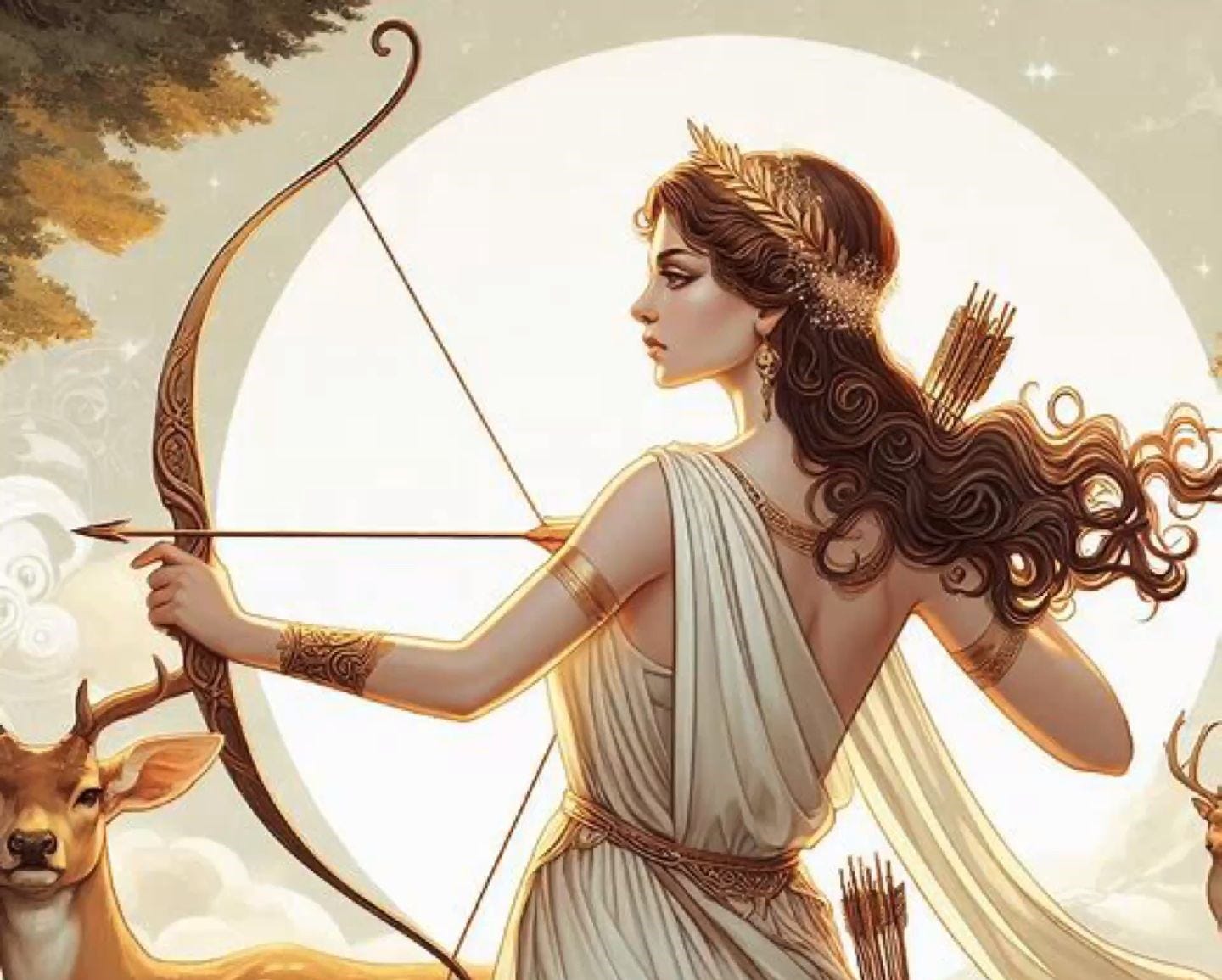
Thus, our heroine knows that she cannot sacrifice her light or dark feminine aspects and that she must find a way to balance her wild, untamed, independent nature with the demands of motherhood and the expectations that society has placed upon her.
For if she can not find a way to achieve this balance, she will inevitably feel “off-balanced” and thus, she will become fixated too far in either direction, unable to feel whole in herself.
As such is the battle for all women, to both honor oneself and the creative self-expression that can only be acquired through understanding one’s dark feminine nature while also balancing the reality that we are social creatures and thus we have roles that we must play as daughters, mothers, aunties, and caretakers, or even counselors for others.
And yet, even when we try to balance these aspects of ourselves…sometimes we outgrow these roles as we enter different phases and seasons of our lives, and when that happens, we have to surrender to the flow of the cycles and seasons of our lives.
Which is why I am choosing to approach this new phase of my career with my writing, research, and deck creation process with grace and acceptance of the cyclical nature of the creative process.
Because in order to truly hone one’s craft and to create a well-balanced life, what one needs is time to evolve with their work and not external standards of achievement as reflective of the masculine linear growth path.
To not be consumed by the capitalist rhetoric that one needs to “hustle” or produce a new story, article, or post a new card image weekly in order for their art to have value and for that value to be recognized by others. Instead, honing a craft requires one to surrender to wisdom and the flow of the feminine by becoming a forever student and understanding that their creative cycles have their own intuitive wisdom, just like the cycles of life itself…which is perhaps why men have always viewed the Goddesses of fate or even justice as women since this is a process which can not be “claimed” or “conquered”.
For everything in life has its season, and if we are able to know ourselves enough to honor our internal wisdom, well then we can always adjust pentacles as needed and maintain balance just like the figure in the Two of Pentacles.
OX
Your Dark Fairy Godmother
If you would like to learn more about Dr. Roby’s courses on her Yonic Theory approach, check out the resources below:
If you would like to donate to her Yonic Tarot deck creation fund, please do so through her ko-fi account: