



For my final Holiday/Christmas-themed episode of the season, I decided to review an actual Hallmark Christmas movie, since it was this trope that inspired me to do this series in the first place…
Thankfully, my friend Kim had the perfect recommendation for me, the made-for-TV Hallmark Channel movie, Three Wise Men and a Baby, which premiered on November 19th, 2022, and was directed by Terry Ingram.

The movie’s story follows three brothers who, after their father leaves them in childhood, have grown estranged from one another. Thus, indicating that all are struggling to integrate the healthy masculine aspects of what I refer to as the Eros/Spirit principle.
The “main brother,” who of course represents our main character, and therefore the other brothers and characters in the movie represent aspects of his Self is Luke Brenner played by Andrew Walker. A loyal, dependable firefighter who assumed the role of his father when his father left his mother. Yet, despite his responsible nature, he still lives with his mom (like his other two brothers) and move away from her dependence, which is a metaphor for his and his brother’s halted self-actualization process.
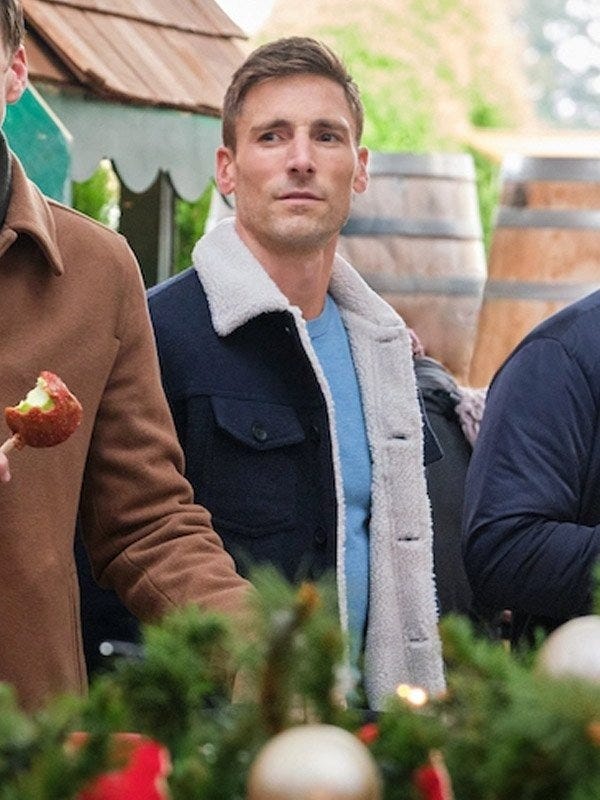
Walker as Luke
Luke is a “gifted” baby, Thomas, when his mother leaves him at the fire station to take care of him for the Holidays as she is in some personal crisis, which is never made clear to us as the audience. Either way, Luke takes the baby, Thomas home to his mother and brothers, but when his mother (played by Margaret Colin) has to leave town to assist their aunt after she gets a concussion, the three brothers are now left on their own to watch Thomas, and Holiday hijinks (and cliché Hallmark movie acting) ensue!
This is also how we learn more about the siblings’ dynamic and how Luke’s middle brother Stephan, played by Paul Campbell, a social anxious “pet therapist,” represents Luke’s idealized light masculine, Ego function. Stephan appears to be successful - having his own home and practice, yet in truth, he is still very dependent on his brother’s mother and lives in her backyard. This comes from his fear of social anxiety, which at its core reflects the function of the Ego and our need to be seen as “likable” and competent by others.

Campbell as Stephan
On the opposite side of the spectrum, we have the youngest brother, Taylor, played by Tyler Hynes. Who represents Luke’s dark masculine, or Daemon function and the wilding archetype, as he is chaotic, hot-headed, immature, and unable to hold down a job.

Hynes as Taylor
He is the brother most dependent on the boy’s mother, Barbara, played by Margaret Colin, as he lives in her basement and plays video games, which represents his desire to remain in a childlike state and his inability to take responsibility for his actions.
Of course, as the brothers are forced to work together throughout the movie and take care of baby, Thomas, they come to have a greater appreciation of their mother and the feminine principle of Psyche/Soul she represents, which can be reflected in the romantic love interests of each brother, which also represent the light and dark feminine aspects of Luke.
For instance, Taylor’s love interest and ex-girlfriend and co-worker Fiona, played by Ali Liebert, represents Luke’s Aura function, or the dark feminine aspect of himself, which challenges Taylor (his Daemon function), forcing him to become accountable for his actions. Thereby representing the dark feminine aspect of Luke, he needs to integrate.
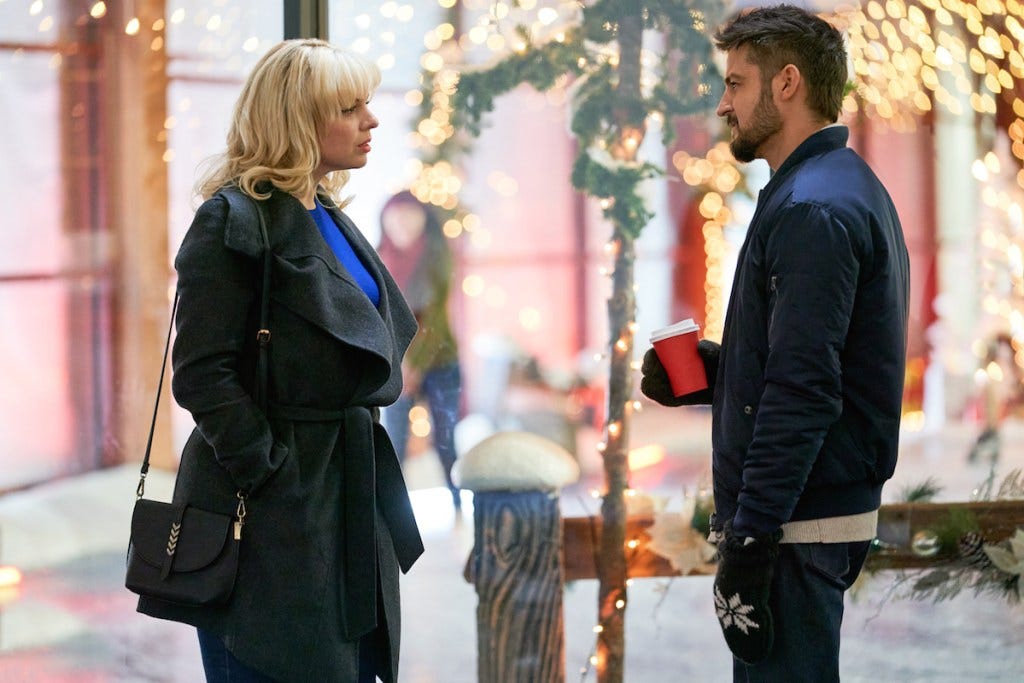
Fiona and Taylor (Liebert and Hynes)
Her cutting and witty confrontational style is contrasted by the character Susie’s (played by Fiona Vroom), whose compassion and warm, friendly demeanor helps the middle brother Stephan develop his feelings of self-confidence. Thus, she serves as a representation of the light feminine Veil function needed to strengthen Stephan’s ego, who again represents Luke’s Ego function.
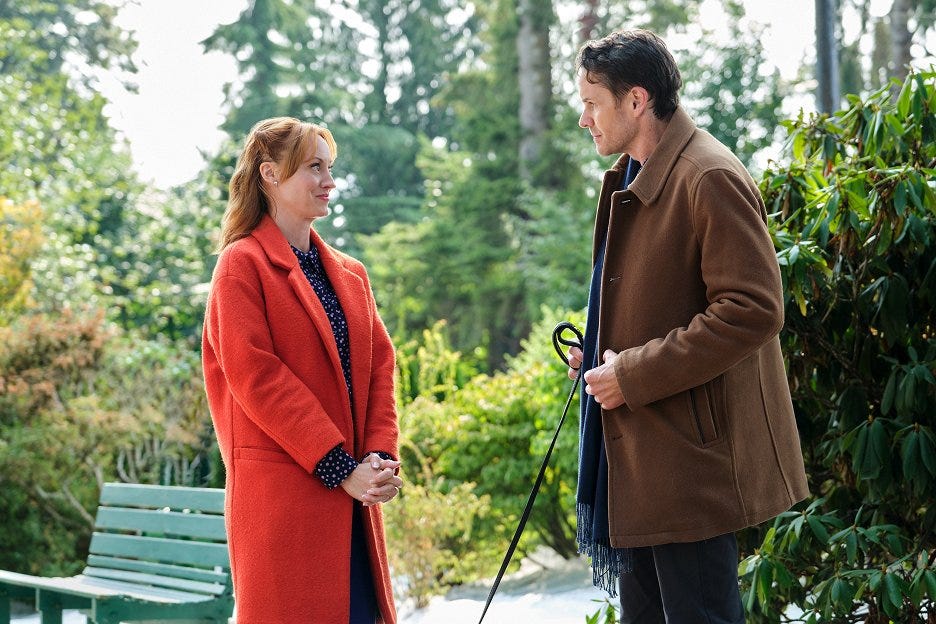
Susie and Stephan (Vroom and Campbell)
We literally see how Susie embodies both the Veil function and the goddess archetype in the movie, by literally embodying the Madonna herself, the Virgin Mary, during the scene in which the three brothers become the three Wise Men in the Christian myth of the birth of Jesus, which they do with baby Thomas.
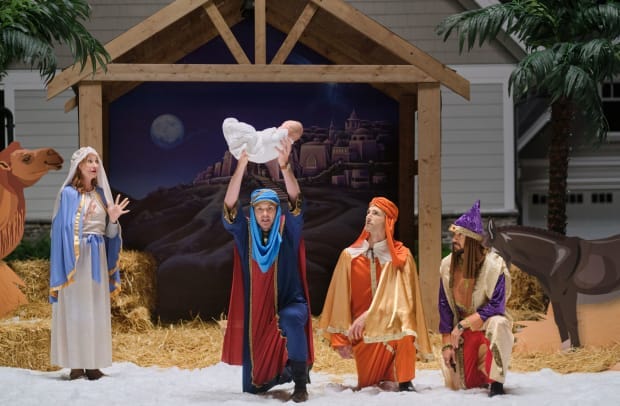
In the podcast, I’ve dived into the psychological symbolism of the religious undertones of this movie and how Christianity itself reflects men’s self-actualization process. Regardless of one’s chosen faith.
At the very end of the movie, Luke makes peace with his brothers and integrates all aspects of himself, allowing him to reunite with Sophie, played by Nicole Major, Thomas’s mother. Thus, she eventually becomes Luke’s love interest and therefore allows him to fully integrate both the masculine (Eros/Spirit) and feminine (Psyche/Soul) principles within himself.
Check out all that and more on this week’s episode, and if there is a movie, show, or book you want me to apply the Yonic Model of the Self to, post it below in the comments!
Happy Holiday season, and I will see you all in 2026!
OX,
Your Dark Fairy Godmother
To check out my Goddess-Witch Spectrum Course, click here:
Donate to my Ko-Fi:
Reference:
Ingram, T. (Director). (2022). Three wise men and a baby [Film]. Hallmark Channel.


