

Happy 2026, my lovelies!
I knew I wanted my first podcast episode to be about the movie adaptation of the Broadway musical Wicked, as I have been planning it since I initially started my podcast in Spring 2025.
The reason for this is that the film, the musical, and even the original book by Gregory Maguire all provide a perfect representation of the concept I refer to in my theory as the goddess-witch spectrum.
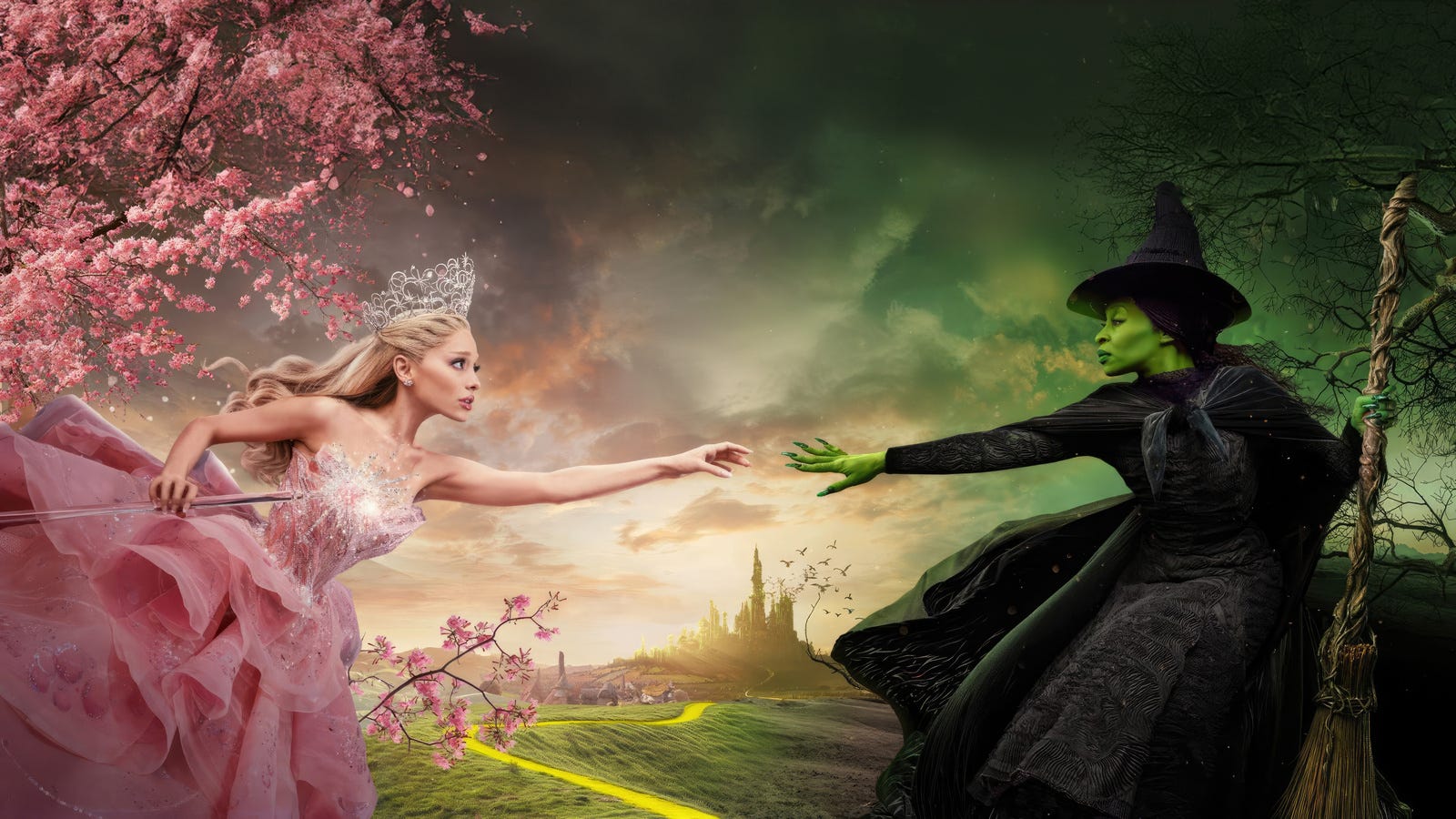
Glinda and Elphaba (played by Ariana Grande and Cynthia Erivo)
Since this is a free episode, some of you might not be familiar with my concept of the goddess-witch spectrum™, which is part of my Yonic Theory™. In a nutshell, my theory argues that one of the most crucial aspects of women’s self-actualization process is reconciling what I call the goddess-witch spectrum. Or how women divide, suppress, and project their light and dark feminine aspects not only within themselves but onto other women.
In this podcast episode, I’ll discuss how both of the characters, Glinda (played by Ariana Grande) and Elphaba (played by Cynthia Erivo), represent the extreme archetypal representations of this dynamic.
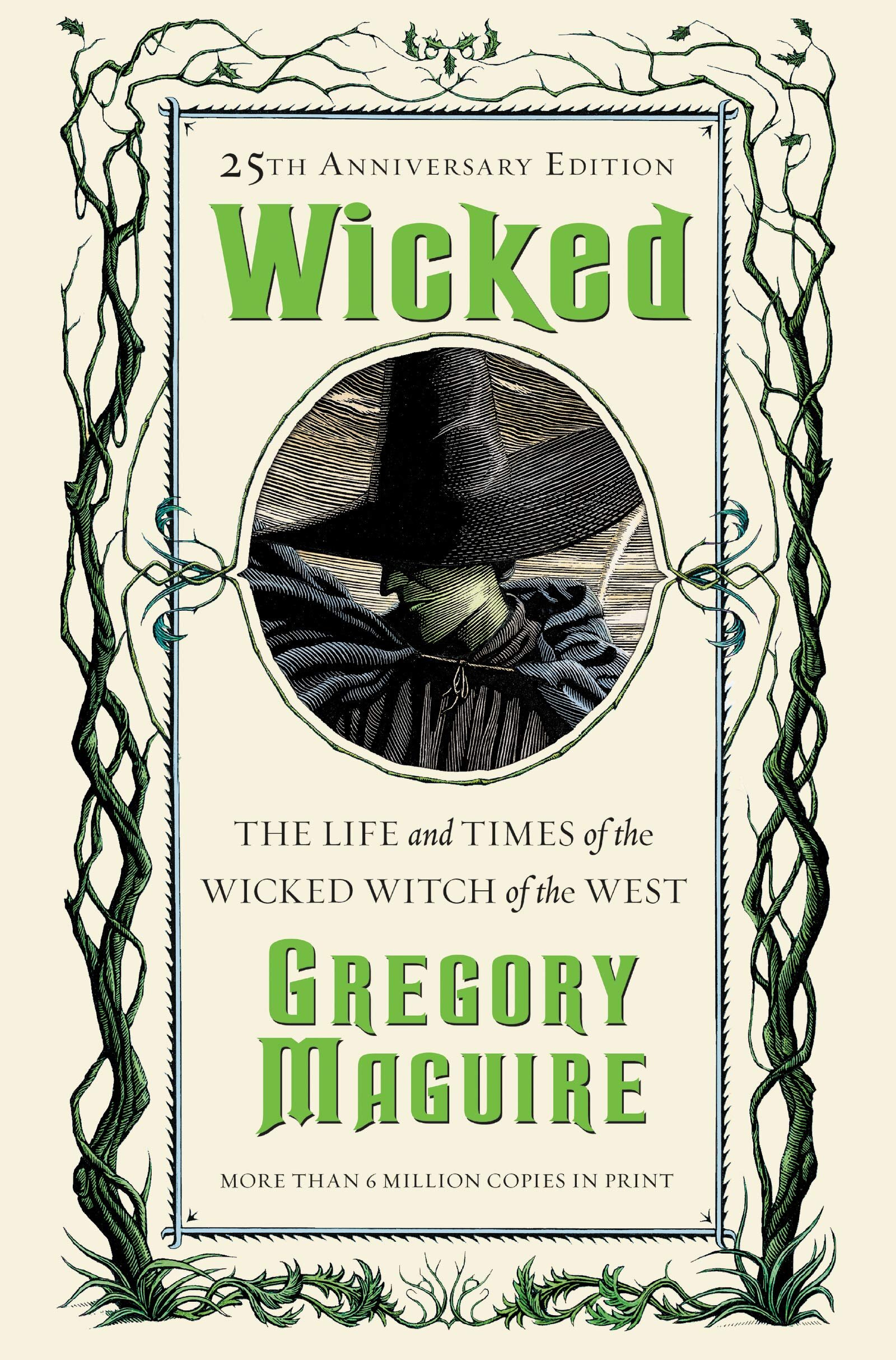
Moreover, I’ll also break down and discuss the clear feminist symbolism in both Wicked (2024) and Wicked: for Good (2025) directed by Jon Chu, and how he was inspired by the symbolism in the original musical Wicked and well as Maguire’s 1995 book Wicked: The Life and Times of the Wicked Witch of the West.
In addition, dive even deeper into how the original 1939 movie The Wizard of Oz directed by Victor Fleming and staring Judy Garland, was inspired by the original book The Wonderful Wizard of Oz written by L. Frank Baum, which was inspired by the work of his mother‑in‑law, Matilda Joslyn Gage — a prominent 19th‑century suffragist, abolitionist, and women’s rights advocate.
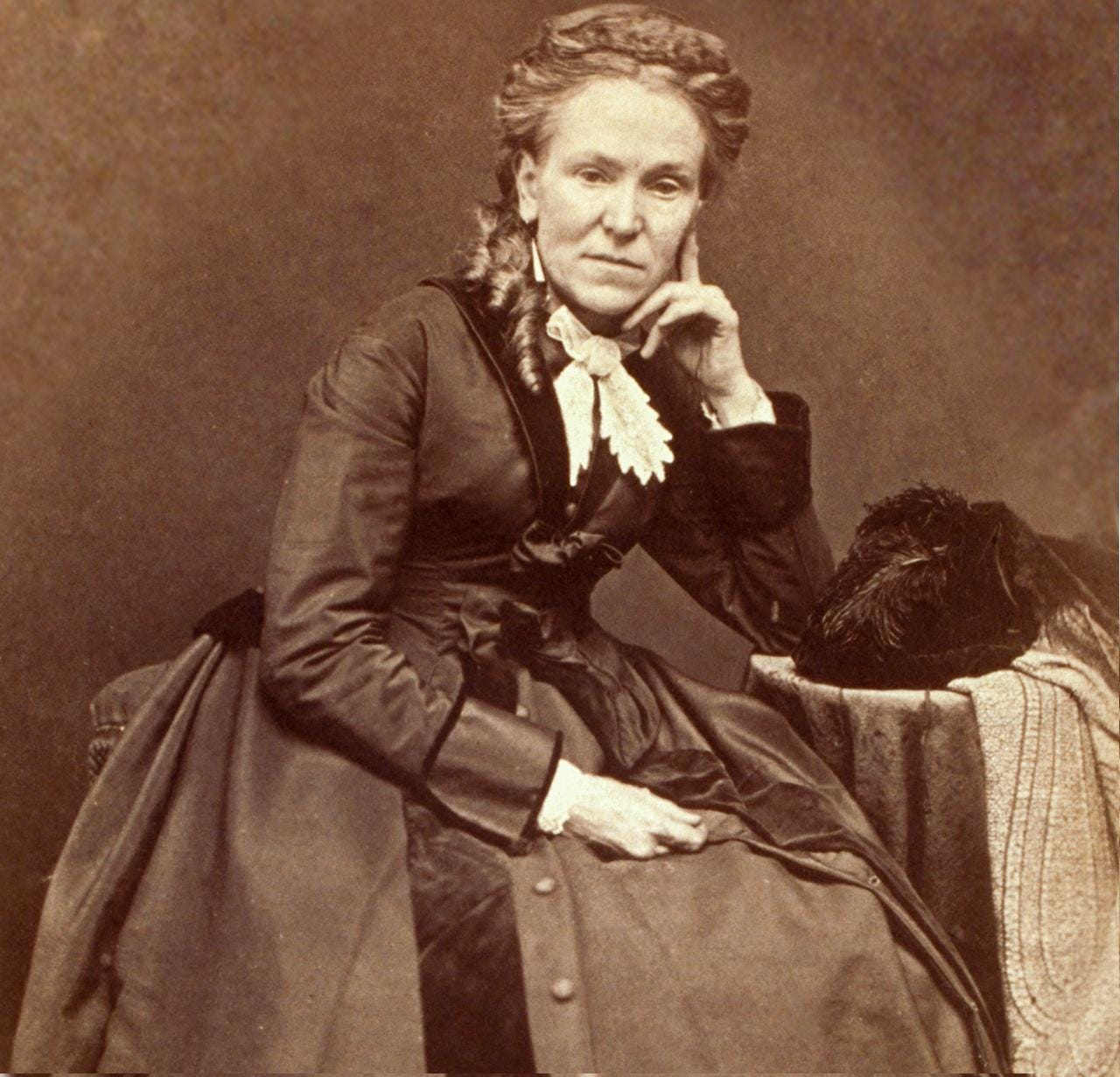
Gage
Specifically, her manifesto called Woman, Church and State (1893), which criticized the institutionalized oppression of women and how the Church used the metaphor of the witch, and the subsequent Witch Craze as a means to oppress women who posed threats to the patriarchal system of leadership.
Moreover, I argue that it is this systemic attack on women and the generational impacts of it on women’s collective psyche that causes women to be pitted against one another. Represented by the classic scene between Glinda and Dorothy in the Wizard of Oz, in which Glinda asks Dorothy if she is a “good witch” or a “bad witch”?
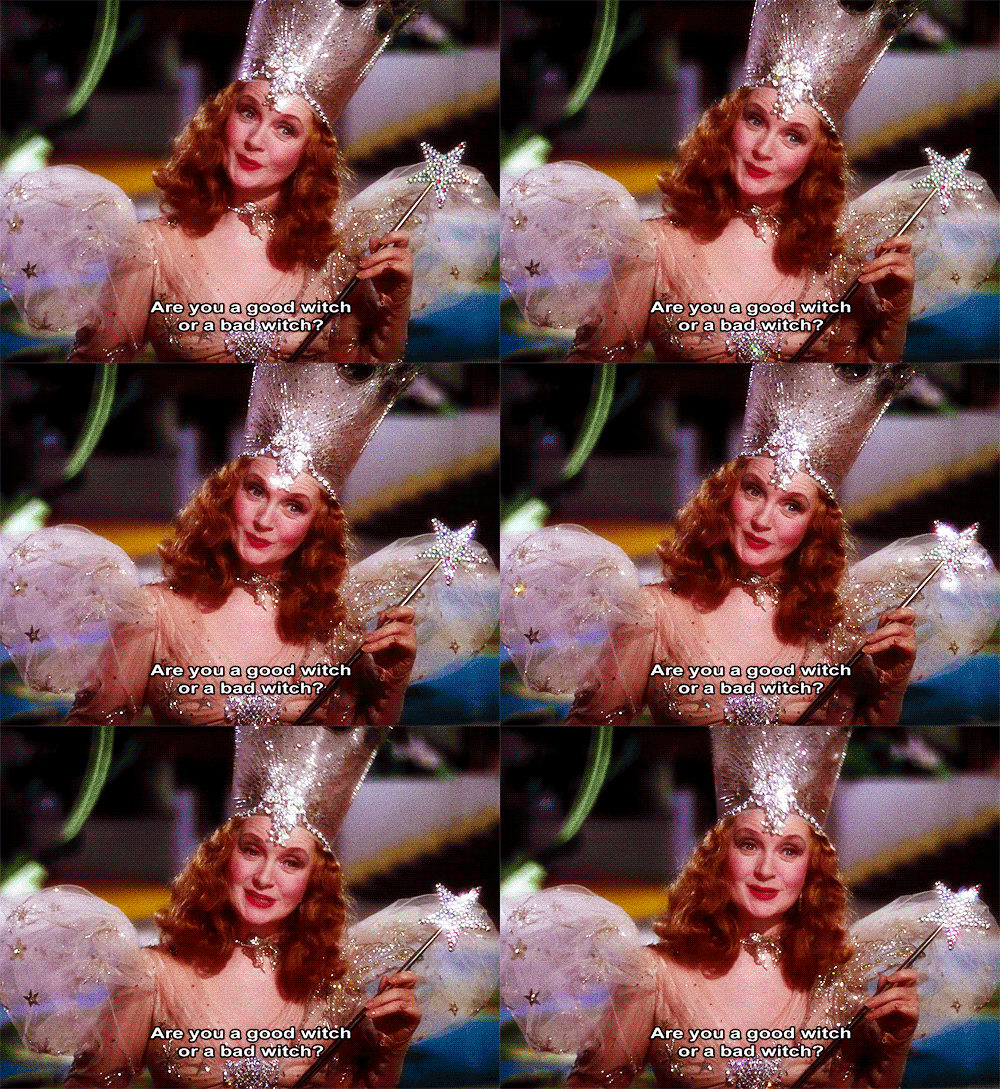
Thus, clearly inspired by the work of his mother-in-law, Baum drew inspiration from her research to construct his characters Glinda (i.e. the “good witch” or goddess archetype) and the Wicked Witch of the West (i.e. the “bad witch”) in reference to how the Church and society today continues to label women as “good” and “bad” as a means to keep them oppressed, thus preventing women from being able to full undergo the process of self-actualization.
Moreover, this suppression of feminine power is referenced throughout Maguire’s book and the two Wicked films, as the character Elphaba (i.e., the Wicked Witch from Baum’s original story) represents the dark feminine that the system of patriarchy tried to eradicate.
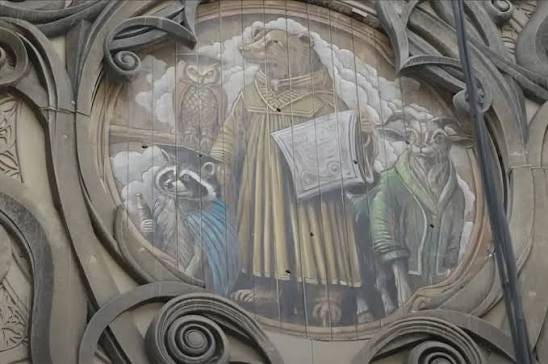
We see this referenced in the scene pictured above from Wicked (2024) when Elphaba accidentally breaks the statue of Oz, thus revealing a mural of animals behind it (with specifically a very feminine figure in the center). Therefore, it represents the suppression of feminine wisdom through the systematic targeting and suppression of women, people of color, indigenous folk, and folk healers throughout history.
Moreover, this is directly represented by the animals losing their ability to speak throughout the movie.
Thus, it is not until women can learn to come together and befriend the light (goddess) and dark (witch) aspects of themselves that true equality can be achieved. Therefore it is what the relationship between Elphaba and Glinda teaches us with beloved songs like “For Good” which I will dive into more on the podcast.
I’ll also discuss some other female characters and their archetypal significance, like Madame Morrible (played by Michelle Yeoh), or as I like to call her the “Karen of Oz” and Elphaba’s nanny Dulcibear voiced by Sharon D. Clarke.
If you would like to learn more about my Yonic Theory™ and the goddess-witch spectrum™, please consider subscribing to my Substack and purchasing a paid subscription.
I also have a course all about reconciling the goddess-witch spectrum for women, which you can purchase through my website below:
Also, if you like this episode, be sure to check out part two coming out on January 5th, 2026, in which I will apply my Yonic Model of the Self to the characters of one of the most iconic love triangles, Elphaba, Fiyero, and Glinda’s self-actualization journey, which only paid subscription members will be able to access!
OX,
Your Dark Fairy Godmother
Resources:
Podcast Episode on Yonic Model of the Self
Buy me a Coffee - KoKi Account
Official Wicked Movie Website - wickedmovie.com.
References:
Baum, L. F. (1900). The wonderful wizard of Oz. George M. Hill Company.
Ehrenreich, B., & English, D. (2010). Witches, midwives, & nurses: A history of women healers (2nd ed.). Feminist Press.
Gage, M. J. (1893). Woman, church, and state: A historical account of the status of woman through the Christian ages, with reminiscences of the matriarchate. C. H. Kerr.
Loehnen, E. (2023). On our best behavior: The seven deadly sins and the price women pay to be good. The Dial Press.
Maguire, G. (1995). Wicked: The life and times of the Wicked Witch of the West. ReganBooks.
Murdock, M. (1990). The Heroine’s Journey: Woman’s Quest for Wholeness. Shambhala/Shambhala Publications.
Qualls-Corbett, N. (1988). The Sacred Prostitute: Eternal Aspect of the Feminine (Studies in Jungian Psychology by Jungian Analysts). Inner City Books.
Robichaux, M. (2025). An introduction to yonic theory and the yonic model of the self. The Yonic Journal, 1(1), 1-87.
Wicked (J. M. Chu, Dir.). (2024). Universal Pictures.
Wicked: For Good (J. M. Chu, Dir.). (2025). Marc Platt Productions / Universal Pictures.
Wolf, N. (1991). The beauty myth: How images of beauty are used against women. W. Morrow.


